
The slave ship
Mary Johnston
THE CLASSIC COLLECTION · 1912
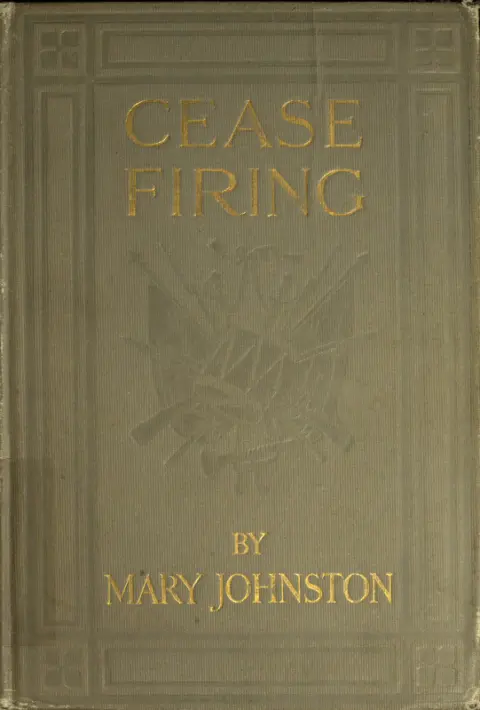
"Cease Firing" by Mary Johnston is a historical novel set during the tumultuous period of the American Civil War, likely written in the early 20th century. The book examines the harrowing experiences of soldiers and civilians amid the conflict, focusing on themes of duty, love, and loss. The narrative introduces the character Edward Cary, a private in the Confederate army, who navigates the challenges of war while grappling with personal emotions and relationships. The opening of the novel sets a richly detailed backdrop of the Mississippi River in December 1862, illustrating a landscape transformed by the ravages of war. Edward Cary's detachment, caught in the mud and rain, faces both physical exhaustion and emotional turmoil as they march towards the dangerous front lines. The text captures the camaraderie and humor among the soldiers amid the adversity, while also introducing Cary's thoughts of home and love, particularly centering on Désirée Gaillard, a strong-willed woman striving to protect her home and people from the floodwaters of both nature and war. This early section effectively establishes the mood and tension of the story, promising a blend of personal and historical narratives in the chapters to come.
Introduction adapted from the source catalogue; source summaries may be automatically generated.
Free to read · English · 175,317 words · No account needed
MAKE TIME FOR A GOOD BOOK
On by default. Untick to stop anonymous reading totals. Each page counts after 10 seconds in view. How this works.
Anonymous counting is on unless you have switched it off.
The young white man and the old negro shared scrupulously between them the not over-great amount of corn bread and bacon. The negro placed Edward’s portion before him on a wooden stool and took his own to the bench beside the hearth. The wind blew, the rain dashed against the hut, the flames leaped from resinous pine knot to pine knot.
Supper finished, talk began. “How far from the river are we?”
“Ef you’ll tell ’Rasmus, sah, ’Rasmus’ll tell you! En rights hit oughter be two miles, but I’s got er kind ob notion dat de ribber’s done crope nigher.”
Edward listened to the wind and rain. “What’s to hinder it from coming
nigher yet?”
“Nothin’, sah.”
The young man got up, somewhat unsteadily, from the pallet, and with his hand against the wall moved to the door, opened it, and looked out. He shivered, then laughed. “Noah must have seen something like it when he looked out of the Ark!” He closed the door with difficulty.
Behind him, the negro continued to speak. “Leastways, dar’s only de Cape Jessamine levee.”
“Cape Jessamine?”
“De Gaillard place, sah.”
With a stick he drew lines in the ashes. “Bayou heah. Ribber heah. De Cun’l in between—only right now he way from home fightin’ de Yankees—he en’ Marse Louis. De Gaillard place—Cape Jessamine. Hope dat levee won’t break!”
Edward came back to the fire. “Do you belong to the place?”
“No, sah, I’se free. Ol’ marster freed me. But I goes dar mos’ every day en’ takes advice en’ draws my rations. No, sah, I don’ ’zactly belong, but dey’re my white folks. De Gaillards’s de finest kind dar is. Dar ain’t no finer.”
Old man and young man, dark-skinned and light, African and Aryan, the two rested by the fire. The negro sat, half doubled, his hands between his knees, his eyes upon the floor by the door. Now he was silent, now he muttered and murmured. The glare from the pine knots beat upon his grey pate, upon his shirt, open over his chest, and upon his gnarled and knotted hands. Over against him half reclined the other, very torn and muddy, unshaven, gaunt, and hollow-eyed, yet, indescribably, carrying his rags as though they were purple, showing through fatigue, deprivation, and injury something tireless, uninjured, and undeprived. He kept now a somewhat languid silence, idle in the warmth, his thoughts away from the Mississippi and the night of storm. With the first light he would quit the cabin and press on after his company. He thought of the armies of the Far South, of the Army of Tennessee, the Army of the Trans-Mississippi, and he thought of the fighting in Virginia, of the Army of Northern Virginia, the army he had quitted but a few weeks before. He, too, that afternoon, had felt homesick for it, lying there behind the hills to the south of Fredericksburg, waiting for Burnside to cross the Rappahannock!... The soldier must go where he is sent! He thought of his own people, of his father, of Fauquier Cary, of Greenwood, and his sisters there. He should find at Vicksburg a letter from Judith. From the thought of Judith he moved to that of Richard Cleave.... Presently, with an impatient sigh, he shook himself free. Better think, to-night, of something else than tragedies and mysteries! He thought of roses and old songs, and deep forests and sunny childhood spaces. He put attention to sleep, diffused his mind and hovered in mere warmth, odors, and hues of memory and imagination. He set faint silver bells to ringing, then, amid slow alternating waves of red and purple, a master violin to playing. Lulled, lulled in the firelight, his eyelids drooped. He drew sleeper’s breath.
Your reading position is saved on this browser. Take it to another device with a library code. Reading pages adapt to text, rather than matching a printed edition.
Mary Johnston
Mary Johnston

Mary Johnston

Mary Johnston
BEHIND THE BOOK
This eBook is for the use of anyone anywhere in the United States and most other parts of the world at no cost and with almost no restrictions whatsoever. You may copy it, give it away or re-use it under the terms of the Project Gutenberg License included with this eBook or online at www.gutenberg.org. If you are not located in the United States, you will have to check the laws of the country where you are located before using this eBook. Read the source licence.
The original source file, including credits and licence, is retained by this library. Request an original-format copy at no charge. Please include the book title and Project Gutenberg identifier #52154.
KEEP YOUR CURIOSITY GOING
Cécile Tormay

Moritz Busch
Coulson Kernahan
John L. Ransom

Maurice Baring
Frances Wright