
The slave ship
Mary Johnston
THE CLASSIC COLLECTION · 1912
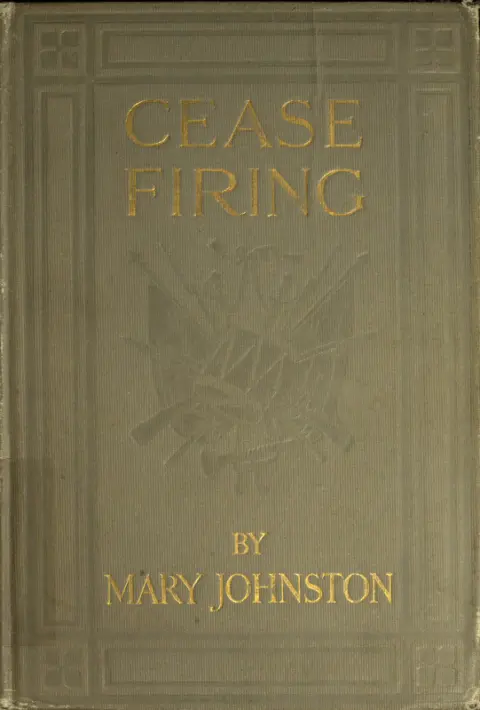
"Cease Firing" by Mary Johnston is a historical novel set during the tumultuous period of the American Civil War, likely written in the early 20th century. The book examines the harrowing experiences of soldiers and civilians amid the conflict, focusing on themes of duty, love, and loss. The narrative introduces the character Edward Cary, a private in the Confederate army, who navigates the challenges of war while grappling with personal emotions and relationships. The opening of the novel sets a richly detailed backdrop of the Mississippi River in December 1862, illustrating a landscape transformed by the ravages of war. Edward Cary's detachment, caught in the mud and rain, faces both physical exhaustion and emotional turmoil as they march towards the dangerous front lines. The text captures the camaraderie and humor among the soldiers amid the adversity, while also introducing Cary's thoughts of home and love, particularly centering on Désirée Gaillard, a strong-willed woman striving to protect her home and people from the floodwaters of both nature and war. This early section effectively establishes the mood and tension of the story, promising a blend of personal and historical narratives in the chapters to come.
Introduction adapted from the source catalogue; source summaries may be automatically generated.
Free to read · English · 175,317 words · No account needed
MAKE TIME FOR A GOOD BOOK
On by default. Untick to stop anonymous reading totals. Each page counts after 10 seconds in view. How this works.
Anonymous counting is on unless you have switched it off.
“It is said to be easy to defend a mountainous country,” said General Braxton Bragg, commanding the Army of Tennessee, “but mountains hide your foe from you, while they are full of gaps through which he can pounce upon you at any time. A mountain is like the wall of a house full of rat-holes. Who can tell what lies hidden behind that wall?”
The wall was the Cumberland Range. The several general officers, riding with General Bragg, uttered a murmur, whether of agreement or disagreement was not apparent.
General D.H. Hill, lately sent from Virginia to the support of the forces in Tennessee, made a sound too gruff for agreement. He fell back a pace or two and drew up beside General Cleburne. “You can know mountainous country, you know,” he said. “It’s a matter of learning, like everything else.”
“True enough,” agreed the other. “But there’s precious few of mankind with any talent for learning!”
The group sitting their horses in the scrub oak, in the September sunshine, gazed in a momentary silence upon Pigeon Mountain and Missionary Ridge and the towering Lookout Mountain. Bragg, brave, able in his own way, but melancholy, depressed, ill in body and mind, at war with himself and all his subordinates, sat staring. Below him lay the slender valley of the Chickamauga. Clear, sinuous, the little stream ran between overbending shrubs and trees. A vague purple mist hung over the valley and the tree-clad slopes beyond. The knot of horsemen fell silent, there in the oak scrub, looking at the folds of the Cumberland Range. Past them on the Lafayette road marched endlessly the Army of Tennessee. Tanned and gaunt, ragged and cheerful, moving out from Chattanooga, but moving out, there was assurance, to give fight, by went the grey, patient, hardy legions, corps of Hill, Polk, Buckner, and Walker, divisions of Cheatham, Cleburne, Breckinridge, Liddell, Hindman, Bushrod Johnson, Preston, and Stewart. Colours, mounted officers, grey foot soldiers and grey foot soldiers and grey foot soldiers, the rumbling guns, old, courageous battalions, on they went, endlessly. The dust rose and clothed them; the purple mountains made a dreamy background. The party, sitting their horses on the scrub-covered low hill, looked again westward.
Bragg spoke to one of his corps commanders, Leonidas Polk, bishop and general. “Chickamauga! This was Cherokee country, wasn’t it?”
“Yes, General. Cherokee Georgia. Chief Ross had his house near here. ‘Chickamauga’ means River of Death. For ages they must have gone up and down, over these ridges and through these vales, hunting and warring, camping and breaking camp—”
Your reading position is saved on this browser. Take it to another device with a library code. Reading pages adapt to text, rather than matching a printed edition.
Mary Johnston
Mary Johnston

Mary Johnston

Mary Johnston
BEHIND THE BOOK
This eBook is for the use of anyone anywhere in the United States and most other parts of the world at no cost and with almost no restrictions whatsoever. You may copy it, give it away or re-use it under the terms of the Project Gutenberg License included with this eBook or online at www.gutenberg.org. If you are not located in the United States, you will have to check the laws of the country where you are located before using this eBook. Read the source licence.
The original source file, including credits and licence, is retained by this library. Request an original-format copy at no charge. Please include the book title and Project Gutenberg identifier #52154.
KEEP YOUR CURIOSITY GOING
Cécile Tormay

Moritz Busch
Coulson Kernahan
John L. Ransom

Maurice Baring
Frances Wright