
The slave ship
Mary Johnston
THE CLASSIC COLLECTION · 1912
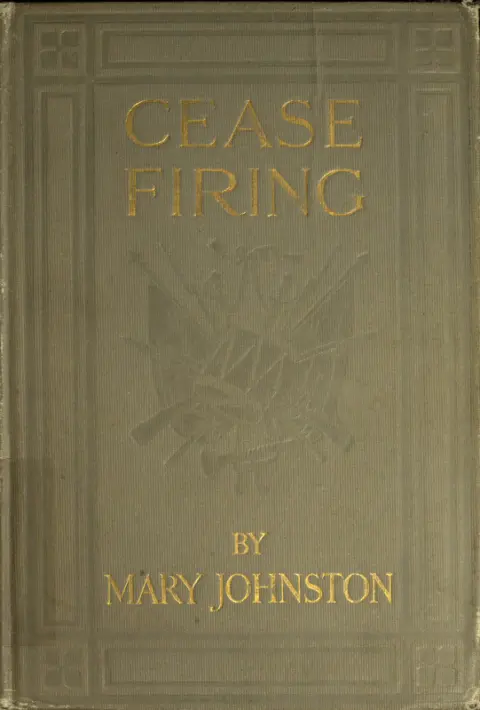
"Cease Firing" by Mary Johnston is a historical novel set during the tumultuous period of the American Civil War, likely written in the early 20th century. The book examines the harrowing experiences of soldiers and civilians amid the conflict, focusing on themes of duty, love, and loss. The narrative introduces the character Edward Cary, a private in the Confederate army, who navigates the challenges of war while grappling with personal emotions and relationships. The opening of the novel sets a richly detailed backdrop of the Mississippi River in December 1862, illustrating a landscape transformed by the ravages of war. Edward Cary's detachment, caught in the mud and rain, faces both physical exhaustion and emotional turmoil as they march towards the dangerous front lines. The text captures the camaraderie and humor among the soldiers amid the adversity, while also introducing Cary's thoughts of home and love, particularly centering on Désirée Gaillard, a strong-willed woman striving to protect her home and people from the floodwaters of both nature and war. This early section effectively establishes the mood and tension of the story, promising a blend of personal and historical narratives in the chapters to come.
Introduction adapted from the source catalogue; source summaries may be automatically generated.
Free to read · English · 175,317 words · No account needed
MAKE TIME FOR A GOOD BOOK
On by default. Untick to stop anonymous reading totals. Each page counts after 10 seconds in view. How this works.
Anonymous counting is on unless you have switched it off.
As he went he found about him the wildest confusion. Units and groups of cavalry, infantry, and artillery were shaken together as in a glass. Here infantry preponderated, here mad horses, larger than nature, appeared to rear in the smoke, and here panting men tried to drag away the guns. Here were the wounded, here were shouting and crying, here were officers, impassioned, rallying, appealing, coercing, and here were the half-sobbing answers of their men. “Lost, lost!” said in effect the answers of the men. “Lost, lost! You, the leaders, know it, and we know it. You would lead us to noble death, but we must keep to life if we can. We have fought very well, and now we are tired, and there is something to be said for knowing when you are beaten and trying another tack.”—“Lost, lost!” said the shot and shell. “Lost, lost!” said the wind whistling from the sabres of Merritt’s charging cavalry. “Lost, lost!” said the autumn night. “Lost, lost!” said the dust on the Valley Pike.
Steve tried to get taken on in an ambulance, but the surgeon in charge first laid practised fingers around his wrist, and then told him to go to hell—in short to walk to hell—and leave ambulances for hurt folks. “Gawd!” thought Steve, “’n’ I saved this army on the road to Buford’s!”
Night came on, night without and night within. The outer night was a night of stars. Myriads and myriads, they showed, star clouds in the Milky Way, and scattered stars in the darker spaces. The air was very clear, and the starshine showed the road—the long, palely gleaming, old, old, familiar road. Within, the night was dark, dark! and peopled with broken hopes. Tramp, tramp! on the Valley Pike. Tramp, tramp! with sore and tired feet, with hot and tired hearts. Tramp, tramp! and all the commands were broken, officers seeking for their men and men for their officers, a part of one regiment marching with a part of another, all the moulds cracked. Tramp, tramp! Tramp, tramp! and fathers were weeping silently for sons, and sons for their fathers, and brothers for brothers, and many for their country. Tramp, tramp! and there came a vision of the burning Valley, and of Atlanta burning, burning, for not one house, said the dispatches, had Sherman left standing, and a vision of the trenches at Petersburg, and a vision of Richmond, Richmond perhaps crashing down in ruin to-night, wall and pillar, and the flames going up. Tramp, tramp! and a flame of wrath came into the marching hearts, welcome because it warmed, welcome because anger and hate gave at least a strength, like a pale reflex of the strength of love, welcome because before it fled the shadows of weakness, and in it despair grew heroic. Now the men, exhausted as they were, would have turned, and gone back and struck Sheridan. Tramp, tramp! Tramp, tramp! and there came a firmness into the sound. Throughout the night, now it came and now it went, and now it came again.
Your reading position is saved on this browser. Take it to another device with a library code. Reading pages adapt to text, rather than matching a printed edition.
Mary Johnston
Mary Johnston

Mary Johnston

Mary Johnston
BEHIND THE BOOK
This eBook is for the use of anyone anywhere in the United States and most other parts of the world at no cost and with almost no restrictions whatsoever. You may copy it, give it away or re-use it under the terms of the Project Gutenberg License included with this eBook or online at www.gutenberg.org. If you are not located in the United States, you will have to check the laws of the country where you are located before using this eBook. Read the source licence.
The original source file, including credits and licence, is retained by this library. Request an original-format copy at no charge. Please include the book title and Project Gutenberg identifier #52154.
KEEP YOUR CURIOSITY GOING
Cécile Tormay

Moritz Busch
Coulson Kernahan
John L. Ransom

Maurice Baring
Frances Wright