
The slave ship
Mary Johnston
THE CLASSIC COLLECTION · 1912
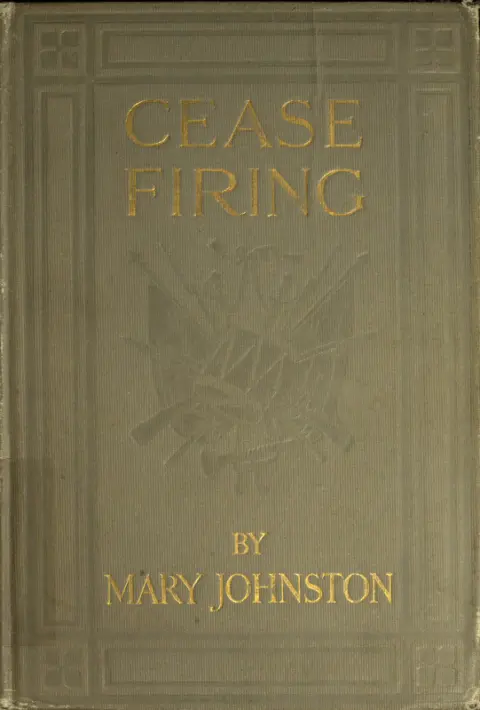
"Cease Firing" by Mary Johnston is a historical novel set during the tumultuous period of the American Civil War, likely written in the early 20th century. The book examines the harrowing experiences of soldiers and civilians amid the conflict, focusing on themes of duty, love, and loss. The narrative introduces the character Edward Cary, a private in the Confederate army, who navigates the challenges of war while grappling with personal emotions and relationships. The opening of the novel sets a richly detailed backdrop of the Mississippi River in December 1862, illustrating a landscape transformed by the ravages of war. Edward Cary's detachment, caught in the mud and rain, faces both physical exhaustion and emotional turmoil as they march towards the dangerous front lines. The text captures the camaraderie and humor among the soldiers amid the adversity, while also introducing Cary's thoughts of home and love, particularly centering on Désirée Gaillard, a strong-willed woman striving to protect her home and people from the floodwaters of both nature and war. This early section effectively establishes the mood and tension of the story, promising a blend of personal and historical narratives in the chapters to come.
Introduction adapted from the source catalogue; source summaries may be automatically generated.
Free to read · English · 175,317 words · No account needed
MAKE TIME FOR A GOOD BOOK
On by default. Untick to stop anonymous reading totals. Each page counts after 10 seconds in view. How this works.
Anonymous counting is on unless you have switched it off.
He was not like Richard Cleave. He had little innate feeling for War, intuitive understanding of all its phases. Being with all his people plunged deep, deep within it, he played his part there bravely enough. He served his native land, and her need and woe dwelt with him as it dwelt with all his world, both men and women. Much of him, perforce, was busy with the vast and mournful stage. But he found himself not truly at home with the war-drums and the wailing, with smell of blood and smoke, weight of shot-riddled banners, trampled faces. He was born for beauty and her worship, for spacious order and large harmony, and for months now there had been war and agony and smell of blood and sight of pale, twisted faces—for long months only that. And then somehow, accidentally it seemed, he had rubbed the lamp. Only ten days ago—oh, light and warmth and harmony! Oh, the strange and sweet in combination! Oh, serene spaces for the mind! Oh, golden piping and beckoning to emotions not stern! Oh, the deepest, oldest wine! Oh, by the oddest, simplest chance, sudden as a wind from Heaven, intimacy warm and fragrant with the Only-Dreamed-Of, the Never-Found-Before! Oh, in a word, the love of Désirée Gaillard!
He was marching through the dark night, the mire, the cold, the wet. Certain centres of consciousness, no doubt, knew them all,—knew hunger, cold, weariness. But the overman, the Lover, moved through rose-scented dusk, through intricate, sweet thoughts, in some imaged Vale of Cashmere. Only not at all, not at all could he banish anxiety as to the Beloved’s well-being.
About him, in the night, was the tramp, tramp of other weary feet, the dim sight and sound of other weary bodies, cold, wet, thinly clad. Most of these men in the darkness thought, perhaps, of beings far away from these labyrinthine ridges and hollows. Many a soldier warmed his heart by the fires of home, dreamed as he marched of lover, wife, or child. But the thoughts were shot with pain and the dreams were bitter sweet. No man in a Southern army could take comfort in the thought that whatever of want and strain and boding might obtain where he moved, ragged, through the darkness, all was well at home—comfort there, warmth and food there, ease of heart there! Many knew that at home there was immediate suffering; others, that while the board was spread to-night, yet the dark sail of privation grew larger and larger. All knew that there was little, little ease of heart. Marching through the rainy night they carried with them, heavier than musket and haversack, the ache of all at home, as, upon this night, all at home felt cold and gaunt with the marching, marching armies. Yet the South at home managed to keep a high head and a ready smile, and the South in the field managed a jest, a laugh, a song. At home and in the field vast need and stress lifted the man, lifted the woman, lifted the child. Some one in the ——th Virginia, moving out to Chickasaw Bayou, began to sing jerkily—
Your reading position is saved on this browser. Take it to another device with a library code. Reading pages adapt to text, rather than matching a printed edition.
Mary Johnston
Mary Johnston

Mary Johnston

Mary Johnston
BEHIND THE BOOK
This eBook is for the use of anyone anywhere in the United States and most other parts of the world at no cost and with almost no restrictions whatsoever. You may copy it, give it away or re-use it under the terms of the Project Gutenberg License included with this eBook or online at www.gutenberg.org. If you are not located in the United States, you will have to check the laws of the country where you are located before using this eBook. Read the source licence.
The original source file, including credits and licence, is retained by this library. Request an original-format copy at no charge. Please include the book title and Project Gutenberg identifier #52154.
KEEP YOUR CURIOSITY GOING
Cécile Tormay

Moritz Busch
Coulson Kernahan
John L. Ransom

Maurice Baring
Frances Wright