
The slave ship
Mary Johnston
THE CLASSIC COLLECTION · 1912
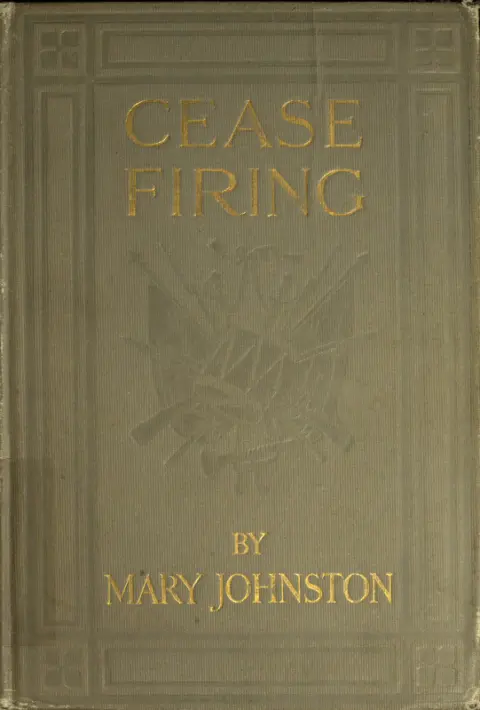
"Cease Firing" by Mary Johnston is a historical novel set during the tumultuous period of the American Civil War, likely written in the early 20th century. The book examines the harrowing experiences of soldiers and civilians amid the conflict, focusing on themes of duty, love, and loss. The narrative introduces the character Edward Cary, a private in the Confederate army, who navigates the challenges of war while grappling with personal emotions and relationships. The opening of the novel sets a richly detailed backdrop of the Mississippi River in December 1862, illustrating a landscape transformed by the ravages of war. Edward Cary's detachment, caught in the mud and rain, faces both physical exhaustion and emotional turmoil as they march towards the dangerous front lines. The text captures the camaraderie and humor among the soldiers amid the adversity, while also introducing Cary's thoughts of home and love, particularly centering on Désirée Gaillard, a strong-willed woman striving to protect her home and people from the floodwaters of both nature and war. This early section effectively establishes the mood and tension of the story, promising a blend of personal and historical narratives in the chapters to come.
Introduction adapted from the source catalogue; source summaries may be automatically generated.
Free to read · English · 175,317 words · No account needed
MAKE TIME FOR A GOOD BOOK
On by default. Untick to stop anonymous reading totals. Each page counts after 10 seconds in view. How this works.
Anonymous counting is on unless you have switched it off.
Past the President of the Confederacy went an array of men that, in certain respects, could only be matched in the whole earth by the other armies of that Confederacy. They were of a piece with the Army of Tennessee now operating near Chattanooga, and with the Army of Northern Virginia now watching Burnside across the Rappahannock, and with other grey forces scattered over the vast terrain of the War.
It emerged at once how spare they were and young and ragged. There were men from well-nigh every Southern State; from Georgia, Alabama, Mississippi, Louisiana, Missouri, Texas, Kentucky, the Carolinas;—but whether they came from lands of cotton and cane, or lands of apple and wheat, they were alike lean and bronzed and ragged and young. Men in their prime were there, and men past their prime; there did not lack grey-beards. Despite this, the impression was overwhelmingly one of youth. Oh, the young, young men, and lean as Indians in winter! Brigade by brigade,—infantry, cavalry, artillery,—with smoke-stained, shot-riddled colours, with bright, used muskets, with the guns, with the war-horses, with the bands playing “Dixie,” they went by Mr. Davis and General Johnston beneath the live-oak.
Toward noon the regiment from Vicksburg found its chance to report, and a little later Edward Cary rejoined his command. The command was glad to see him; not all his comrades understood him, but they liked him exceedingly. That night, the first lieutenant, with whom at the University, he had read George Sand and the dramas of M. Victor Hugo, found him seated under a yellow pine with a pine stump for table, and a pine torch for lamp, slowly covering with strong, restrained handwriting, several sheets of bluish Confederate paper.
The lieutenant threw himself down upon the pine needles. “Writing
home?”
“No. Not to-night.”
Two letters lay addressed in their envelopes. The lieutenant, weary and absent-minded, took them up, fingering them without thinking. Edward drew the letter he was writing into the shadow, guarded it with his arm, and, smiling, held out the other hand.
Colonel Henry Gaillard,
—— Louisiana Cavalry,
Mobile,
Alabama.
Captain Louis Gaillard,
—— Louisiana,
Barton’s Brigade—
read the lieutenant. He dropped the letters. “I am sure I beg your pardon, Cary! I didn’t in the least think what I was doing!”
“There’s no harm done, Morton.” He repossessed himself of the letters, struck the torch at another angle, and turned from the forest table. “Morton, I’m going in for promotion.”
The lieutenant laid down his pipe. “Well, if you go in for it, I’ll back you to get it, but I thought you said—”
“I did.”
“What do you want it for? Vain-glory?”
Your reading position is saved on this browser. Take it to another device with a library code. Reading pages adapt to text, rather than matching a printed edition.
Mary Johnston
Mary Johnston

Mary Johnston

Mary Johnston
BEHIND THE BOOK
This eBook is for the use of anyone anywhere in the United States and most other parts of the world at no cost and with almost no restrictions whatsoever. You may copy it, give it away or re-use it under the terms of the Project Gutenberg License included with this eBook or online at www.gutenberg.org. If you are not located in the United States, you will have to check the laws of the country where you are located before using this eBook. Read the source licence.
The original source file, including credits and licence, is retained by this library. Request an original-format copy at no charge. Please include the book title and Project Gutenberg identifier #52154.
KEEP YOUR CURIOSITY GOING
Cécile Tormay

Moritz Busch
Coulson Kernahan
John L. Ransom

Maurice Baring
Frances Wright