
The slave ship
Mary Johnston
THE CLASSIC COLLECTION · 1912
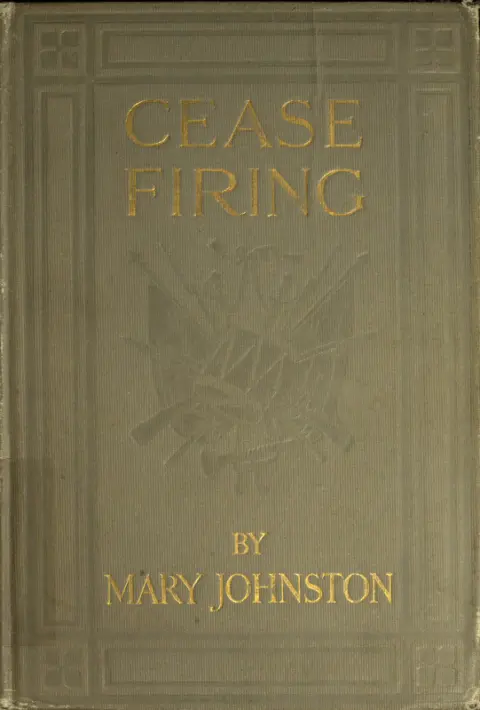
"Cease Firing" by Mary Johnston is a historical novel set during the tumultuous period of the American Civil War, likely written in the early 20th century. The book examines the harrowing experiences of soldiers and civilians amid the conflict, focusing on themes of duty, love, and loss. The narrative introduces the character Edward Cary, a private in the Confederate army, who navigates the challenges of war while grappling with personal emotions and relationships. The opening of the novel sets a richly detailed backdrop of the Mississippi River in December 1862, illustrating a landscape transformed by the ravages of war. Edward Cary's detachment, caught in the mud and rain, faces both physical exhaustion and emotional turmoil as they march towards the dangerous front lines. The text captures the camaraderie and humor among the soldiers amid the adversity, while also introducing Cary's thoughts of home and love, particularly centering on Désirée Gaillard, a strong-willed woman striving to protect her home and people from the floodwaters of both nature and war. This early section effectively establishes the mood and tension of the story, promising a blend of personal and historical narratives in the chapters to come.
Introduction adapted from the source catalogue; source summaries may be automatically generated.
Free to read · English · 175,317 words · No account needed
MAKE TIME FOR A GOOD BOOK
On by default. Untick to stop anonymous reading totals. Each page counts after 10 seconds in view. How this works.
Anonymous counting is on unless you have switched it off.
But in the early Georgian spring, pale emeralds and the purple mist of the Judas tree, July and that change were far away. The Army of Tennessee, encamped in and around Dalton, only knew that “Old Joe” was day by day putting iron in its veins and shoes upon its feet; that the commissariat was steadily improving; that the men’s cheeks were filling out; that the horses were growing less woe-begone; that camp was cheerful and clean, that officers were affable, chaplains fatherly, and surgeons benevolent; that the bands had suddenly plucked up heart; that the drills, though long, were not too long; that if the morale of the Army of Tennessee had been shaken at Missionary Ridge, it had now returned, and that it felt like cheering and did cheer “Old Joe” whenever he appeared. Men who had been wounded and were now well; men who had been on furlough, men who had somehow been just “missing,” came in steadily. Small detachments of troops appeared, also, arriving from Canton, Mississippi, and from northern Alabama. The Army of Tennessee grew to feel whole again—whole, bronzed, lean, determined, and hopeful.
From northern Alabama came in March the ——th Virginia. For the ——th Virginia there had been the siege of Vicksburg and the surrender; then the long slow weeks at Enterprise, where the Vicksburg men were reorganized; then service with Loring in northern Mississippi; then duty in Alabama. Now in the soft spring weather it came to Dalton and the Army of Tennessee.
The village was filled with soldiers. The surrounding valley was filled with soldiers. From the valley, rude hills, only partially cleared, ran back to unbroken woods. There was Crow Valley and Sugar Valley, Rocky Face Mountain, Buzzard Roost and Mill Creek Gap, and many another pioneer-named locality. And in all directions there were camps of soldiers. Sometimes these boasted tents, but oftenest they showed clusters or streets of rude, ingenious huts, brown structures of bark and bough, above, between, and behind them foliage and bloom of the immemorial forest. Officers had log cabins, very neatly kept, with curls of blue smoke coming out of the mud chimneys. Headquarters was in the village, a white house with double porch, before it headquarters flag, and always a trim coming and going. At intervals the weary and worn engines, fed by wood, rarely repaired, brought over an unmended road a train of dilapidated cars and in them forage, munitions, handfuls of troops. But in the increasing confidence at Dalton, in the general invigoration and building-up, the tonic air, the running of the sap, the smiling of the world, even the East Tennessee, Virginia, and Georgia, and the Western and Atlantic, roadbed and rolling-stock and force of men, took on, as it were, an air of lively instead of grim determination. Outside of the town was the parade ground. Drill and music, music and drill, and once or twice a great review! Here came Johnston himself, erect, military, grey-mustached, with a quiet exterior and an affectionate heart, able and proud. With him rode his staff. Staff more than worshipped Johnston; it loved him. Here, too, came the lieutenant- and major-generals—Hardee, one of the best—and Hood the “fighter,” well-liked by the President—Patrick Cleburne and Cheatham and Stewart and Carter Stevenson and Walker, and many another good leader and true. Here the artillery, reorganized, was put through manœuvres, and Joe Wheeler’s cavalry trotted across, and in the morning light the bugles blew. It was a lovely Southern spring, with soft airs, with dogwood stars and flame-coloured azalea, with the fragrance of the grape and the yellow jessamine, with the song of many a bright bird, building in the wood. The Army of Tennessee, strong at Chickamauga, fallen ill at Missionary Ridge, convalescent through the winter, was now in health again.
Your reading position is saved on this browser. Take it to another device with a library code. Reading pages adapt to text, rather than matching a printed edition.
Mary Johnston
Mary Johnston

Mary Johnston

Mary Johnston
BEHIND THE BOOK
This eBook is for the use of anyone anywhere in the United States and most other parts of the world at no cost and with almost no restrictions whatsoever. You may copy it, give it away or re-use it under the terms of the Project Gutenberg License included with this eBook or online at www.gutenberg.org. If you are not located in the United States, you will have to check the laws of the country where you are located before using this eBook. Read the source licence.
The original source file, including credits and licence, is retained by this library. Request an original-format copy at no charge. Please include the book title and Project Gutenberg identifier #52154.
KEEP YOUR CURIOSITY GOING
Cécile Tormay

Moritz Busch
Coulson Kernahan
John L. Ransom

Maurice Baring
Frances Wright