
The slave ship
Mary Johnston
THE CLASSIC COLLECTION · 1912
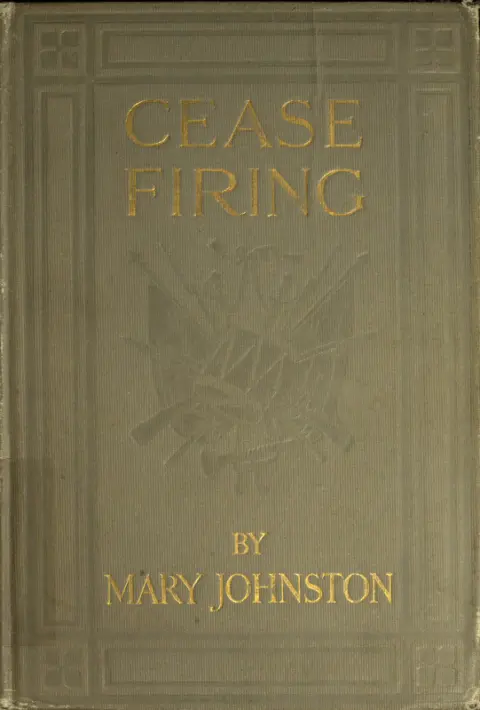
"Cease Firing" by Mary Johnston is a historical novel set during the tumultuous period of the American Civil War, likely written in the early 20th century. The book examines the harrowing experiences of soldiers and civilians amid the conflict, focusing on themes of duty, love, and loss. The narrative introduces the character Edward Cary, a private in the Confederate army, who navigates the challenges of war while grappling with personal emotions and relationships. The opening of the novel sets a richly detailed backdrop of the Mississippi River in December 1862, illustrating a landscape transformed by the ravages of war. Edward Cary's detachment, caught in the mud and rain, faces both physical exhaustion and emotional turmoil as they march towards the dangerous front lines. The text captures the camaraderie and humor among the soldiers amid the adversity, while also introducing Cary's thoughts of home and love, particularly centering on Désirée Gaillard, a strong-willed woman striving to protect her home and people from the floodwaters of both nature and war. This early section effectively establishes the mood and tension of the story, promising a blend of personal and historical narratives in the chapters to come.
Introduction adapted from the source catalogue; source summaries may be automatically generated.
Free to read · English · 175,317 words · No account needed
MAKE TIME FOR A GOOD BOOK
On by default. Untick to stop anonymous reading totals. Each page counts after 10 seconds in view. How this works.
Anonymous counting is on unless you have switched it off.
Helm was killed, heroically leading his brigade. The colonel of the Second Kentucky was killed, the colonel of the Ninth badly wounded. The Ninth lost a third of its number. “I went into the fight,” says the colonel of the Second, “with thirty officers and two hundred and seventy-two men, and came out with ten officers and one hundred and forty-six men. Both officers and men behaved gallantly.” The colonel of the Fourth was badly wounded; the Sixth had its losses; the Forty-first Alabama went in with something over three hundred men, and lost in killed twenty-seven, in wounded, one hundred and twenty. Three captains of the Second were killed at the foot of the works, and the colour-sergeant, Robert Anderson, having planted the flag a-top, died with his hands about the staff. Adams’s Louisiana brigade came to the help of Helm. Adams, severely wounded, was taken prisoner. The combat raged, bitter and bloody. There was a long, long line of well-erected breastworks, with a shorter line at right angles. The divisions of Thomas fought grimly, heroically; the brigades of Breckinridge went to the assault as heroically. Nowadays no Confederate brigade, no Confederate regiment, had full complement of muskets. They were skeleton organizations, gaunt as their units, but declining to merge because each would keep its old, heroic name. Spare as they were, they threw themselves, yelling, against the log-works. Breckinridge was tall and straight and filled with fiery courage. Vice-President, on a time, of the United States, now grey general on the chessboard, he showed here, as there, a brilliant, commanding personality. His men, proud of him, fought with his own high ardour. The withering blast came against them; they shouted and tossed it back. Now there came also against the breastworks the division of Cleburne.
Patrick Romayne Cleburne,—thirty-six years old, but with greying hair above his steel-grey eyes, Irishman of the county of Cork, one time soldier in the English army, then lawyer in the city of Helena and the State of Arkansas, then private in the Confederate army, then captain, then colonel, then brigadier, and now major-general,—Patrick Cleburne commanded a division that, also, had its personality. The division’s heart and his heart beat in unison. “He was not only a commander, but a comrade fighting with his men.” Arkansas, Tennessee, Texas, Alabama, Mississippi, and the Irish regiment adored Cleburne, and Cleburne returned their love. “To my noble division,” he wrote to a lady, “and not to myself, belong the praises for the deeds of gallantry you mention.” Cleburne’s division had its own flags, and on each was worked a device of “crossed cannon inverted,” and the name of the battle-fields over which it had been carried. “Prior to the battle of Shiloh,” says General Hardee, “a blue battle-flag had been adopted by me for this division, and when the Confederate battle-flag became the national colours, Cleburne’s division, at its urgent request, was allowed to retain its own bullet-ridden battle-flags.... Friends and foes soon learned to watch the course of the blue flag that marked where Cleburne was in the battle. Where this division defended, no odds broke its lines where it attacked, no numbers resisted its onslaught—save only once—and there is the grave of Cleburne and his heroic division.” Now at Chickamauga, Cleburne and forty-four hundred bayonets swung into battle to the support of Breckinridge. Before Cleburne, also, at short range, were breastworks, and now from these there burst a tempest of grape and canister, with an undersong of musketry. It was a fire that mowed like a scythe. Wood’s brigade had to cross an old field bordering the Chattanooga road, an old field marked by a burning house. Crossing, there burst against it, from hidden batteries to right and left, a blast as from a furnace seven times heated. Five hundred men fell here, killed and wounded. On the left Lucius Polk’s brigade came against breastworks cresting a hill covered with scrub oak. Blue and grey engaged with fury. Down poured the blast from the ridge, canister and grape and musketry. Lucius Polk’s men lay down behind the crest of a lower ridge, and kept up the fight, losing in no great time three hundred and fifty officers and men. Deshler’s brigade moved forward. A shell came shrieking, struck Deshler in the breast, and killed him. Cleburne shook his head. “Too much loss of good life!”—and withdrawing the division four hundred yards, took up a strong defensive position.
Your reading position is saved on this browser. Take it to another device with a library code. Reading pages adapt to text, rather than matching a printed edition.
Mary Johnston
Mary Johnston

Mary Johnston

Mary Johnston
BEHIND THE BOOK
This eBook is for the use of anyone anywhere in the United States and most other parts of the world at no cost and with almost no restrictions whatsoever. You may copy it, give it away or re-use it under the terms of the Project Gutenberg License included with this eBook or online at www.gutenberg.org. If you are not located in the United States, you will have to check the laws of the country where you are located before using this eBook. Read the source licence.
The original source file, including credits and licence, is retained by this library. Request an original-format copy at no charge. Please include the book title and Project Gutenberg identifier #52154.
KEEP YOUR CURIOSITY GOING
Cécile Tormay

Moritz Busch
Coulson Kernahan
John L. Ransom

Maurice Baring
Frances Wright