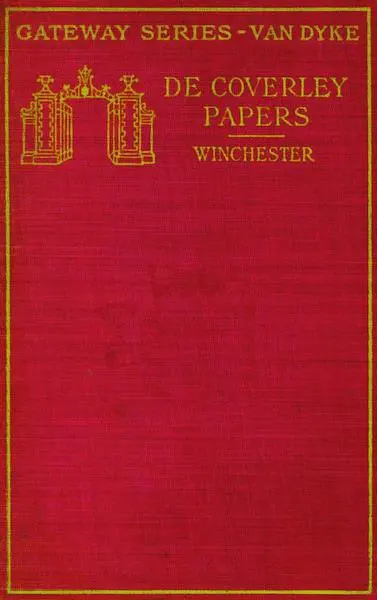
The Sir Roger de Coverley Papers
Joseph Addison & Eustace Budgell & Richard, Sir Steele
THE CLASSIC COLLECTION · 1713
"Cato: A Tragedy, in Five Acts" by Joseph Addison is a dramatic play written in the early 18th century, specifically around the early 1700s. This work belongs to the genre of tragedy and engages with themes of freedom, political integrity, and the moral struggles of its characters within the context of ancient Rome. The narrative focuses on the figure of Cato, a Roman statesman, who stands as a symbol of virtue and resistance against tyranny. The plot unfolds during a tumultuous time in Rome as Cato and his supporters grapple with the advancing power of Julius Caesar. Throughout the five acts, Cato embodies the struggle between liberty and oppression as he prepares to face Caesar’s forces in Utica. The story weaves together various subplots involving his children, Portius and Marcia, who navigate their own conflicts of love and allegiance against the backdrop of civil war, adding depth to the central theme of sacrifice for one’s country. Cato's unwavering commitment to his principles ultimately leads him to a tragic yet noble end, reflecting Addison's exploration of stoicism and virtue in the face of despair.
Introduction adapted from the source catalogue; source summaries may be automatically generated.
Free to read · English · 15,158 words · No account needed
MAKE TIME FOR A GOOD BOOK
On by default. Untick to stop anonymous reading totals. Each page counts after 10 seconds in view. How this works.
Anonymous counting is on unless you have switched it off.
Marcia. Though stern and awful to the foes of Rome,
He is all goodness, Lucia, always mild;
Compassionate and gentle to his friends;
Fill'd with domestic tenderness, the best,
The kindest father; I have ever found him
Easy and good, and bounteous to my wishes.
Lucia. 'Tis his consent alone can make us blest.
Marcia, we both are equally involved
In the same intricate, perplex'd distress.
The cruel hand of fate, that has destroy'd
Thy brother Marcus, whom we both lament----
Marcia. And ever shall lament; unhappy youth!
Lucia. Has set my soul at large, and now I stand
Loose of my vow. But who knows Cato's thoughts?
Who knows how yet he may dispose of Portius,
Or how he has determined of himself?
Marcia. Let him but live, commit the rest to Heav'n.
Enter LUCIUS.
Luc. Sweet are the slumbers of the virtuous man!
Oh, Marcia, I have seen thy godlike father!
Some power invisible supports his soul,
And bears it up in all its wonted greatness.
A kind, refreshing sleep is fall'n upon him:
I saw him stretch'd at ease; his fancy lost
In pleasing dreams; as I drew near his couch,
He smiled, and cried, "Caesar, thou canst not hurt me."
Marcia. His mind still labours with some dreadful thought.
Enter JUBA.
Jub. Lucius, the horsemen are return'd from viewing
The number, strength, and posture of our foes,
Who now encamp within a short hour's march;
On the high point of yon bright western tower,
We ken them from afar; the setting sun
Plays on their shining arms and burnish'd helmets,
And covers all the field with gleams of fire.
Luc. Marcia, 'tis time we should awake thy father.
Caesar is still disposed to give us terms,
And waits at distance, till he hears from Cato.
Enter PORTIUS.
Portius, thy looks speak somewhat of importance,
What tidings dost thou bring? Methinks, I see
Unusual gladness sparkle in thy eyes.
Por. As I was hasting to the port, where now
My father's friends, impatient for a passage,
Accuse the ling'ring winds, a sail arrived
From Pompey's son, who, through the realms of Spain,
Calls out for vengeance on his father's death,
And rouses the whole nation up to arms.
Were Cato at their head, once more might Rome
Assert her rights, and claim her liberty.
But, hark! what means that groan?----Oh, give me way,
And let me fly into my father's presence! [Exit.
Luc. Cato, amidst his slumbers, thinks on Rome,
And, in the wild disorder of his soul,
Mourns o'er his country.--Ha! a second groan--
Heav'n guard us all!
Your reading position is saved on this browser. Take it to another device with a library code. Reading pages adapt to text, rather than matching a printed edition.
Joseph Addison & Eustace Budgell & Richard, Sir Steele
BEHIND THE BOOK
This eBook is for the use of anyone anywhere in the United States and most other parts of the world at no cost and with almost no restrictions whatsoever. You may copy it, give it away or re-use it under the terms of the Project Gutenberg License included with this eBook or online at www.gutenberg.org. If you are not located in the United States, you will have to check the laws of the country where you are located before using this eBook. Read the source licence.
The original source file, including credits and licence, is retained by this library. Request an original-format copy at no charge. Please include the book title and Project Gutenberg identifier #31592.
KEEP YOUR CURIOSITY GOING
Maurice Baring
W. B. (William Butler) Yeats
Edward Martyn

John Brougham & Charlotte Brontë
Marguerite Merington
Leonid Andreyev