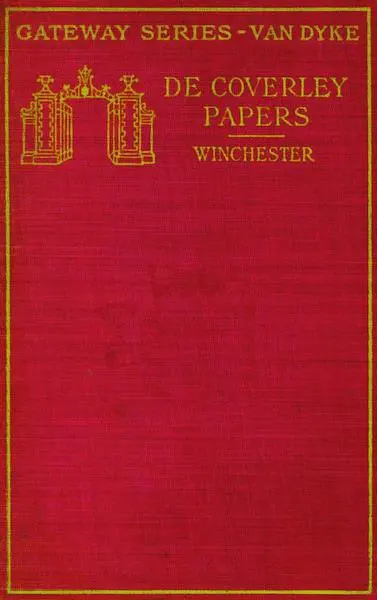
The Sir Roger de Coverley Papers
Joseph Addison & Eustace Budgell & Richard, Sir Steele
THE CLASSIC COLLECTION · 1713
"Cato: A Tragedy, in Five Acts" by Joseph Addison is a dramatic play written in the early 18th century, specifically around the early 1700s. This work belongs to the genre of tragedy and engages with themes of freedom, political integrity, and the moral struggles of its characters within the context of ancient Rome. The narrative focuses on the figure of Cato, a Roman statesman, who stands as a symbol of virtue and resistance against tyranny. The plot unfolds during a tumultuous time in Rome as Cato and his supporters grapple with the advancing power of Julius Caesar. Throughout the five acts, Cato embodies the struggle between liberty and oppression as he prepares to face Caesar’s forces in Utica. The story weaves together various subplots involving his children, Portius and Marcia, who navigate their own conflicts of love and allegiance against the backdrop of civil war, adding depth to the central theme of sacrifice for one’s country. Cato's unwavering commitment to his principles ultimately leads him to a tragic yet noble end, reflecting Addison's exploration of stoicism and virtue in the face of despair.
Introduction adapted from the source catalogue; source summaries may be automatically generated.
Free to read · English · 15,158 words · No account needed
MAKE TIME FOR A GOOD BOOK
On by default. Untick to stop anonymous reading totals. Each page counts after 10 seconds in view. How this works.
Anonymous counting is on unless you have switched it off.
Jub. What shall I answer thee?
I'd rather gain
Thy praise, O Cato! than Numidia's empire.
Enter PORTIUS.
Por. Misfortune on misfortune! grief on grief!
My brother Marcus----
Cato. Ha! what has he done?
Has he forsook his post? Has he given way?
Did he look tamely on, and let them pass?
Por. Scarce had I left my father, but I met him
Borne on the shields of his surviving soldiers,
Breathless and pale, and cover'd o'er with wounds.
Long, at the head of his few faithful friends,
He stood the shock of a whole host of foes,
Till, obstinately brave, and bent on death,
Oppress'd with multitudes, he greatly fell.
Cato. I'm satisfied.
Por. Nor did he fall, before
His sword had pierced thro' the false heart of Syphax.
Yonder he lies. I saw the hoary traitor
Grin in the pangs of death, and bite the ground.
Cato. Thanks to the gods, my boy has done his duty.
--Portius, when I am dead, be sure you place
His urn near mine.
Por. Long may they keep asunder!
Luc. Oh, Cato, arm thy soul with all its patience;
See where the corpse of thy dead son approaches!
The citizens and senators alarm'd,
Have gather'd round it, and attend it weeping.
CATO meeting the Corpse.--SENATORS attending.
Cato. Welcome, my son! Here lay him down, my friends,
Full in my sight, that I may view at leisure
The bloody corse, and count those glorious wounds.
--How beautiful is death, when earn'd by virtue!
Who would not be that youth? What pity is it,
That we can die but once, to serve our country!
--Why sits this sadness on your brows, my friends?
I should have blush'd, if Cato's house had stood
Secure, and flourish'd in a civil war.
Portius, behold thy brother, and remember,
Thy life is not thy own when Rome demands it.
Jub. Was ever man like this!
Cato. Alas, my friends,
Why mourn you thus? let not a private loss
Afflict your hearts. 'Tis Rome requires our tears,
The mistress of the world, the seat of empire,
The nurse of heroes, the delight of gods,
That humbled the proud tyrants of the earth,
And set the nations free; Rome is no more.
Oh, liberty! Oh, virtue! Oh, my country!
Jub. Behold that upright man! Rome fills his eyes With tears, that flow'd not o'er his own dear son. [Aside.
Your reading position is saved on this browser. Take it to another device with a library code. Reading pages adapt to text, rather than matching a printed edition.
Joseph Addison & Eustace Budgell & Richard, Sir Steele
BEHIND THE BOOK
This eBook is for the use of anyone anywhere in the United States and most other parts of the world at no cost and with almost no restrictions whatsoever. You may copy it, give it away or re-use it under the terms of the Project Gutenberg License included with this eBook or online at www.gutenberg.org. If you are not located in the United States, you will have to check the laws of the country where you are located before using this eBook. Read the source licence.
The original source file, including credits and licence, is retained by this library. Request an original-format copy at no charge. Please include the book title and Project Gutenberg identifier #31592.
KEEP YOUR CURIOSITY GOING
Maurice Baring
W. B. (William Butler) Yeats
Edward Martyn

John Brougham & Charlotte Brontë
Marguerite Merington
Leonid Andreyev