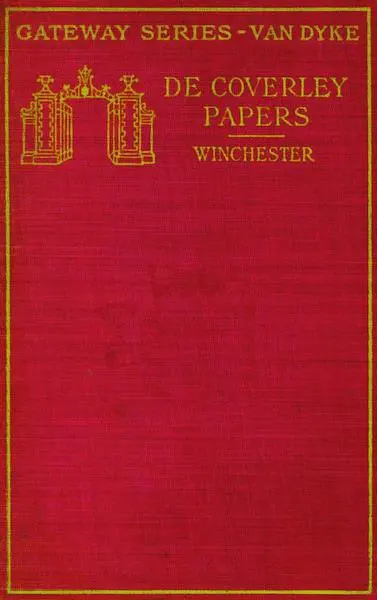
The Sir Roger de Coverley Papers
Joseph Addison & Eustace Budgell & Richard, Sir Steele
THE CLASSIC COLLECTION · 1713
"Cato: A Tragedy, in Five Acts" by Joseph Addison is a dramatic play written in the early 18th century, specifically around the early 1700s. This work belongs to the genre of tragedy and engages with themes of freedom, political integrity, and the moral struggles of its characters within the context of ancient Rome. The narrative focuses on the figure of Cato, a Roman statesman, who stands as a symbol of virtue and resistance against tyranny. The plot unfolds during a tumultuous time in Rome as Cato and his supporters grapple with the advancing power of Julius Caesar. Throughout the five acts, Cato embodies the struggle between liberty and oppression as he prepares to face Caesar’s forces in Utica. The story weaves together various subplots involving his children, Portius and Marcia, who navigate their own conflicts of love and allegiance against the backdrop of civil war, adding depth to the central theme of sacrifice for one’s country. Cato's unwavering commitment to his principles ultimately leads him to a tragic yet noble end, reflecting Addison's exploration of stoicism and virtue in the face of despair.
Introduction adapted from the source catalogue; source summaries may be automatically generated.
Free to read · English · 15,158 words · No account needed
MAKE TIME FOR A GOOD BOOK
On by default. Untick to stop anonymous reading totals. Each page counts after 10 seconds in view. How this works.
Anonymous counting is on unless you have switched it off.
Jub. If knowledge of the world makes men perfidious,
May Juba ever live in ignorance!
Syph. Go, go; you're young.
Jub. Gods, must I tamely bear
This arrogance, unanswer'd! Thou'rt a traitor,
A false old traitor.
Syph. I've gone too far. [Aside.
Jub. Cato shall know the baseness of thy soul.
Syph. I must appease this storm, or perish in it. [Aside. Young prince, behold these locks, that are grown white Beneath a helmet in your father's battles.
Jub. Those locks shall ne'er protect thy insolence.
Syph. Must one rash word, the infirmity of age, Throw down the merit of my better years? This the reward of a whole life of service!-- Curse on the boy! how steadily he hears me! [Aside.
Jub. Syphax, no more! I would not hear you talk.
Syph. Not hear me talk! what, when my faith to Juba,
My royal master's son, is call'd in question?
My prince may strike me dead, and I'll be dumb;
But whilst I live I must not hold my tongue,
And languish out old age in his displeasure.
Jub. Thou know'st the way too well into my heart.
I do believe thee loyal to thy prince.
Syph. What greater instance can I give? I've offer'd
To do an action which my soul abhors,
And gain you whom you love, at any price.
Jub. Was this thy motive? I have been too hasty.
Syph. And 'tis for this my prince has call'd me traitor.
Jub. Sure thou mistakest; I did not call thee so.
Syph. You did, indeed, my prince, you call'd me traitor. Nay, further, threatened you'd complain to Cato. Of what, my prince, would you complain to Cato? That Syphax loves you, and would sacrifice His life, nay, more, his honour, in your service?
Jub. Syphax, I know thou lovest me; but indeed
Thy zeal for Juba carried thee too far.
Honour's a sacred tie, the law of kings,
The noble mind's distinguishing perfection,
That aids and strengthens Virtue where it meets her,
And imitates her actions where she is not;
It ought not to be sported with.
Syph. Believe me, prince, you make old Syphax weep
To hear you talk--but 'tis with tears of joy.
If e'er your father's crown adorn your brows,
Numidia will be blest by Cato's lectures.
Jub. Syphax, thy hand; we'll mutually forget
The warmth of youth, and forwardness of age:
Thy prince esteems thy worth, and loves thy person.
If e'er the sceptre come into my hand,
Syphax shall stand the second in my kingdom.
Syph. Why will you overwhelm my age with kindness? My joys grow burdensome, I sha'n't support it.
Your reading position is saved on this browser. Take it to another device with a library code. Reading pages adapt to text, rather than matching a printed edition.
Joseph Addison & Eustace Budgell & Richard, Sir Steele
BEHIND THE BOOK
This eBook is for the use of anyone anywhere in the United States and most other parts of the world at no cost and with almost no restrictions whatsoever. You may copy it, give it away or re-use it under the terms of the Project Gutenberg License included with this eBook or online at www.gutenberg.org. If you are not located in the United States, you will have to check the laws of the country where you are located before using this eBook. Read the source licence.
The original source file, including credits and licence, is retained by this library. Request an original-format copy at no charge. Please include the book title and Project Gutenberg identifier #31592.
KEEP YOUR CURIOSITY GOING
Maurice Baring
W. B. (William Butler) Yeats
Edward Martyn

John Brougham & Charlotte Brontë
Marguerite Merington
Leonid Andreyev