THE CLASSIC COLLECTION✦Bulldog CarneyCLASSIC FREE BOOKS
Bulldog Carney
William Alexander Fraser
THE CLASSIC COLLECTION · 1922
"Caste" by William Alexander Fraser is a historical novel written in the early 20th century. The book centers around the political and social tensions in India during the time of colonial rule, particularly focusing on the intrigues between local rulers and their relationships with the British. Among the key figures are Nana Sahib—adopted son of the Peshwa and a Brahmin who secretly harbors anti-British sentiments—and Captain Barlow, who is entangled in both personal and political conflicts, exploring themes of betrayal, loyalty, and the complexities of caste. The opening portion of the novel establishes a tense political atmosphere, where the Mahratta rulers Sindhia, Holkar, and Bhonsla plot against the British and the Resident Hodson at Poona remains suspicious of Nana Sahib, whose outward charm hides a deep animosity towards colonial powers. Barlow is introduced as a pivotal character, tasked with navigating these treacherous waters while also romantically involved with Hodson's daughter, Elizabeth. Meanwhile, plots are set into motion involving the ambitious Dandhu Panth, and the tension escalates as simmering cultural divides, personal vendettas, and the looming threat of violent rebellion shape the narrative. As these factions jockey for power and control, the intermingling of personal relationships and political machinations begins to unravel, hinting at the chaos to come.
Introduction adapted from the source catalogue; source summaries may be automatically generated.
Free to read · English · 67,113 words · No account needed
MAKE TIME FOR A GOOD BOOK
On by default. Untick to stop anonymous reading totals. Each page counts after 10 seconds in view. How this works.
Anonymous counting is on unless you have switched it off.
Kassim passed an order and Hunsa was brought, his evil eyes turning from face to face with the restless query of a caged leopard.
"There is no paper, Commander Sahib," the jamadar said, returning from his search of the iron-box.
"There was none such," Kassim growled; "it was but a Patan lie; the message is yonder," and he pointed to the smear of blood upon the marble floor.
Then he turned to Bootea: "Now, woman, speak what is in thy mind, for this is an affair of action."
"Commander Sahib," Bootea began, "yonder man,"--and she pointed a slim hand toward Barlow--"is not an Afghan, he is a Sahib."
This startling announcement filled the room with cries of astonishment and anger; tulwars flashed. Barlow shivered; not because of the impending danger, for he had accepted the roll of the dice, but at the thought that Bootea was betraying him, that all she had said and done before was nothing--a lie, that she was an accomplice in this murder of the Chief, and was now giving the Pindaris the final convincing proof, the reason.
To deny the revelation was useless; they would torture him, and he was to die anyway; better to die claiming to be a messenger from the British rather than as one sent to murder the Chief.
Kassim bellowed an order subduing the tumult; then he asked: "What art thou, a Patan, or as the woman says, an Englay?"
"I am a Sahib," Barlow answered; "a Captain in the British service, and came to your Chief with a written message of friendship."
Kassim pointed to the blood on the floor: "Thou wert a good messenger, infidel; thou hast slain a follower of the Prophet."
But Bootea raised a slim hand, and, her voice trembling with intensity, cried: "Commander, Amir Khan was not slain with the dagger, he was killed by the towel. Look you at his throat and you will see the mark."
"Bismillah!" came in a cry of astonishment from the Commander's throat, and the marble walls of the Surya-Mahal (room of audience) echoed gasps and curses. Kassim himself had knelt by the dead Chief, and now rising, said: "By Allah! it is true. That dog--" his finger was thrusting like a dagger at Barlow.
But Bootea's clear voice hushed the rising clamour: "No, Commander, the sahibs know not the thug trick of the roomal, and few thugs could have overcome the Chief."
"Who then killed him--speak quick, and with the truth," Kassim
commanded.
He was interrupted by one of Hunsa's guards, crying: "Here, where go you--you had not leave!" And Hunsa, who had turned to slip away, was jerked back to where he had stood.
Your reading position is saved on this browser. Take it to another device with a library code. Reading pages adapt to text, rather than matching a printed edition.
William Alexander Fraser
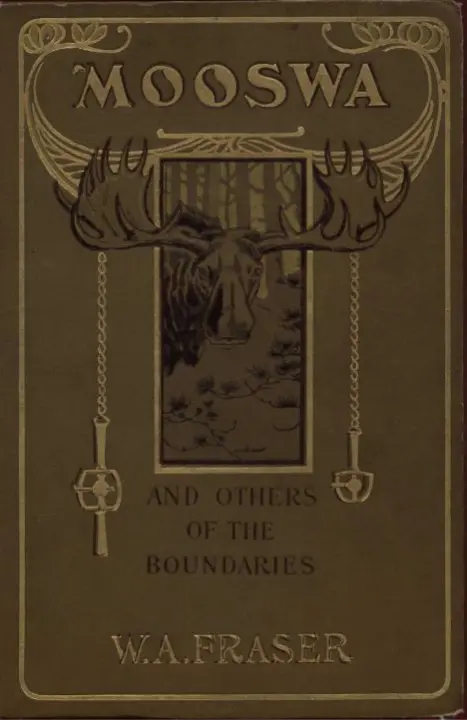
William Alexander Fraser
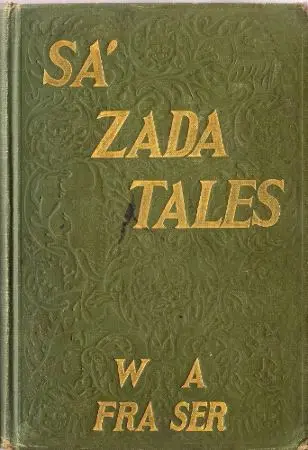
William Alexander Fraser
William Alexander Fraser
BEHIND THE BOOK
This eBook is for the use of anyone anywhere in the United States and most other parts of the world at no cost and with almost no restrictions whatsoever. You may copy it, give it away or re-use it under the terms of the Project Gutenberg License included with this eBook or online at www.gutenberg.org. If you are not located in the United States, you will have to check the laws of the country where you are located before using this eBook. Read the source licence.
The original source file, including credits and licence, is retained by this library. Request an original-format copy at no charge. Please include the book title and Project Gutenberg identifier #16752.
KEEP YOUR CURIOSITY GOING
Cécile Tormay

Moritz Busch
Coulson Kernahan
John L. Ransom

Maurice Baring
Frances Wright