THE CLASSIC COLLECTION✦Bulldog CarneyCLASSIC FREE BOOKS
Bulldog Carney
William Alexander Fraser
THE CLASSIC COLLECTION · 1922
"Caste" by William Alexander Fraser is a historical novel written in the early 20th century. The book centers around the political and social tensions in India during the time of colonial rule, particularly focusing on the intrigues between local rulers and their relationships with the British. Among the key figures are Nana Sahib—adopted son of the Peshwa and a Brahmin who secretly harbors anti-British sentiments—and Captain Barlow, who is entangled in both personal and political conflicts, exploring themes of betrayal, loyalty, and the complexities of caste. The opening portion of the novel establishes a tense political atmosphere, where the Mahratta rulers Sindhia, Holkar, and Bhonsla plot against the British and the Resident Hodson at Poona remains suspicious of Nana Sahib, whose outward charm hides a deep animosity towards colonial powers. Barlow is introduced as a pivotal character, tasked with navigating these treacherous waters while also romantically involved with Hodson's daughter, Elizabeth. Meanwhile, plots are set into motion involving the ambitious Dandhu Panth, and the tension escalates as simmering cultural divides, personal vendettas, and the looming threat of violent rebellion shape the narrative. As these factions jockey for power and control, the intermingling of personal relationships and political machinations begins to unravel, hinting at the chaos to come.
Introduction adapted from the source catalogue; source summaries may be automatically generated.
Free to read · English · 67,113 words · No account needed
MAKE TIME FOR A GOOD BOOK
On by default. Untick to stop anonymous reading totals. Each page counts after 10 seconds in view. How this works.
Anonymous counting is on unless you have switched it off.
Barlow hesitated, a slight hope that might save his own life would be to declare himself as a Sahib, and his mission; but he felt sure that the Chief had been murdered because of this very thing, that somebody, an agent of Nana Sahib, had waited hidden, had killed the Chief and taken the paper. To speak of it would be to start a rumour that would run across India that the British had negotiated with the Pindaris, and if the paper weren't found there--which it wouldn't be--he wouldn't be believed. Better to accept the roll of the dice as they lay, that he had lost, and die as an Afghan rather than as an Englishman, a spy who had killed their Chief.
"Speak, Patan," Kassim commanded; "thou dwellest overlong upon some
lie."
"There was a mission," Barlow answered; "it was from my own people, the
people of Sind."
"Of Sindhia?"
"No; from the land of Sind, Afghanistan. We ride not with the
Mahrattas; they are infidels, while we be followers of the true
Prophet."
"Thou art a fair speaker, Afghan. And was there a sealed message?"
"There was, Commander Sahib."
"Where is it now?"
"I know not. It was left with Amir Khan."
There was a hush of three seconds. Then Kassim, whose eye had searched the room, saw the iron box. "This has a bearing upon matters," he declared; "this affair of a written message. Open the box and see if it is within," he commanded a Pindari.
"How now, woman," for the Gulab had stepped forward; "what dost thou here--ah! there was talk of a message from the Chief. It might be, it might be, because,"--his leonine face, full whiskered, the face of a wild rider, a warrior, softened as he looked at the slight figure,--"our noble Chief had spoken soft words of thee, and passed the order that thou wert Begum, that whatsoever thou desired was to be."
"Commander," Bootea said, and her voice was like her eyes, trembling, vibrant, "let me look upon the face of Amir Khan; then there are things to be said that will avenge his death in the sight of Allah."
Kassim hesitated. Then he said; "It matters not--we have the killer." And reverently, with his own hands, he turned the Chief on his back, saying, softly, "In the name of Allah, thou restest better thus."
The Gulab, kneeling, pushed back the black beard with her hand, and they thought that she was making oath upon the beard of the slain man. Then she rose to her feet, and said: "There is one without, Hunsa, bring him here, and see that there is no weapon upon him."
Your reading position is saved on this browser. Take it to another device with a library code. Reading pages adapt to text, rather than matching a printed edition.
William Alexander Fraser
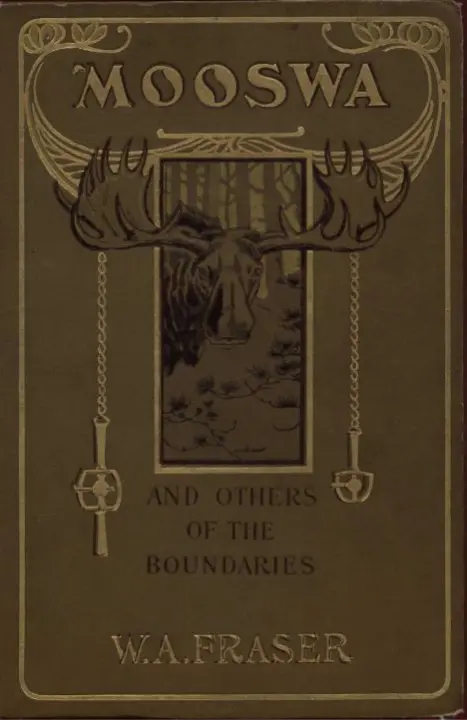
William Alexander Fraser
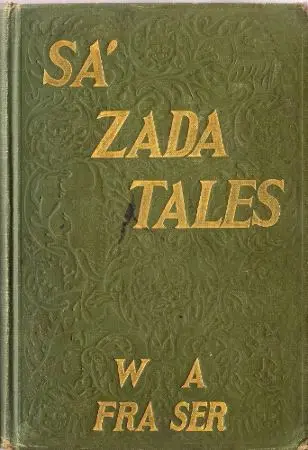
William Alexander Fraser
William Alexander Fraser
BEHIND THE BOOK
This eBook is for the use of anyone anywhere in the United States and most other parts of the world at no cost and with almost no restrictions whatsoever. You may copy it, give it away or re-use it under the terms of the Project Gutenberg License included with this eBook or online at www.gutenberg.org. If you are not located in the United States, you will have to check the laws of the country where you are located before using this eBook. Read the source licence.
The original source file, including credits and licence, is retained by this library. Request an original-format copy at no charge. Please include the book title and Project Gutenberg identifier #16752.
KEEP YOUR CURIOSITY GOING
Cécile Tormay

Moritz Busch
Coulson Kernahan
John L. Ransom

Maurice Baring
Frances Wright