THE CLASSIC COLLECTION✦The haunts of menCLASSIC FREE BOOKS
The haunts of men
Robert W. (Robert William) Chambers
THE CLASSIC COLLECTION · 1901
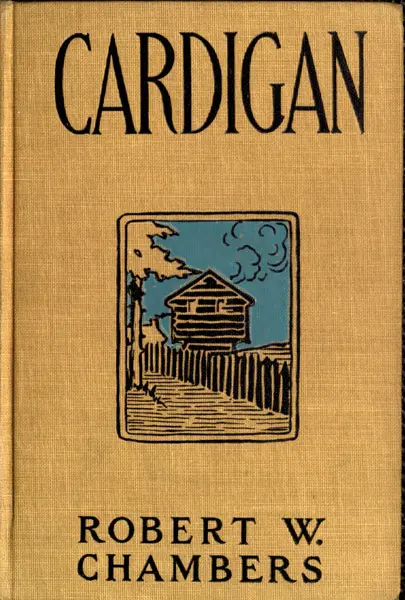
"Cardigan" by Robert W. Chambers is a historical novel written in the late 19th century. The story is set in the colonial period of America, specifically around the year 1774, and follows the life and adventures of a young boy named Michael Cardigan. As he navigates his coming of age in a world filled with conflict and early American pioneer life, themes of loyalty, ambition, and personal identity unfold throughout the narrative. At the start of the novel, Michael is portrayed as a rebellious and willful boy at the cusp of adulthood, feeling tethered by the constraints of his schooling and the expectations set by his guardian, Sir William Johnson. The opening chapters provide a glimpse into Michael's struggles with authority, his desire for independence, and his yearning for escapism through fishing. His relationship with Silver Heels, a spirited girl who is equally determined, is central to the narrative, illustrating childhood conflicts and camaraderie. The arrival of a new schoolmaster and the backdrop of impending conflicts add tension and anticipation for Michael's journey towards self-discovery and historical significance, setting the stage for a tale rich with adventure and character development.
Introduction adapted from the source catalogue; source summaries may be automatically generated.
Free to read · English · 182,420 words · No account needed
MAKE TIME FOR A GOOD BOOK
On by default. Untick to stop anonymous reading totals. Each page counts after 10 seconds in view. How this works.
Anonymous counting is on unless you have switched it off.
"Add the whole Six Nations," suggested Lord Dunmore, leering at Sir William; "come, now! curse me blind! but we shall have the whole Six Nations, and that filthy little Red Jacket to boot."
"My Lord," replied Sir William, "if it lay with your Lordship you would have Red Jacket against you."
This blunt rebuke almost sobered Lord Dunmore for a moment, and he asked Sir William what he meant.
"I mean," said the Baronet, "that you mocked this powerful chief, Red Jacket, at my table to-night, and he knew it. That is not the way to gain allies, my Lord."
"The drunken, guzzling son of a slut!" bawled Lord Dunmore, "d'ye think I care what the bandy-legged little beast thinks?"
"I only know," replied Sir William, curtly, "that if your Lordship has so conducted in Virginia, the King cannot look for any Indian support in that colony."
"Oh, choke me, Sir William, but that's too bad now!--pinch me blue if it isn't!" protested Lord Dunmore in a pet. Then a subtle smirk settled on his waxen cast of a face and he winked his weak eyes at Walter Butler, a proceeding observed by me and by Sir William.
Not for a moment now did I doubt that Lord Dunmore had set Colonel Cresap to drive the Cayugas into a hatred for the colonies, nor did I doubt but that Walter Butler knew of this plan, perhaps had even connived at it.
Sir William, too, had come to some quick conclusion, for I saw the crease deepen around his jaws, and his steady eyes strike fire. But he said nothing to interrupt Lord Dunmore, who had now launched into a gust of incoherent words and protestations and hiccoughs, to which all listened sneeringly until his voice ended with a hollow buzz inside his wine-glass.
There came a silence, broken by the clear sarcastic tones of Sir
William.
"I beg permission to submit to Governor Tryon the opinion of a country Baronet--for what that opinion may be worth."
"With pleasure," said Governor Tryon, cordially, looking up from the plate of nuts he was picking.
"And this is my opinion," continued Sir William, "that, firstly, the disaffected classes in Boston and New York will not care a fig for our conference here, nor for our show of militia; that, secondly, if they should once entertain a suspicion that England, in the event of war, proposes to employ savages as allies to subdue rebellion, we would have to-morrow the thirteen colonies swarming like thirteen hives to sting us all to death--ay--and there would not be an Indian left twixt here and the Ohio!"
Your reading position is saved on this browser. Take it to another device with a library code. Reading pages adapt to text, rather than matching a printed edition.
Robert W. (Robert William) Chambers
Robert W. (Robert William) Chambers

Robert W. (Robert William) Chambers
Robert W. (Robert William) Chambers
BEHIND THE BOOK
This eBook is for the use of anyone anywhere in the United States and most other parts of the world at no cost and with almost no restrictions whatsoever. You may copy it, give it away or re-use it under the terms of the Project Gutenberg License included with this eBook or online at www.gutenberg.org. If you are not located in the United States, you will have to check the laws of the country where you are located before using this eBook. Read the source licence.
The original source file, including credits and licence, is retained by this library. Request an original-format copy at no charge. Please include the book title and Project Gutenberg identifier #38958.
KEEP YOUR CURIOSITY GOING
Cécile Tormay

Moritz Busch
Coulson Kernahan
John L. Ransom

Maurice Baring
Frances Wright