THE CLASSIC COLLECTION✦The haunts of menCLASSIC FREE BOOKS
The haunts of men
Robert W. (Robert William) Chambers
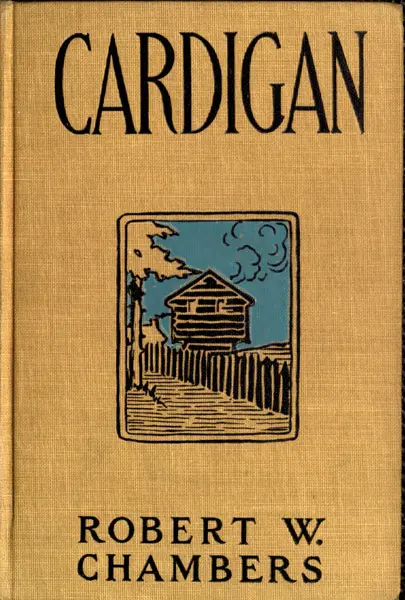
THE CLASSIC COLLECTION · 1901
"Cardigan" by Robert W. Chambers is a historical novel written in the late 19th century. The story is set in the colonial period of America, specifically around the year 1774, and follows the life and adventures of a young boy named Michael Cardigan. As he navigates his coming of age in a world filled with conflict and early American pioneer life, themes of loyalty, ambition, and personal identity unfold throughout the narrative. At the start of the novel, Michael is portrayed as a rebellious and willful boy at the cusp of adulthood, feeling tethered by the constraints of his schooling and the expectations set by his guardian, Sir William Johnson. The opening chapters provide a glimpse into Michael's struggles with authority, his desire for independence, and his yearning for escapism through fishing. His relationship with Silver Heels, a spirited girl who is equally determined, is central to the narrative, illustrating childhood conflicts and camaraderie. The arrival of a new schoolmaster and the backdrop of impending conflicts add tension and anticipation for Michael's journey towards self-discovery and historical significance, setting the stage for a tale rich with adventure and character development.
Introduction adapted from the source catalogue; source summaries may be automatically generated.
Free to read · English · 182,420 words · No account needed
MAKE TIME FOR A GOOD BOOK
On by default. Untick to stop anonymous reading totals. Each page counts after 10 seconds in view. How this works.
Anonymous counting is on unless you have switched it off.
It was not yet dawn, though a few birds sang in the darkness around us, as Sir William and I set off for the Cayuga's lodge, which stood beyond the town on a rocky knoll, partly cleared of trees.
The air was cold and without fragrance, for in our country it is the sun that draws the earth's sweetness in early spring.
The stars lighted us through the streets of Johnstown, empty of life save for the muffled watchman dozing in his own lanthorn glow, who roused as he heard us, and shook his damp cloak. And far behind us we heard his sing-song:
"Four o'clock! A cold, fair morn, and all well!"
One inn there was, where the dim bush swung wet and sleek as a clinging bat, and where stale embers of the night's revelry still flickered; for, behind the lighted windows, men were singing, and we heard them as we passed:
"Oh, we're all dry
Wi' drinking on't--
We're all dry
Wi' drinking on't.
The piper kissed
The fiddler's wife;
And I can't sleep
For thinking on't!"
"Starbuck's Inn," muttered Sir William, grimly. "He's a Boston man;
they drink no tea there."
And, as we strode on in the darkness, behind us, from the lighted hostelry, came a husky echo of that foolish catch:
"Diddle diddle dumpling,
My son John--"
So I knew that my buckskin birds were still chirping among us.
But now we were on the stony way and the town sank below us as we climbed towards Quider's lodge, knee-deep in dewy thistles.
The spark of a tiny council fire guided us. Coming nearer we smelled black birch burning, and we saw the long thread of aromatic smoke mounting steadily to the paling stars.
We passed a young basswood-tree from which hung a flint, symbol of the Mohawks. From another chestnut-sapling dangled the symbol of the Cayugas, a pipe. All at once we saw Quider, standing motionless before his lodge.
Sir William drew flint and tinder from his pouch, and sent a spark flying into the dry tobacco of his pipe. He drew it to a long glow, twice, and passed it, through the smoke of the fire, to Quider.
I saw the Cayuga's face then. It was a strange red, yet it was not painted. He seemed ill; his eyes glittered like the eyes of a lynx.
And now, as the Indian sank down into his blanket before the fire, Sir William produced a belt from the folds of his cloak and held it out. The belt was black with two figures woven in white on it. The hands of the figures were clasped together. It was a chain-belt.
Your reading position is saved on this browser. Take it to another device with a library code. Reading pages adapt to text, rather than matching a printed edition.
Robert W. (Robert William) Chambers
Robert W. (Robert William) Chambers

Robert W. (Robert William) Chambers
Robert W. (Robert William) Chambers
BEHIND THE BOOK
This eBook is for the use of anyone anywhere in the United States and most other parts of the world at no cost and with almost no restrictions whatsoever. You may copy it, give it away or re-use it under the terms of the Project Gutenberg License included with this eBook or online at www.gutenberg.org. If you are not located in the United States, you will have to check the laws of the country where you are located before using this eBook. Read the source licence.
The original source file, including credits and licence, is retained by this library. Request an original-format copy at no charge. Please include the book title and Project Gutenberg identifier #38958.
KEEP YOUR CURIOSITY GOING
Cécile Tormay

Moritz Busch
Coulson Kernahan
John L. Ransom

Maurice Baring
Frances Wright