THE CLASSIC COLLECTION✦The haunts of menCLASSIC FREE BOOKS
The haunts of men
Robert W. (Robert William) Chambers
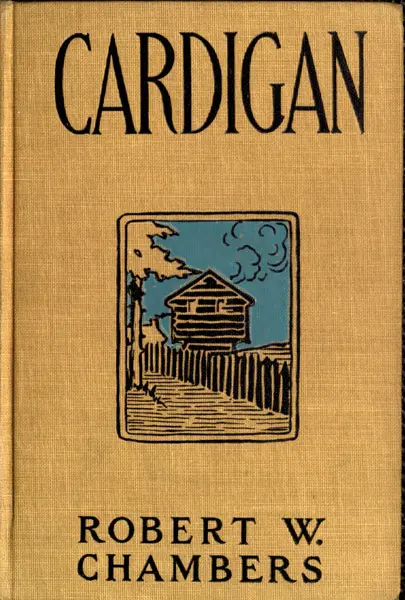
THE CLASSIC COLLECTION · 1901
"Cardigan" by Robert W. Chambers is a historical novel written in the late 19th century. The story is set in the colonial period of America, specifically around the year 1774, and follows the life and adventures of a young boy named Michael Cardigan. As he navigates his coming of age in a world filled with conflict and early American pioneer life, themes of loyalty, ambition, and personal identity unfold throughout the narrative. At the start of the novel, Michael is portrayed as a rebellious and willful boy at the cusp of adulthood, feeling tethered by the constraints of his schooling and the expectations set by his guardian, Sir William Johnson. The opening chapters provide a glimpse into Michael's struggles with authority, his desire for independence, and his yearning for escapism through fishing. His relationship with Silver Heels, a spirited girl who is equally determined, is central to the narrative, illustrating childhood conflicts and camaraderie. The arrival of a new schoolmaster and the backdrop of impending conflicts add tension and anticipation for Michael's journey towards self-discovery and historical significance, setting the stage for a tale rich with adventure and character development.
Introduction adapted from the source catalogue; source summaries may be automatically generated.
Free to read · English · 182,420 words · No account needed
MAKE TIME FOR A GOOD BOOK
On by default. Untick to stop anonymous reading totals. Each page counts after 10 seconds in view. How this works.
Anonymous counting is on unless you have switched it off.
Had he not told me, sadly, that he could not speak of this plan even to his own son, Sir John Johnson, lest his son, placing loyalty to the King before obedience to his father, should thwart Sir William, and even aid Colonel Cresap to anger the Cayugas, and so injure the cause of the colonies?
He told me, too, that he could not confide in Mr. Butler or in his father, Colonel John Butler; neither dared he trust his sons-in-law, Colonel Claus or Colonel Guy Johnson, although they served as his deputies in Indian affairs.
All of these gentlemen were, first of all, loyal to our King, and all of them, clearly foreseeing a struggle between King and colonies, would not raise a finger to prevent Colonel Cresap from driving the Six Nations as allies into the King's arms.
"What I am striving for," said Sir William to me, again and again, "is to so conduct that these Indians on our frontiers shall take neither one side nor the other, but remain passive while the storm rages. To work openly for this is not possible. If it were possible to work openly, and if Quider should die, I would send such a message to my Lord Dunmore of Virginia as would make his bloodless ears burn! And they may burn yet!"
At my expression of horrified surprise Sir William hesitated, then struck his fist into the open palm of his left hand.
"Why should you not know it?" he cried. "You are the only one of all I
can trust!"
He paused, eying me intently.
"Can I not trust you, dear lad?" he said, gently.
"Yes, sir," I cried, in an overwhelming rush of pity and love. "You are first in my heart, sir--and then the King."
Sir William smiled and thought awhile. Then he continued:
"You are to know, Michael, that Lord Dunmore, Governor of Virginia, is, in my opinion, at the bottom of this. He it is who, foreseeing the future, as do all thinking men, has sent the deluded Cresap to pick a quarrel with my Cayugas, knowing that he is making future allies for England. It is vile! It is a monstrous thing! It is not loyalty, it is treason!"
He struck his pinched forehead and strode up and down.
"Can Dunmore know what he is doing? God! The horror of it!--the horror of border war! Has Dunmore ever seen how savages fight? Has he seen raw scalps ripped from babies? Has he seen naked prisoners writhing at the stake, drenched in blood, eyeless sockets raised to the skies?"
Your reading position is saved on this browser. Take it to another device with a library code. Reading pages adapt to text, rather than matching a printed edition.
Robert W. (Robert William) Chambers
Robert W. (Robert William) Chambers

Robert W. (Robert William) Chambers
Robert W. (Robert William) Chambers
BEHIND THE BOOK
This eBook is for the use of anyone anywhere in the United States and most other parts of the world at no cost and with almost no restrictions whatsoever. You may copy it, give it away or re-use it under the terms of the Project Gutenberg License included with this eBook or online at www.gutenberg.org. If you are not located in the United States, you will have to check the laws of the country where you are located before using this eBook. Read the source licence.
The original source file, including credits and licence, is retained by this library. Request an original-format copy at no charge. Please include the book title and Project Gutenberg identifier #38958.
KEEP YOUR CURIOSITY GOING
Cécile Tormay

Moritz Busch
Coulson Kernahan
John L. Ransom

Maurice Baring
Frances Wright