THE CLASSIC COLLECTION✦The haunts of menCLASSIC FREE BOOKS
The haunts of men
Robert W. (Robert William) Chambers
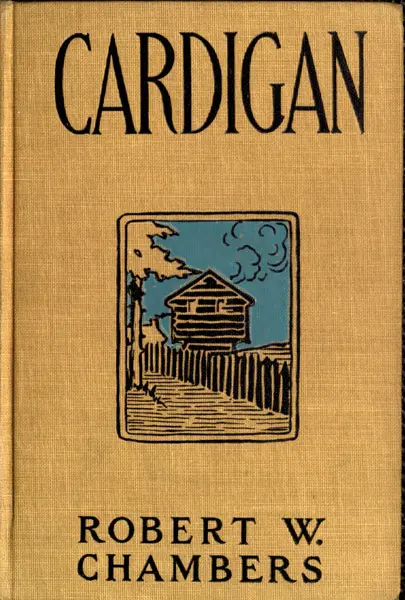
THE CLASSIC COLLECTION · 1901
"Cardigan" by Robert W. Chambers is a historical novel written in the late 19th century. The story is set in the colonial period of America, specifically around the year 1774, and follows the life and adventures of a young boy named Michael Cardigan. As he navigates his coming of age in a world filled with conflict and early American pioneer life, themes of loyalty, ambition, and personal identity unfold throughout the narrative. At the start of the novel, Michael is portrayed as a rebellious and willful boy at the cusp of adulthood, feeling tethered by the constraints of his schooling and the expectations set by his guardian, Sir William Johnson. The opening chapters provide a glimpse into Michael's struggles with authority, his desire for independence, and his yearning for escapism through fishing. His relationship with Silver Heels, a spirited girl who is equally determined, is central to the narrative, illustrating childhood conflicts and camaraderie. The arrival of a new schoolmaster and the backdrop of impending conflicts add tension and anticipation for Michael's journey towards self-discovery and historical significance, setting the stage for a tale rich with adventure and character development.
Introduction adapted from the source catalogue; source summaries may be automatically generated.
Free to read · English · 182,420 words · No account needed
MAKE TIME FOR A GOOD BOOK
On by default. Untick to stop anonymous reading totals. Each page counts after 10 seconds in view. How this works.
Anonymous counting is on unless you have switched it off.
All Sir William's hopes of averting war were now centred in the stricken Cayuga. He and I haunted the neighbourhood of Quider's lodge, staring for hours at the silent hut in the clearing, or, rambling by starlight, we watched the candle burning in the lodge door as though it were the flame of life, now flaring, now sinking in its socket.
On such rambles he seldom spoke, but sometimes he leaned on my shoulder as we walked, and his very hand seemed burdened with the weight of his cares.
Once, however, when from the sentinels we learned that Quider might live, Sir William appeared almost gay, and we walked to a little hill, all silvery in the light of the young moon, and rested on a rock.
"Black Care rides behind the horseman, but--I have dismounted," he said, lightly. "Quider will live, I warrant you, barring those arrows of outrageous fortune of which you have doubtless heard, Michael."
"What may those same arrows be marked with?" I asked, innocently.
"With the totem of Kismet, my boy."
I did not know that totem, and said so, whereupon he fell a-laughing and pinched my cheek, saying, "Are there no people in the world but the Six Nations of the Long House?"
I answered cautiously: "Oe-yen-de-hit Sar-a-ta-ke," meaning, "there are favourable signs (of people) where the tracks of (their) heels may be seen. I have not travelled; there may be other tracks in the world."
"Ten-ca-re Ne-go-ni," replied Sir William, gravely. "He scatters His
people everywhere, Michael. The world lies outside of the Long
House!"
"I shall say to the world I come from Ko-lan-e-ka, and that I am kin to you, sir," said I, dropping easily into that intimate dialect we children often used together, or in the family circle.
"The world will say: 'He comes from Da-o-sa-no-geh, the place without a name; let him return to The-ya-o-guin, the Gray-Haired, who sent him out so ignorant.'"
"Do you say that, sir, because I am ignorant of the poets?" I asked.
"Even women know the poets in these days," he said, smiling. "You would not wish to know less than your own wife, would you?"
"My wife!" I exclaimed, scornfully.
"Why, yes," said Sir William, much amused; "you will marry one day, I
suppose."
After a moment I said:
"Is Silver Heels going to marry Mr. Butler?"
"I hope so," replied Sir William, a little surprised. "Mr. Butler is a gentleman of culture and wealth. Felicity has no large dower, and I can leave but little if I provide for all my children. I deem it most fortunate that Captain Butler has spoken to me."
Your reading position is saved on this browser. Take it to another device with a library code. Reading pages adapt to text, rather than matching a printed edition.
Robert W. (Robert William) Chambers
Robert W. (Robert William) Chambers

Robert W. (Robert William) Chambers
Robert W. (Robert William) Chambers
BEHIND THE BOOK
This eBook is for the use of anyone anywhere in the United States and most other parts of the world at no cost and with almost no restrictions whatsoever. You may copy it, give it away or re-use it under the terms of the Project Gutenberg License included with this eBook or online at www.gutenberg.org. If you are not located in the United States, you will have to check the laws of the country where you are located before using this eBook. Read the source licence.
The original source file, including credits and licence, is retained by this library. Request an original-format copy at no charge. Please include the book title and Project Gutenberg identifier #38958.
KEEP YOUR CURIOSITY GOING
Cécile Tormay

Moritz Busch
Coulson Kernahan
John L. Ransom

Maurice Baring
Frances Wright