THE CLASSIC COLLECTION✦The haunts of menCLASSIC FREE BOOKS
The haunts of men
Robert W. (Robert William) Chambers
THE CLASSIC COLLECTION · 1901
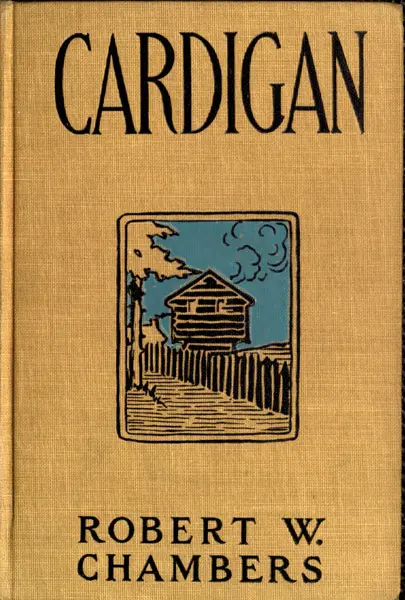
"Cardigan" by Robert W. Chambers is a historical novel written in the late 19th century. The story is set in the colonial period of America, specifically around the year 1774, and follows the life and adventures of a young boy named Michael Cardigan. As he navigates his coming of age in a world filled with conflict and early American pioneer life, themes of loyalty, ambition, and personal identity unfold throughout the narrative. At the start of the novel, Michael is portrayed as a rebellious and willful boy at the cusp of adulthood, feeling tethered by the constraints of his schooling and the expectations set by his guardian, Sir William Johnson. The opening chapters provide a glimpse into Michael's struggles with authority, his desire for independence, and his yearning for escapism through fishing. His relationship with Silver Heels, a spirited girl who is equally determined, is central to the narrative, illustrating childhood conflicts and camaraderie. The arrival of a new schoolmaster and the backdrop of impending conflicts add tension and anticipation for Michael's journey towards self-discovery and historical significance, setting the stage for a tale rich with adventure and character development.
Introduction adapted from the source catalogue; source summaries may be automatically generated.
Free to read · English · 182,420 words · No account needed
MAKE TIME FOR A GOOD BOOK
On by default. Untick to stop anonymous reading totals. Each page counts after 10 seconds in view. How this works.
Anonymous counting is on unless you have switched it off.
When the Acton men returned with their prisoners, the soldier whom I had struck was sitting up in the swamp-grass, rubbing his powdered head and staring wildly at his sweating and anxious comrades.
"That's the fellow who murdered Harrington!" said one of the militia, and drew up his rifle with a jerk.
"Use these prisoners well, or I'll knock your head off!" roared Mount,
striking up the rifle.
An officer of Minute Men came up; his eyes were red as though he had
been weeping.
"They butchered his brother behind the red barn yonder," whispered a lean yokel beside me. "He'll hang 'em, that's what he'll do."
"That's it! Hang 'em!" bawled out a red-headed lout, flourishing a
pitchfork. "Hang the damn--!"
"Put that fool under arrest," said the officer, sharply. Some Acton Minute Men seized the lout and hustled him off; others formed a guard and conducted the big, perspiring, red-coated soldiers towards "Buckman's Tavern."
"You will treat them humanely?" I asked, as the officer passed me.
He gave me a blank glance; the tears again had filled his eyes.
"Certainly," he said, shortly; "I am not a butcher."
I gave him the officer's salute; he returned it absently, and walked on, with drawn sword and head sunk on his tarnished brass gorget.
A restless, silent crowd had gathered at "Buckman's Tavern," where two dead Minute Men lay on the porch, stiffening in their blood.
The sun had not yet risen, but all the east was turning yellow; great clouds of red-winged blackbirds rose and settled in the swampy meadows, and filled the air with their dry chirking; robins sang ecstatically.
Back along the muddy Bedford Road trudged the remnants of the scattered Lexington company of militia; the little barelegged drummer posted himself in front of the Meeting-house once more, and drummed the assembly. Men seemed to spring from the soil; every bramble-patch was swarming now; they came hurrying across the distant fields singly, in twos and threes, in scores.
Far away in the vague dawn bells rang out in distant villages, and I heard the faint sound of guns and the throbbing of drums. I passed the Lexington company re-forming on the trodden village green. Their captain, Parker, called out to me: "Forest-runner! We need your rifle! Will you fight with us?"
"I cannot," I said, and ran towards the post-chaise, rifle on
shoulder.
The women and children of Lexington were gathered around it. I saw at a glance that Silver Heels had given her seat to a frightened old woman, and that other women were thrusting their children into the vehicle, imploring Mount and Foxcroft to save them from the British.
Your reading position is saved on this browser. Take it to another device with a library code. Reading pages adapt to text, rather than matching a printed edition.
Robert W. (Robert William) Chambers
Robert W. (Robert William) Chambers

Robert W. (Robert William) Chambers
Robert W. (Robert William) Chambers
BEHIND THE BOOK
This eBook is for the use of anyone anywhere in the United States and most other parts of the world at no cost and with almost no restrictions whatsoever. You may copy it, give it away or re-use it under the terms of the Project Gutenberg License included with this eBook or online at www.gutenberg.org. If you are not located in the United States, you will have to check the laws of the country where you are located before using this eBook. Read the source licence.
The original source file, including credits and licence, is retained by this library. Request an original-format copy at no charge. Please include the book title and Project Gutenberg identifier #38958.
KEEP YOUR CURIOSITY GOING
Cécile Tormay

Moritz Busch
Coulson Kernahan
John L. Ransom

Maurice Baring
Frances Wright