THE CLASSIC COLLECTION✦The haunts of menCLASSIC FREE BOOKS
The haunts of men
Robert W. (Robert William) Chambers
THE CLASSIC COLLECTION · 1901
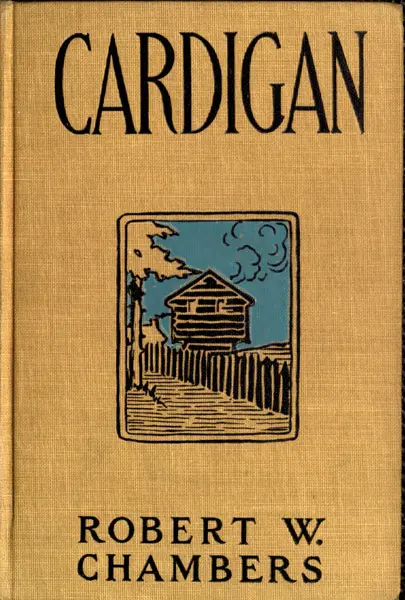
"Cardigan" by Robert W. Chambers is a historical novel written in the late 19th century. The story is set in the colonial period of America, specifically around the year 1774, and follows the life and adventures of a young boy named Michael Cardigan. As he navigates his coming of age in a world filled with conflict and early American pioneer life, themes of loyalty, ambition, and personal identity unfold throughout the narrative. At the start of the novel, Michael is portrayed as a rebellious and willful boy at the cusp of adulthood, feeling tethered by the constraints of his schooling and the expectations set by his guardian, Sir William Johnson. The opening chapters provide a glimpse into Michael's struggles with authority, his desire for independence, and his yearning for escapism through fishing. His relationship with Silver Heels, a spirited girl who is equally determined, is central to the narrative, illustrating childhood conflicts and camaraderie. The arrival of a new schoolmaster and the backdrop of impending conflicts add tension and anticipation for Michael's journey towards self-discovery and historical significance, setting the stage for a tale rich with adventure and character development.
Introduction adapted from the source catalogue; source summaries may be automatically generated.
Free to read · English · 182,420 words · No account needed
MAKE TIME FOR A GOOD BOOK
On by default. Untick to stop anonymous reading totals. Each page counts after 10 seconds in view. How this works.
Anonymous counting is on unless you have switched it off.
"They say the British are betwixt us and the west," replied Mount. His eyes had begun to burn with a steady, fierce light; he sat astride the off horse, cocking and uncocking his rifle.
"Then we should make for the Boston Road!" I said, impatiently; "we
can't stay here--"
"Look yonder!" broke in Foxcroft, excitedly.
Out into the Boston Road, in the gray haze of dawn, trotted a British officer, superbly mounted. The pale light glimmered on his silver gorget; the gold on his sleeves and hat sparkled.
Straight on his heels marched the British infantry, moving walls of scarlet topped with shining steel, rank after rank, in magnificent alignment, pouring steadily into the square, with never a drum-beat to time the perfect precision of their black-gaitered legs.
"Halt!" cried a far voice; the red ranks stood as one man. An officer galloped alongside of the motionless lines, and, leaning forward in his saddle, shouted to the disordered group of farmers, "Stop that drum!"
"Fall in! Fall in!" roared the captain of the militia; the old Louisburg drum thundered louder yet.
"Prime! Load!" cried the British officers, and the steady call was repeated from company to company, and yet to companies unseen, far down the Boston Road.
Twoscore of spectators had now so hemmed in our post-chaise that we could not move without crushing them, yet I struggled ceaselessly to back the vehicle into the stable-yard, and Foxcroft begged the crowd to move and let the chaise pass.
We had scarcely succeeded in reaching the corner of the yard, and the body of the chaise was now safe from bullets, when a British major galloped into the green, motioning violently to the militia with his drawn sword.
"Disperse! Disperse!" he called out, angrily.
"Stand your ground!" roared the militia captain. "Don't fire unless fired upon! But if they mean to have a war, let it begin here!"
"Disperse!" shouted the British major. "Lay down your arms! Why don't you lay down your arms and disperse--"
A shot cut him short; his horse gave a great bound, backed, lashed out with both hind feet, then reared in agony.
"My God! they've shot his horse!" cried Foxcroft.
"'Tis his own men, then," broke in Mount; "I marked the smoke."
"Disperse!" bellowed the maddened officer, dragging his horse to a stand-still--"disperse, ye rebels!"
Behind a stone wall a farmer rose and presented his firelock, but the
piece flashed in the pan. A shot rang out, but I could not see who
fired.
Far down the Boston Road the solid front of a second British column
appeared.
Your reading position is saved on this browser. Take it to another device with a library code. Reading pages adapt to text, rather than matching a printed edition.
Robert W. (Robert William) Chambers
Robert W. (Robert William) Chambers

Robert W. (Robert William) Chambers
Robert W. (Robert William) Chambers
BEHIND THE BOOK
This eBook is for the use of anyone anywhere in the United States and most other parts of the world at no cost and with almost no restrictions whatsoever. You may copy it, give it away or re-use it under the terms of the Project Gutenberg License included with this eBook or online at www.gutenberg.org. If you are not located in the United States, you will have to check the laws of the country where you are located before using this eBook. Read the source licence.
The original source file, including credits and licence, is retained by this library. Request an original-format copy at no charge. Please include the book title and Project Gutenberg identifier #38958.
KEEP YOUR CURIOSITY GOING
Cécile Tormay

Moritz Busch
Coulson Kernahan
John L. Ransom

Maurice Baring
Frances Wright