THE CLASSIC COLLECTION✦The haunts of menCLASSIC FREE BOOKS
The haunts of men
Robert W. (Robert William) Chambers
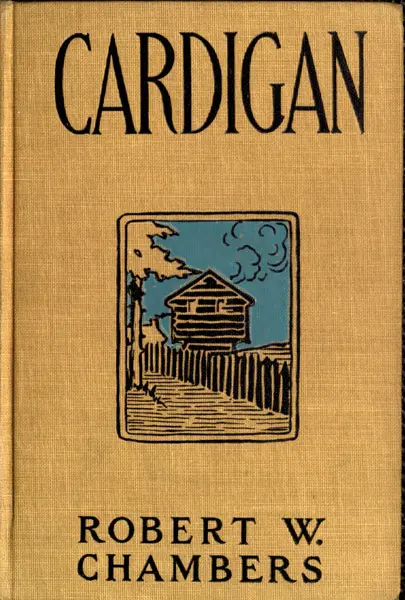
THE CLASSIC COLLECTION · 1901
"Cardigan" by Robert W. Chambers is a historical novel written in the late 19th century. The story is set in the colonial period of America, specifically around the year 1774, and follows the life and adventures of a young boy named Michael Cardigan. As he navigates his coming of age in a world filled with conflict and early American pioneer life, themes of loyalty, ambition, and personal identity unfold throughout the narrative. At the start of the novel, Michael is portrayed as a rebellious and willful boy at the cusp of adulthood, feeling tethered by the constraints of his schooling and the expectations set by his guardian, Sir William Johnson. The opening chapters provide a glimpse into Michael's struggles with authority, his desire for independence, and his yearning for escapism through fishing. His relationship with Silver Heels, a spirited girl who is equally determined, is central to the narrative, illustrating childhood conflicts and camaraderie. The arrival of a new schoolmaster and the backdrop of impending conflicts add tension and anticipation for Michael's journey towards self-discovery and historical significance, setting the stage for a tale rich with adventure and character development.
Introduction adapted from the source catalogue; source summaries may be automatically generated.
Free to read · English · 182,420 words · No account needed
MAKE TIME FOR A GOOD BOOK
On by default. Untick to stop anonymous reading totals. Each page counts after 10 seconds in view. How this works.
Anonymous counting is on unless you have switched it off.
She had turned quite pale; her eyes seemed set and fascinated, and she
wished me happiness in a low voice, as though uncertain of her own
words.
Chilled by her lifeless greeting, I returned to Sir William, who presented me to the guests with unconcealed pride:
"My kinsman, Mr. Cardigan, gentlemen; Captain Cardigan's only son!"
The officers, all in full dress, brilliant with the red, green, and gold of the Royal Americans, greeted me most kindly, some claiming acquaintance with my honoured father, and all speaking of his noble death before Quebec.
Before we sat at table, they gave me a standing toast, all touching
glasses with me, and Sir William, smiling, with one arm around my
shoulder.
So we sat down to breakfast, a breakfast I, being excited, scarcely tasted; but I listened with all my ears to the discourse touching the late troubles in New York and Massachusetts, concerning the importation of tea by the East India Company. The discussion soon became a monologue, for the subject was one which Sir William understood from A to Zed, and his eloquence upon it had amazed and irritated people of more importance than our Governor Tryon himself.
"Look you," said Sir William, in his clear voice like a bell; "look you, gentlemen; I yield to no man in loyalty and love to my King; but this I know and dare maintain here or at St. James: that his Majesty whom I serve and honour is misled by his ministers, and neither he nor they suspect the truth concerning these colonies!"
The officers were all attention, some leaning forward to lose no word or inflection; Mistress Molly poured the roundly abused tea, and her gentle dark eyes ever stole proudly towards Sir William.
"Gentlemen," said Sir William, blandly, "you all are aware that since
last December the Atlantic Ocean is become but a vast pot of cold
tea."
The laughter which followed sounded to me a trifle strained, as well it might be, considering the insolence of the people who had flung this defiance into the King's ocean.
"Very well," said Sir William, with that tight crease running around his jaw which meant his mind was made up. "This is the true history of that trouble, gentlemen. Judge for yourselves where lies the blame." And, leaning back in his chair, one hand lifted, he began:
"That damned East India Company, floundering about with the non-importation pill in its gullet, found itself owing the government fourteen hundred thousand pounds, with seventeen million pounds of unsold tea on its hands.
Your reading position is saved on this browser. Take it to another device with a library code. Reading pages adapt to text, rather than matching a printed edition.
Robert W. (Robert William) Chambers
Robert W. (Robert William) Chambers

Robert W. (Robert William) Chambers
Robert W. (Robert William) Chambers
BEHIND THE BOOK
This eBook is for the use of anyone anywhere in the United States and most other parts of the world at no cost and with almost no restrictions whatsoever. You may copy it, give it away or re-use it under the terms of the Project Gutenberg License included with this eBook or online at www.gutenberg.org. If you are not located in the United States, you will have to check the laws of the country where you are located before using this eBook. Read the source licence.
The original source file, including credits and licence, is retained by this library. Request an original-format copy at no charge. Please include the book title and Project Gutenberg identifier #38958.
KEEP YOUR CURIOSITY GOING
Cécile Tormay

Moritz Busch
Coulson Kernahan
John L. Ransom

Maurice Baring
Frances Wright