THE CLASSIC COLLECTION✦The haunts of menCLASSIC FREE BOOKS
The haunts of men
Robert W. (Robert William) Chambers
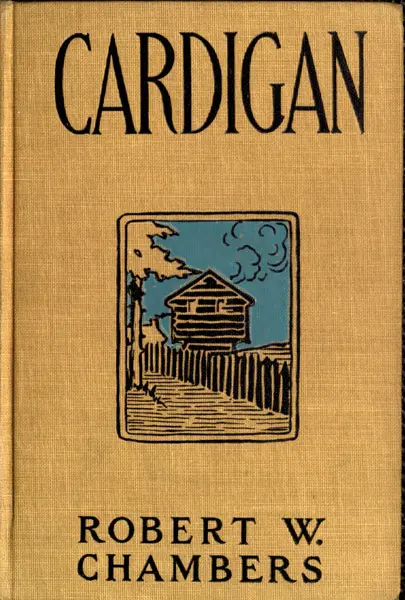
THE CLASSIC COLLECTION · 1901
"Cardigan" by Robert W. Chambers is a historical novel written in the late 19th century. The story is set in the colonial period of America, specifically around the year 1774, and follows the life and adventures of a young boy named Michael Cardigan. As he navigates his coming of age in a world filled with conflict and early American pioneer life, themes of loyalty, ambition, and personal identity unfold throughout the narrative. At the start of the novel, Michael is portrayed as a rebellious and willful boy at the cusp of adulthood, feeling tethered by the constraints of his schooling and the expectations set by his guardian, Sir William Johnson. The opening chapters provide a glimpse into Michael's struggles with authority, his desire for independence, and his yearning for escapism through fishing. His relationship with Silver Heels, a spirited girl who is equally determined, is central to the narrative, illustrating childhood conflicts and camaraderie. The arrival of a new schoolmaster and the backdrop of impending conflicts add tension and anticipation for Michael's journey towards self-discovery and historical significance, setting the stage for a tale rich with adventure and character development.
Introduction adapted from the source catalogue; source summaries may be automatically generated.
Free to read · English · 182,420 words · No account needed
MAKE TIME FOR A GOOD BOOK
On by default. Untick to stop anonymous reading totals. Each page counts after 10 seconds in view. How this works.
Anonymous counting is on unless you have switched it off.
"Ay, that I will, lad," he said, cheerily, picking up his hat and case of drugs. "And, by-the-way, your regiment of Border Horse will be here in a month. You will doubtless be content to see the gallant troopers in whose ranks you will one day serve, please God."
"Perhaps," I said, closing my eyes.
I must have fallen into a light sleep, for when I unclosed my eyes I saw Mr. Duncan beside me, looking down into my face. I smiled and raised one hand, and he took it gently in both of his strong, sun-browned hands.
"Well, well, well," he muttered, smiling, while the tears stood in his pleasant eyes; "here is our soldier home again--that same soldier whom I last saw in the guard-house, having his poll clipped by honest Wraxall, a la coureur-de-bois--eh?"
I motioned feebly for him to find a chair beside my bed, and he sat down, still holding my hand in his.
"Now," I said, "explain to me all that has happened. The doctor tells me what I ask, but I have had little inclination to hear much. I like you, Mr. Duncan. Tell me everything."
"You mean--about Sir William?" he asked, gently.
"Yes--but that last of all," I muttered, choking.
After a silence he straightened up, unhooked his sword, and laid it against the wall. Then, settling comfortably back in his chair, he clasped his hands over his white gaiters and looked at me.
"You must know," he said, "that Colonel Guy Johnson is now superintendent of Indian affairs in North America for his Majesty. He has appointed as deputies Colonel Claus and Colonel John Butler--"
"Who?" I exclaimed.
"Colonel Butler," repeated Mr. Duncan; "you remember him, don't you?"
"Yes, I remember him," I replied; "where is he?"
"He and Joseph Brant are organizing the loyalists and Indians north of us," said Mr. Duncan, innocently. "This border war in Virginia has set the Six Nations afire. Many of our Mohawks have slipped away to join Logan and Sowanowane against this fellow Cresap who murdered Logan's children; the others are restless and sullen. There was but one man in the world who could have controlled them--"
He paused.
"I know it," said I. "You mean Sir William."
"Ay, Mr. Cardigan, I mean Sir William. Well, well, there is no help now. It is Sir John Johnson's policy to win over the savages to our side; but I often think Sir William knew best how to manage them. It will be dreadful, dreadful! I for one wish no such allies as are gathering north of us under Joseph Brant and Colonel Butler."
"Why do you not say as much to Sir John?" I asked.
Your reading position is saved on this browser. Take it to another device with a library code. Reading pages adapt to text, rather than matching a printed edition.
Robert W. (Robert William) Chambers
Robert W. (Robert William) Chambers

Robert W. (Robert William) Chambers
Robert W. (Robert William) Chambers
BEHIND THE BOOK
This eBook is for the use of anyone anywhere in the United States and most other parts of the world at no cost and with almost no restrictions whatsoever. You may copy it, give it away or re-use it under the terms of the Project Gutenberg License included with this eBook or online at www.gutenberg.org. If you are not located in the United States, you will have to check the laws of the country where you are located before using this eBook. Read the source licence.
The original source file, including credits and licence, is retained by this library. Request an original-format copy at no charge. Please include the book title and Project Gutenberg identifier #38958.
KEEP YOUR CURIOSITY GOING
Cécile Tormay

Moritz Busch
Coulson Kernahan
John L. Ransom

Maurice Baring
Frances Wright