THE CLASSIC COLLECTION✦The haunts of menCLASSIC FREE BOOKS
The haunts of men
Robert W. (Robert William) Chambers
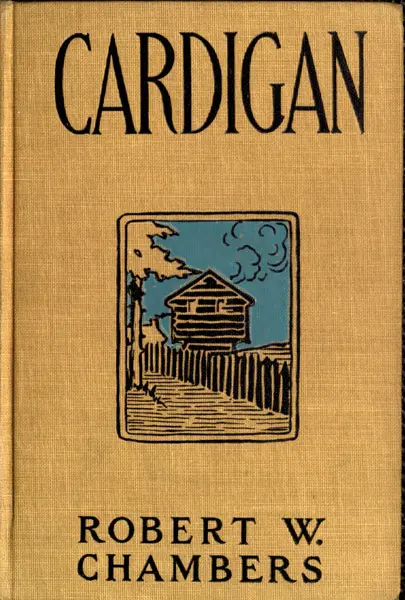
THE CLASSIC COLLECTION · 1901
"Cardigan" by Robert W. Chambers is a historical novel written in the late 19th century. The story is set in the colonial period of America, specifically around the year 1774, and follows the life and adventures of a young boy named Michael Cardigan. As he navigates his coming of age in a world filled with conflict and early American pioneer life, themes of loyalty, ambition, and personal identity unfold throughout the narrative. At the start of the novel, Michael is portrayed as a rebellious and willful boy at the cusp of adulthood, feeling tethered by the constraints of his schooling and the expectations set by his guardian, Sir William Johnson. The opening chapters provide a glimpse into Michael's struggles with authority, his desire for independence, and his yearning for escapism through fishing. His relationship with Silver Heels, a spirited girl who is equally determined, is central to the narrative, illustrating childhood conflicts and camaraderie. The arrival of a new schoolmaster and the backdrop of impending conflicts add tension and anticipation for Michael's journey towards self-discovery and historical significance, setting the stage for a tale rich with adventure and character development.
Introduction adapted from the source catalogue; source summaries may be automatically generated.
Free to read · English · 182,420 words · No account needed
MAKE TIME FOR A GOOD BOOK
On by default. Untick to stop anonymous reading totals. Each page counts after 10 seconds in view. How this works.
Anonymous counting is on unless you have switched it off.
It seemed hours, yet it was scarcely five minutes, ere the gate-house lights broke out ahead, dots of dim yellow dancing through the dust. Now we were galloping straight into the eye of the great brass lanthorn set above the guard-house; there came a far call in the darkness, a shadow crossed the lamplit glare, then I turned in my saddle and shouted: "Draw bridle!"--and our four horses came clashing in a huddle with a hollow volley of hoof-beats.
"Road closed for the night!" said a sentinel, walking towards us from
the darkness ahead, cap, buckle, and buttons glittering in the
lamplight.
"A post-chaise passed five minutes ahead of us," began Mount, angrily.
"Tut! tut! my good fellow," said the sentry; "that's none o' your
business. Back up there!"
"I wish to see Mr. Bevan," said I, scarce able to speak.
"Mr. Bevan's gone home to bed," said the soldier, impatiently. "He passed that other post-chaise at a gallop, or it would have been here yet, I warrant you. Come, come, now! You know the law. Clear the road, now!--turn your leaders, post-boy--back up, d'ye hear!"
"I tell you I've got to pass!" I persisted.
"Oh, you have, have you? And who are you, my important friend?" he sneered, barring our way with firelock balanced.
"I am deputy of Sir William Johnson!" I roared, losing all
self-control. "Stand clear, there!"
"If you move I'll shoot!" he retorted; then without turning his head
he bawled out: "Ho, sergeant o' the quarter-guard! Post number
seven!--"
"Drive over him!" I shouted, lashing at the horses. There was a jolt, an uproar, a rush of frantic horses, a bright flash and report. Then a wheel caught the soldier and pitched him reeling into the darkness. I turned in my stirrups, glancing fearfully at Renard, who was recovering his balance in the saddle behind me and lifting a firelock to the pommel.
"Shot?" I asked, breathlessly.
"No; I caught his firelock; it exploded in my hand."
"Look out!" called Mount, from his front seat on the chaise. "The toll-gate's right ahead! There's a camp-guard due there at midnight! Out with your coach-lamps!"
Shemuel jerked open each lanthorn and blew out the lights; darkness hid even the horses from our sight.
A camp-guard! Suppose the gate was closed! Thirty men and a drummer
ahead of us!
"Cut the pike!" cried Mount, suddenly. "We save six miles by the old Williamsburg post-road! Turn out! Turn out!"
Far ahead the toll-gate lamp twinkled through the dust; I signalled to Renard and dragged the horses into a trot, straining my eyes for the branch road we had seen that morning. I could see nothing.
Your reading position is saved on this browser. Take it to another device with a library code. Reading pages adapt to text, rather than matching a printed edition.
Robert W. (Robert William) Chambers
Robert W. (Robert William) Chambers

Robert W. (Robert William) Chambers
Robert W. (Robert William) Chambers
BEHIND THE BOOK
This eBook is for the use of anyone anywhere in the United States and most other parts of the world at no cost and with almost no restrictions whatsoever. You may copy it, give it away or re-use it under the terms of the Project Gutenberg License included with this eBook or online at www.gutenberg.org. If you are not located in the United States, you will have to check the laws of the country where you are located before using this eBook. Read the source licence.
The original source file, including credits and licence, is retained by this library. Request an original-format copy at no charge. Please include the book title and Project Gutenberg identifier #38958.
KEEP YOUR CURIOSITY GOING
Cécile Tormay

Moritz Busch
Coulson Kernahan
John L. Ransom

Maurice Baring
Frances Wright