THE CLASSIC COLLECTION✦The haunts of menCLASSIC FREE BOOKS
The haunts of men
Robert W. (Robert William) Chambers
THE CLASSIC COLLECTION · 1901
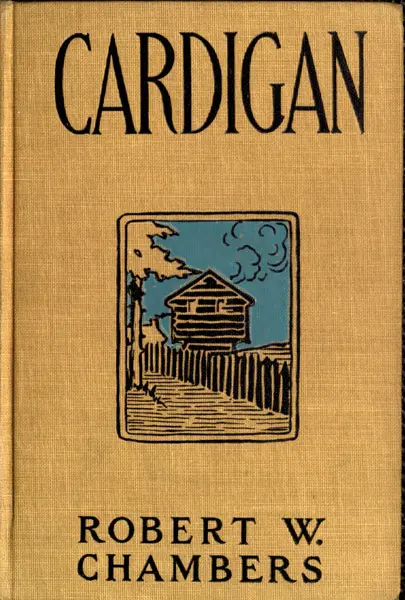
"Cardigan" by Robert W. Chambers is a historical novel written in the late 19th century. The story is set in the colonial period of America, specifically around the year 1774, and follows the life and adventures of a young boy named Michael Cardigan. As he navigates his coming of age in a world filled with conflict and early American pioneer life, themes of loyalty, ambition, and personal identity unfold throughout the narrative. At the start of the novel, Michael is portrayed as a rebellious and willful boy at the cusp of adulthood, feeling tethered by the constraints of his schooling and the expectations set by his guardian, Sir William Johnson. The opening chapters provide a glimpse into Michael's struggles with authority, his desire for independence, and his yearning for escapism through fishing. His relationship with Silver Heels, a spirited girl who is equally determined, is central to the narrative, illustrating childhood conflicts and camaraderie. The arrival of a new schoolmaster and the backdrop of impending conflicts add tension and anticipation for Michael's journey towards self-discovery and historical significance, setting the stage for a tale rich with adventure and character development.
Introduction adapted from the source catalogue; source summaries may be automatically generated.
Free to read · English · 182,420 words · No account needed
MAKE TIME FOR A GOOD BOOK
On by default. Untick to stop anonymous reading totals. Each page counts after 10 seconds in view. How this works.
Anonymous counting is on unless you have switched it off.
"Was not that gentleman Patrick Henry--the one in black who led the
poor savage out?" he asked.
"Doubtless you know Patrick Henry better than I do," I answered,
cautiously.
He laughed outright.
"Pray, believe me, Mr. Cardigan, I am not prying. It is rumoured that Patrick Henry has been at some rebel tavern in town. A few thought they recognized him in 'Governor's Hall,' and many claim that he wrote that great speech for Logan."
"If he did he is the greatest orator of our times," I said.
"Do you believe he did?"
"No," said I, bluntly.
He looked at me with curious, friendly eyes.
"You have become famous, Mr. Cardigan, since we last met."
"You would say 'notorious,'" I rejoined, smiling.
He protested vigorously:
"No! no! I understand you are not of our party, but, believe me, were I a--a--patriot, as they say, I should be proud to hear a comrade utter the words you uttered in 'Governor's Hall'!"
"Did I say I was a rebel?" I asked, laughing.
"Well," he rejoined, "if that speech did not commit you, we are but a dull company here in Pittsburg."
He glanced after his comrades, who were now entering the canopied space where refreshments lay piled between the bottles and punch-bowls; and he straightway invited me, turning with a bow to include Jack Mount, whom I had not dared present under his proper name.
Mount began to accept with a flourish, but I cut him short with excuses, which Mr. Bevan accepted politely, expressing his regret. Then again he offered me his hand so frankly that I drew him aside, and begged his indulgence and forgetfulness for my boorish behaviour at Johnson Hall.
"The fault was mine," he said, instantly; "I sneered at your militia and deserved your rebuke. Had I not deserved it, I should have called you out, Mr. Cardigan."
"You conducted properly," said I; "on the contrary, I must blush for my churlishness when you favoured my hilt with a ribbon."
His friendly eyes grew grave, and he began bending his hunting-whip into a bow, thoughtfully studying the buttercups at his feet.
After a moment he looked up, saying, "Do you know that this morning the banns were published for the wedding of Lord Dunmore and your kinswoman, Miss Warren?"
So, after all, and in spite of my letter, Dunmore had done this shameful thing! I think my scowling face gave Bevan his answer, for he laid his hand on my arm and looked at me earnestly.
"It is no shame," he said, "for me to tell you that Miss Warren has refused me. How can a heart be humbled which has loved such a woman?"
Your reading position is saved on this browser. Take it to another device with a library code. Reading pages adapt to text, rather than matching a printed edition.
Robert W. (Robert William) Chambers
Robert W. (Robert William) Chambers

Robert W. (Robert William) Chambers
Robert W. (Robert William) Chambers
BEHIND THE BOOK
This eBook is for the use of anyone anywhere in the United States and most other parts of the world at no cost and with almost no restrictions whatsoever. You may copy it, give it away or re-use it under the terms of the Project Gutenberg License included with this eBook or online at www.gutenberg.org. If you are not located in the United States, you will have to check the laws of the country where you are located before using this eBook. Read the source licence.
The original source file, including credits and licence, is retained by this library. Request an original-format copy at no charge. Please include the book title and Project Gutenberg identifier #38958.
KEEP YOUR CURIOSITY GOING
Cécile Tormay

Moritz Busch
Coulson Kernahan
John L. Ransom

Maurice Baring
Frances Wright