THE CLASSIC COLLECTION✦The haunts of menCLASSIC FREE BOOKS
The haunts of men
Robert W. (Robert William) Chambers
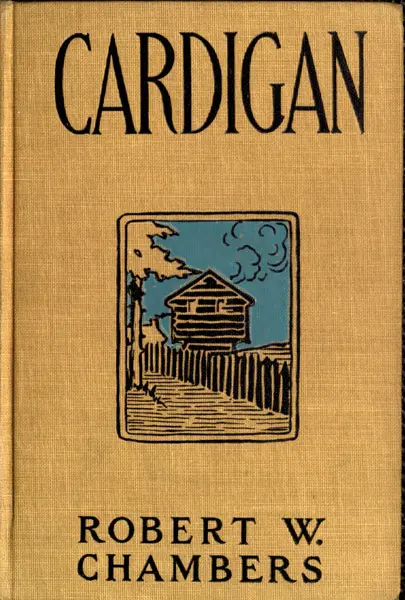
THE CLASSIC COLLECTION · 1901
"Cardigan" by Robert W. Chambers is a historical novel written in the late 19th century. The story is set in the colonial period of America, specifically around the year 1774, and follows the life and adventures of a young boy named Michael Cardigan. As he navigates his coming of age in a world filled with conflict and early American pioneer life, themes of loyalty, ambition, and personal identity unfold throughout the narrative. At the start of the novel, Michael is portrayed as a rebellious and willful boy at the cusp of adulthood, feeling tethered by the constraints of his schooling and the expectations set by his guardian, Sir William Johnson. The opening chapters provide a glimpse into Michael's struggles with authority, his desire for independence, and his yearning for escapism through fishing. His relationship with Silver Heels, a spirited girl who is equally determined, is central to the narrative, illustrating childhood conflicts and camaraderie. The arrival of a new schoolmaster and the backdrop of impending conflicts add tension and anticipation for Michael's journey towards self-discovery and historical significance, setting the stage for a tale rich with adventure and character development.
Introduction adapted from the source catalogue; source summaries may be automatically generated.
Free to read · English · 182,420 words · No account needed
MAKE TIME FOR A GOOD BOOK
On by default. Untick to stop anonymous reading totals. Each page counts after 10 seconds in view. How this works.
Anonymous counting is on unless you have switched it off.
All at once the fiery shower ceased. A soldier climbed the flag-pole to look out over the smoke, and presently he called down to us that the savages were falling back to the forest. Then our cannon began to flash and thunder, and the militia fell in for volley-firing again, while, below, the drawbridge dropped once more, and our riflemen stole out into the haze.
I was sitting on the parapet, looking at Boyd's inn, "The Leather Bottle," which was on fire, when Mount and Cade Renard came up to me, carrying a sheaf of charred arrows which they had gathered on the parade.
"I just want you to look at these," began Mount, dumping the arrows into my lap. "The Weasel, he says you know more about Indians than we do, and I don't deny it, seeing you lived at Johnstown and seem so fond of the cursed hell-hounds--"
"He wants you to read these arrows," interrupted the Weasel, dryly; "no, not the totem signs. What tribes are they?"
"Cayuga," I replied, wondering. "Cayuga, of course--wait!--why, this is a Seneca war-arrow!--you can see by the shaft and nock and the quills set inside the fibres!"
"I told you!" observed the Weasel, grimly nudging Mount.
Mount stood silent and serious, watching me picking up arrow after arrow from the charred sheaf on my knees.
"Here is a Shawanese hunting-shaft," I said, startled, "and--and this--this is a strange arrow to me!"
I held up a slender, delicate arrow, beautifully made and tipped with
steel.
"That," said Mount, gravely, "is a Delaware arrow."
"The Lenape!" I cried, astonished. Suddenly the terrible significance of these blackened arrows came to me like a blow. The Lenni-Lenape had risen, the Senecas and Shawanese had joined the Cayugas. The Long House was in revolt.
"Mount," I said, quietly, "does Colonel Cresap know this?"
The Weasel nodded.
"We abandon the fort to-night," he said. "We can't face the Six
Nations--here."
"We make for Pittsburg," added Mount. "It will be a job to get the women and children through. Cresap wishes to see you, Mr. Cardigan. You will find him laying fuses to the magazine."
They piloted me to the casemates and around the barracks to the angle of the fort, where a stockade barred the passage to the magazine. The sentry refused us admittance, but Corporal Cloud heard us and opened the stockade gate, where we saw Cresap on his hands and knees, heaping up loose powder into a long train. He glanced up at us quietly; his thin, grave face was very pale.
"Am I right about those arrows?" he asked Mount.
"Mr. Cardigan says there's a Seneca war-arrow among 'em, too," replied
Mount.
Your reading position is saved on this browser. Take it to another device with a library code. Reading pages adapt to text, rather than matching a printed edition.
Robert W. (Robert William) Chambers
Robert W. (Robert William) Chambers

Robert W. (Robert William) Chambers
Robert W. (Robert William) Chambers
BEHIND THE BOOK
This eBook is for the use of anyone anywhere in the United States and most other parts of the world at no cost and with almost no restrictions whatsoever. You may copy it, give it away or re-use it under the terms of the Project Gutenberg License included with this eBook or online at www.gutenberg.org. If you are not located in the United States, you will have to check the laws of the country where you are located before using this eBook. Read the source licence.
The original source file, including credits and licence, is retained by this library. Request an original-format copy at no charge. Please include the book title and Project Gutenberg identifier #38958.
KEEP YOUR CURIOSITY GOING
Cécile Tormay

Moritz Busch
Coulson Kernahan
John L. Ransom

Maurice Baring
Frances Wright