THE CLASSIC COLLECTION✦The haunts of menCLASSIC FREE BOOKS
The haunts of men
Robert W. (Robert William) Chambers
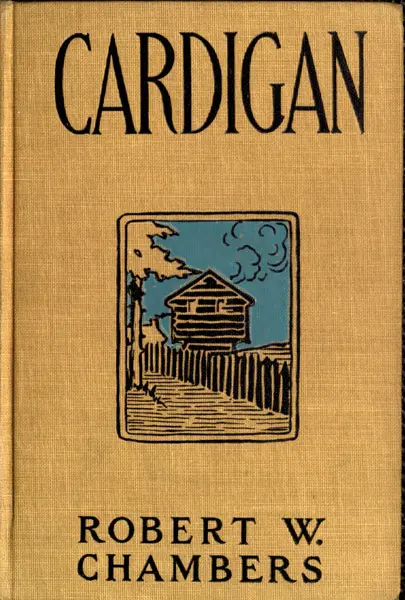
THE CLASSIC COLLECTION · 1901
"Cardigan" by Robert W. Chambers is a historical novel written in the late 19th century. The story is set in the colonial period of America, specifically around the year 1774, and follows the life and adventures of a young boy named Michael Cardigan. As he navigates his coming of age in a world filled with conflict and early American pioneer life, themes of loyalty, ambition, and personal identity unfold throughout the narrative. At the start of the novel, Michael is portrayed as a rebellious and willful boy at the cusp of adulthood, feeling tethered by the constraints of his schooling and the expectations set by his guardian, Sir William Johnson. The opening chapters provide a glimpse into Michael's struggles with authority, his desire for independence, and his yearning for escapism through fishing. His relationship with Silver Heels, a spirited girl who is equally determined, is central to the narrative, illustrating childhood conflicts and camaraderie. The arrival of a new schoolmaster and the backdrop of impending conflicts add tension and anticipation for Michael's journey towards self-discovery and historical significance, setting the stage for a tale rich with adventure and character development.
Introduction adapted from the source catalogue; source summaries may be automatically generated.
Free to read · English · 182,420 words · No account needed
MAKE TIME FOR A GOOD BOOK
On by default. Untick to stop anonymous reading totals. Each page counts after 10 seconds in view. How this works.
Anonymous counting is on unless you have switched it off.
A brisk southwest wind was singing through the pines as I stepped out-of-doors and peered cautiously about. There was nothing stirring save the wind and the unseen leaves in the forest. I primed my rifle and sheltered the pan under the hollow of my arm, then stole forth into the starlit road.
To gain the river, whence the trail ran northward to the Cayuga camp, I was obliged to pass the fort, and consequently the "Greathouse Inn." But I had no fear at this hour o' morning, and I trotted on along the stump fence like a cub-fox in his proper runway, until the first curve in the road brought me to Greathouse's inn.
Shutters were drawn and bolted over every window, but candle-light streamed through loopholes in the tap-room, and I could hear men singing within and tapping on bowls with spoons:
"My true love is old Brown Bess."
Nosing the house delicately, I perceived odours of cooking, of rum toddy, and of tobacco smoke. Clearly Butler's company were supping after their long jog on the back trail from Fortress Pitt.
Satisfied that all was safe, I had silently begun skirting the road ditch shadowed by the fence, when a dark heap, which I had taken for a stump in the road, moved, rolled over, and moaned.
I stopped, frozen motionless. After a moment's wary reconnoitring, I crept forward again along the ditch, eyes fastened on the dim shape ahead, a human form lying in the black shadows of the road.
When I came closer I understood. At my feet, in a drunken stupor, sprawled a young Cayuga girl, limbs plastered with mud, body saturated and reeking with the stench of spirits. Her black hair floated in a pool of rain which spread out reflecting stars. One helpless hand clutched the mud.
I lifted the little thing and bore her to the shadow of the fence; but here, to my amazement, lay a drunken squaw, doubtless her mother, still clinging to an empty bottle; and, along the ditch and fence, flung in beastly, breathing heaps, I counted seven more barbarians, old and young, from the infant of ten to the young buck of twenty, all apparently of the same family, and all in a sodden swoon.
This was the work, then, done by a single agent of my Lord Dunmore,
Royal Governor of Virginia!
Like torpid snakes they lay there, glistening in the grass, the children naked, the mother in rags, breathing out poison under the stars. The very air of morn sweated rum; candle-light from the loopholes fell across the bodies, flung limply on the grass.
Your reading position is saved on this browser. Take it to another device with a library code. Reading pages adapt to text, rather than matching a printed edition.
Robert W. (Robert William) Chambers
Robert W. (Robert William) Chambers

Robert W. (Robert William) Chambers
Robert W. (Robert William) Chambers
BEHIND THE BOOK
This eBook is for the use of anyone anywhere in the United States and most other parts of the world at no cost and with almost no restrictions whatsoever. You may copy it, give it away or re-use it under the terms of the Project Gutenberg License included with this eBook or online at www.gutenberg.org. If you are not located in the United States, you will have to check the laws of the country where you are located before using this eBook. Read the source licence.
The original source file, including credits and licence, is retained by this library. Request an original-format copy at no charge. Please include the book title and Project Gutenberg identifier #38958.
KEEP YOUR CURIOSITY GOING
Cécile Tormay

Moritz Busch
Coulson Kernahan
John L. Ransom

Maurice Baring
Frances Wright