THE CLASSIC COLLECTION✦The haunts of menCLASSIC FREE BOOKS
The haunts of men
Robert W. (Robert William) Chambers
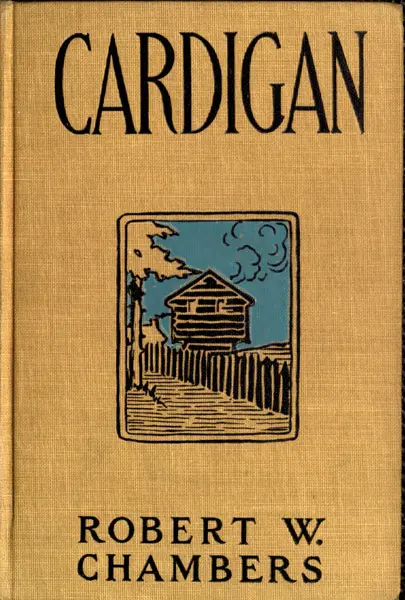
THE CLASSIC COLLECTION · 1901
"Cardigan" by Robert W. Chambers is a historical novel written in the late 19th century. The story is set in the colonial period of America, specifically around the year 1774, and follows the life and adventures of a young boy named Michael Cardigan. As he navigates his coming of age in a world filled with conflict and early American pioneer life, themes of loyalty, ambition, and personal identity unfold throughout the narrative. At the start of the novel, Michael is portrayed as a rebellious and willful boy at the cusp of adulthood, feeling tethered by the constraints of his schooling and the expectations set by his guardian, Sir William Johnson. The opening chapters provide a glimpse into Michael's struggles with authority, his desire for independence, and his yearning for escapism through fishing. His relationship with Silver Heels, a spirited girl who is equally determined, is central to the narrative, illustrating childhood conflicts and camaraderie. The arrival of a new schoolmaster and the backdrop of impending conflicts add tension and anticipation for Michael's journey towards self-discovery and historical significance, setting the stage for a tale rich with adventure and character development.
Introduction adapted from the source catalogue; source summaries may be automatically generated.
Free to read · English · 182,420 words · No account needed
MAKE TIME FOR A GOOD BOOK
On by default. Untick to stop anonymous reading totals. Each page counts after 10 seconds in view. How this works.
Anonymous counting is on unless you have switched it off.
Suddenly a light twinkled on the edge of a clearing, then another broke out like a star in the bush, and soon all about us cabin-windows gleamed brightly and we were marching down a broad road, full of stones and stumps, and lined on either side by cultivated land and cabins enclosed in little stockades.
"Shoulder arms! Right wheel!" cried Mount; and we filed between two block-houses, and across a short bridge, and halted, grounding arms under the shadow of a squatty fort built with enormous logs.
The sentry had called out the guard, and the corporal in charge came up to us, lifting his lanthorn. He greeted Mount cheerfully, nodding and smiling at Renard also.
"Who the devil is this he-goat with red whiskers?" he demanded, illuminating Shemuel's cheerful features.
"Friend of liberty," said Mount, in a low voice. "Is Colonel Cresap in
the fort, corporal?"
"No," said the corporal, looking hard at me; "he's off somewhere. Who
is this gentleman, Jack?"
I looked at Mount, perhaps appealingly, wondering what he would say.
But he did not hesitate; he laid his great paw on my shoulder and said, "He's a good lad, corporal; give him a bed and a bowl o' porridge, and it's a kindness to Jack Mount you will do."
Then he held out his hand to me, and I took it.
"Good-night lad," he said, heartily. "We'll meet again to-morrow. I've a few friends to see to-night. Sleep tight to the bed and think not too much ill of this same Catamount Jack they write books about."
The Weasel sidled up and offered his small, dry hand.
"If you were ruined," he said, regretfully, "you'd make a rare
wood-runner."
I thanked him uncertainly and returned Shemuel's low obeisance with an
unforgiving nod.
"Pray, follow me, sir," said the corporal, with a civil bow, and I walked after him through the postern, out across the moonlit parade, and into the western barracks, where he lighted me to a tiny casemate and pointed to a door.
"We have messed, but there's some cold meat and a jug of cider for you," he said, affably. "Yonder's a bucket of water, and I'll leave this lanthorn for you. Open that door, and you'll find food and drink. Good-night, sir."
"Good-night," I said, "and pardon my importunity, but I have a message
for Colonel Cresap."
"He returns to the fort to-morrow," said the soldier. Then, lingering, he asked the news from Boston and whether any more troops had been sent thither. But I did not know and he retired presently, whistling "The White Cockade," and making passes at the moonbeams with his bright bayonet.
Your reading position is saved on this browser. Take it to another device with a library code. Reading pages adapt to text, rather than matching a printed edition.
Robert W. (Robert William) Chambers
Robert W. (Robert William) Chambers

Robert W. (Robert William) Chambers
Robert W. (Robert William) Chambers
BEHIND THE BOOK
This eBook is for the use of anyone anywhere in the United States and most other parts of the world at no cost and with almost no restrictions whatsoever. You may copy it, give it away or re-use it under the terms of the Project Gutenberg License included with this eBook or online at www.gutenberg.org. If you are not located in the United States, you will have to check the laws of the country where you are located before using this eBook. Read the source licence.
The original source file, including credits and licence, is retained by this library. Request an original-format copy at no charge. Please include the book title and Project Gutenberg identifier #38958.
KEEP YOUR CURIOSITY GOING
Cécile Tormay

Moritz Busch
Coulson Kernahan
John L. Ransom

Maurice Baring
Frances Wright