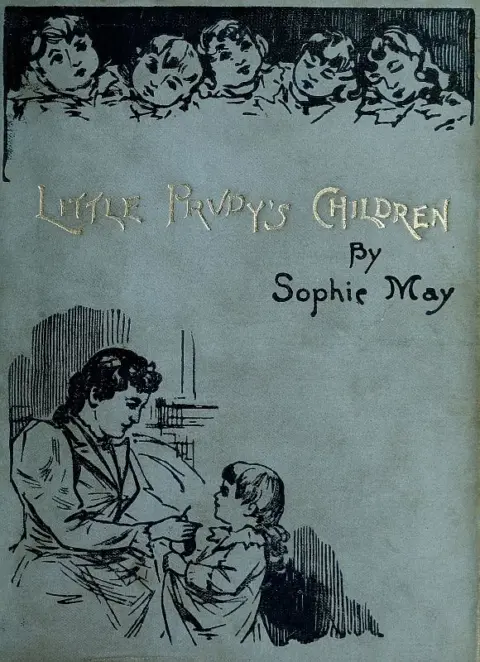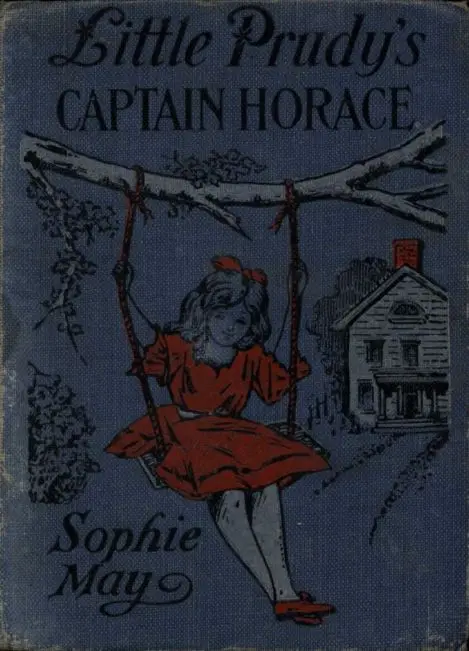
Little Prudy’s Captain Horace
Sophie May
THE CLASSIC COLLECTION · 1892
"Captain Horace" by Sophie May is a children's novel written in the late 19th century. The story revolves around young Horace Clifford, a spirited boy living in Indiana with his family, who dreams of being a soldier. Throughout the narrative, Horace navigates childhood adventures, including mischief, friendship, and the challenges of growing up, while grappling with the realities of war as his father serves as a captain in the army. At the start of the novel, we meet Horace and his sister Grace as they enjoy a lovely evening, looking at the stars and discussing their dreams. Horace's desire to become a soldier is evident as he engages in playful banter and lively imaginations about their father’s role in the army. Their innocent childhood is contrasted with the mention of impending dangers, as Mr. Clifford prepares for battle. The opening sets the stage for both lighthearted adventures—including making candy and camping out—and foreshadows the themes of loss and responsibility that will significantly shape Horace’s character as the story progresses.
Introduction adapted from the source catalogue; source summaries may be automatically generated.
Free to read · English · 24,177 words · No account needed
MAKE TIME FOR A GOOD BOOK
On by default. Untick to stop anonymous reading totals. Each page counts after 10 seconds in view. How this works.
Anonymous counting is on unless you have switched it off.
"It'll sugar off," said Grace, calmly, as if she had made up her mind for the worst; "don't you know how it sugared off once when ma was making it, and let the fire go 'most out'?"
"Now just hear them childers," said good-natured Barbara; "where's the little boy and girl that wasn't to speak to me one word, if I biled 'em some candies?"
"There, now, Barby, I wasn't speaking to you," said Horace; "I mean I wasn't talking to her, Grace. Look here: I've heard you spell, but you didn't ask me my Joggerphy."
"Geography, you mean, Horace."
"Well, Ge-ography, then. Here's the book: we begin at the Mohammedans."
Horace could pronounce that long name very well, though he had no idea what it meant. He knew there was a book called the Koran, and would have told you Mr. Mohammed wrote it; but so had Mr. Colburn written an Arithmetic, and whether both these gentlemen were alive, or both dead, was more than he could say.
"Hold up your head," said Grace, with dignity, and looking as much as possible like tall Miss Allen, her teacher. "Please repeat your verse."
The first sentence read, "They consider Moses and Christ as true prophets, but Mohammed as the greatest and last."
"I'll tell you," said Horace: "they think that Christ and Moses was good enough prophets, but Mohammed was a heap better."
"Why, Horace, it doesn't say any such think in the book! It begins,
'They consider.'"
"I don't care," said the boy, "Miss Jordan tells us to get the sense of it. Ma, musn't I get the sense of it?" he added, as Mrs. Clifford entered the kitchen.
"But, mamma," broke in Grace, eagerly, "our teacher wants us to commit the verses: she says a great deal about committing the verses."
"If you would give me time to answer," said Mrs. Clifford, smiling, "I should say both your teachers are quite right. You should 'get the sense of it,' as Horace says, and after that commit the verses."
"But, ma, do you think Horace should say 'heap,' and 'no account,' and
such words?"
"It would certainly please me," said Mrs. Clifford, "if he would try to speak more correctly. My little boy knows how much I dislike some of his expressions."
"There, Horace," cried Grace, triumphantly, "I always said you talked just like the Dutch boys; and it's very, very improper!"
Your reading position is saved on this browser. Take it to another device with a library code. Reading pages adapt to text, rather than matching a printed edition.
BEHIND THE BOOK
This eBook is for the use of anyone anywhere in the United States and most other parts of the world at no cost and with almost no restrictions whatsoever. You may copy it, give it away or re-use it under the terms of the Project Gutenberg License included with this eBook or online at www.gutenberg.org. If you are not located in the United States, you will have to check the laws of the country where you are located before using this eBook. Read the source licence.
The original source file, including credits and licence, is retained by this library. Request an original-format copy at no charge. Please include the book title and Project Gutenberg identifier #25484.
KEEP YOUR CURIOSITY GOING
Cécile Tormay

Moritz Busch
Coulson Kernahan
John L. Ransom

Maurice Baring
Frances Wright