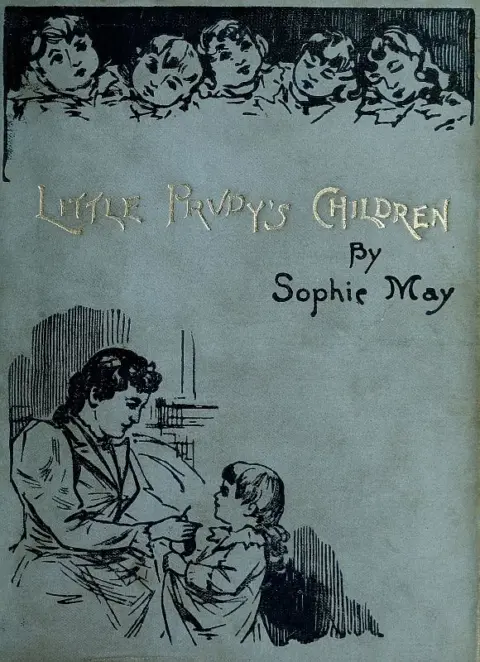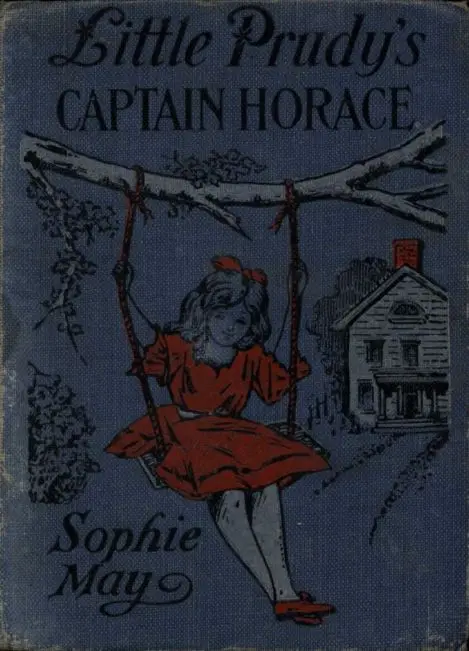
Little Prudy’s Captain Horace
Sophie May
THE CLASSIC COLLECTION · 1892
"Captain Horace" by Sophie May is a children's novel written in the late 19th century. The story revolves around young Horace Clifford, a spirited boy living in Indiana with his family, who dreams of being a soldier. Throughout the narrative, Horace navigates childhood adventures, including mischief, friendship, and the challenges of growing up, while grappling with the realities of war as his father serves as a captain in the army. At the start of the novel, we meet Horace and his sister Grace as they enjoy a lovely evening, looking at the stars and discussing their dreams. Horace's desire to become a soldier is evident as he engages in playful banter and lively imaginations about their father’s role in the army. Their innocent childhood is contrasted with the mention of impending dangers, as Mr. Clifford prepares for battle. The opening sets the stage for both lighthearted adventures—including making candy and camping out—and foreshadows the themes of loss and responsibility that will significantly shape Horace’s character as the story progresses.
Introduction adapted from the source catalogue; source summaries may be automatically generated.
Free to read · English · 24,177 words · No account needed
MAKE TIME FOR A GOOD BOOK
On by default. Untick to stop anonymous reading totals. Each page counts after 10 seconds in view. How this works.
Anonymous counting is on unless you have switched it off.
"What a shiny night, Horace! What do the stars look like? Is it diamond
rings?"
"I'll tell you, Gracie; it's cigars they look like--just the ends of cigars when somebody is smoking."
At that moment the cluster called the "Seven Sisters" was drowned in a
soft, white cloud.
"Look," said Grace; "there are some little twinkles gone to sleep, all tucked up in a coverlet. I don't see what makes you think of dirty cigars! They look to me like little specks of gold harps ever so far off, so you can't hear the music. O, Horace, don't you want to be an angel, and play on a beautiful harp?"
"I don't know," said her brother, knitting his brows, and thinking a moment; "when I can't live any longer, you know, then I'd like to go up to heaven; but now, I'd a heap sooner be a soldier!"
"O, Horace, you'd ought to rather be an angel! Besides, you're too
little for a soldier!"
"But I grow. Just look at my hands; they're bigger than yours, this
minute!"
"Why, Horace Clifford, what makes them so black?"
"O, that's no account! I did it climbin' trees. Barby tried to scour it off, but it sticks. I don't care--soldiers' hands ain't white, are they, Pincher?"
The pretty dog at Horace's feet shook his ears, meaning to say,--
"I should think not, little master; soldiers have very dirty hands, if
you say so."
"Come," said Grace, who was tired of gazing at the far-off star-land; "let's go down and see if Barbara hasn't made that candy: she said she'd be ready in half an hour."
They went into the library, which opened upon the balcony, through the passage, down the front stairs, and into the kitchen, Pincher following close at their heels.
It was a very tidy kitchen, whose white floor was scoured every day with a scrubbing-brush. Bright tin pans were shining upon the walls, and in one corner stood a highly polished cooking-stove, over which Barbara Kinckle, a rosy-cheeked German girl, was stooping to watch a kettle of boiling molasses. Every now and then she raised the spoon with which she was stirring it, and let the half-made candy drip back into the kettle in ropy streams. It looked very tempting, and gave out a delicious odor. Perhaps it was not strange that the children thought they were kept waiting a long while.
"Look here, Grace," muttered Horace, loud enough for Barbara to hear; "don't you think she's just the slowest kind?"
Your reading position is saved on this browser. Take it to another device with a library code. Reading pages adapt to text, rather than matching a printed edition.
BEHIND THE BOOK
This eBook is for the use of anyone anywhere in the United States and most other parts of the world at no cost and with almost no restrictions whatsoever. You may copy it, give it away or re-use it under the terms of the Project Gutenberg License included with this eBook or online at www.gutenberg.org. If you are not located in the United States, you will have to check the laws of the country where you are located before using this eBook. Read the source licence.
The original source file, including credits and licence, is retained by this library. Request an original-format copy at no charge. Please include the book title and Project Gutenberg identifier #25484.
KEEP YOUR CURIOSITY GOING
Cécile Tormay

Moritz Busch
Coulson Kernahan
John L. Ransom

Maurice Baring
Frances Wright