
Van Zorn
Edwin Arlington Robinson
THE CLASSIC COLLECTION · 1902
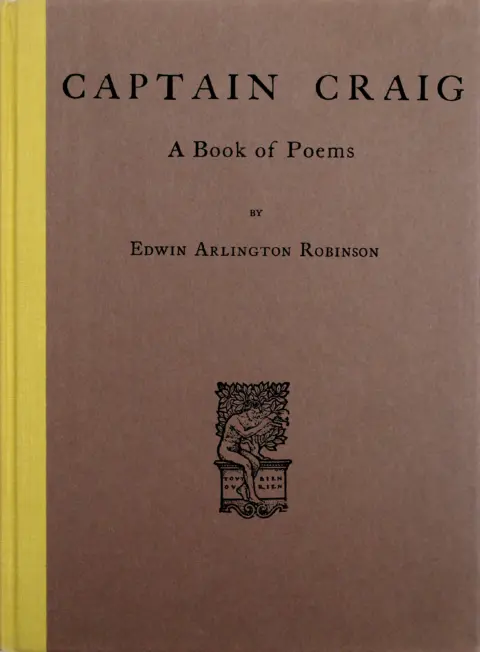
"Captain Craig" by Edwin Arlington Robinson is a collection of poems written in the early 20th century. It is anchored by a long narrative in verse set in Tilbury Town, following an eccentric, destitute philosopher named Captain Craig as observed by a young narrator and his friends. Through talk, letters, and character sketches, it meditates on truth, art, faith, failure, and the stubborn spark of joy amid want. Readers drawn to character-driven, philosophical poetry with a dry New England wit may find it compelling.
The opening of the work introduces Tilbury Town and the shabby, hungry Captain, whom only a few men befriend; the narrator visits his attic and hears bold, ruminative talk on gratitude, sunlight, laughter with God, and sincerity. After the narrator departs, letters arrive in which the Captain celebrates spring, quotes Sophocles, names his three hens after the Fates, recounts odd dreams (including a carpenter’s counsel to “find Nazareth”), tells an anecdote of Count Pretzel, and playfully critiques a friend’s ballad. Returning, the narrator finds the Captain failing; the old man reads a grandly humorous “testament” that bequeaths “God’s universe” and urges courage, climbing, and truth, then drifts through fevered dreams and dies with a final whimsical word about “trombones.” The friends gather at their tavern before escorting his funeral with the Tilbury band. The section closes by turning to a new poem, where the speaker fondly recalls Isaac and Archibald and a country walk to check on oats.
Introduction adapted from the source catalogue; source summaries may be automatically generated.
Free to read · English · 29,828 words · No account needed
MAKE TIME FOR A GOOD BOOK
On by default. Untick to stop anonymous reading totals. Each page counts after 10 seconds in view. How this works.
Anonymous counting is on unless you have switched it off.
“I turned a little furrow of my own
Once on a time, and everybody laughed--
As I laughed afterwards; and I doubt not
The First Intelligence, which we have drawn
In our competitive humility
As if it went forever on two legs,
Had some diversion of it: I believe
God’s humor is the music of the spheres--
But even as we draft omnipotence
Itself to our own image, we pervert
The courage of an infinite ideal
To finite resignation. You have made
The cement of your churches out of tears
And ashes, and the fabric will not stand:
The shifted walls that you have coaxed and shored
So long with unavailing compromise
Will crumble down to dust and blow away,
And younger dust will follow after them;
Though not the faintest or the farthest whirled
First atom of the least that ever flew
Shall be by man defrauded of the touch
God thrilled it with to make a dream for man
When Science was unborn. And after time,
When we have earned our spiritual ears,
And art’s commiseration of the truth
No longer glorifies the singing beast,
Or venerates the clinquant charlatan,--
Then shall at last come ringing through the sun,
Through time, through flesh, God’s music of the soul.
For wisdom is that music, and all joy
That wisdom:--you may counterfeit, you think,
The burden of it in a thousand ways;
But as the bitterness that loads your tears
Makes Dead Sea swimming easy, so the gloom,
The penance, and the woeful pride you keep,
Make bitterness your buoyance of the world.
And at the fairest and the frenziedest
Alike of your God-fearing festivals,
You so compound the truth to pamper fear
That in the doubtful surfeit of your faith
You clamor for the food that shadows eat.
You call it rapture or deliverance,--
Passion or exaltation, or what most
The moment needs, but your faint-heartedness
Lives in it yet: you quiver and you clutch
For something larger, something unfulfilled,
Some wiser kind of joy that you shall have
Never, until you learn to laugh with God.”
And with a calm Socratic patronage,
At once half sombre and half humorous,
The Captain reverently twirled his thumbs
And fixed his eyes on something far away;
Then, with a gradual gaze, conclusive, shrewd,
And at the moment unendurable
For sheer beneficence, he looked at me.--
“But the brass band?” I said, not quite at ease
With altruism yet.--He made a kind
Of reminiscent little inward noise,
Midway between a chuckle and a laugh,
And that was all his answer: not a word
Of explanation or suggestion came
From those tight-smiling lips. And when I left,
I wondered, as I trod the creaking snow
And had the world-wide air to breathe again,--
Though I had seen the tremor of his mouth
And honored the endurance of his hand--
Whether or not, securely closeted
Up there in the stived haven of his den,
The man sat laughing at me; and I felt
My teeth grind hard together with a quaint
Revulsion--as I think back on it now--
Not only for my Captain, but as well
For every smug-faced failure on God’s earth--
Albeit I could swear, at the same time,
That there were tears in the old fellow’s eyes.
I question if in tremors or in tears
There be more guidance to man’s worthiness
Than--well, say in his prayers. But oftentimes
It humors us to think that we possess
By some divine adjustment of our own
Particular shrewd cells, or something else,
What others, for untutored sympathy,
Go spirit-fishing more than half their lives
To catch--like cheerful sinners to catch faith;
And I have not a doubt but I assumed
Some egotistic attribute like this
When, cautiously, next morning I reduced
The fretful qualms of my novitiate,
For most part, to an undigested pride.
Only, I live convinced that I regret
This enterprise no more than I regret
My life; and I am glad that I was born.
Your reading position is saved on this browser. Take it to another device with a library code. Reading pages adapt to text, rather than matching a printed edition.
Edwin Arlington Robinson
Edwin Arlington Robinson
Edwin Arlington Robinson
BEHIND THE BOOK
This eBook is for the use of anyone anywhere in the United States and most other parts of the world at no cost and with almost no restrictions whatsoever. You may copy it, give it away or re-use it under the terms of the Project Gutenberg License included with this eBook or online at www.gutenberg.org. If you are not located in the United States, you will have to check the laws of the country where you are located before using this eBook. Read the source licence.
The original source file, including credits and licence, is retained by this library. Request an original-format copy at no charge. Please include the book title and Project Gutenberg identifier #77544.
KEEP YOUR CURIOSITY GOING
Eric Mackay
Edmund Gosse
Sophia Margaretta Hensley
Gilbert Parker
George MacDonald

Elizabeth Bibesco