THE CLASSIC COLLECTION✦Familiar Letters The Writings of Henry David Thoreau, Volume 06 (of 20)CLASSIC FREE BOOKS
Familiar Letters The Writings of Henry David Thoreau, Volume 06 (of 20)
Henry David Thoreau
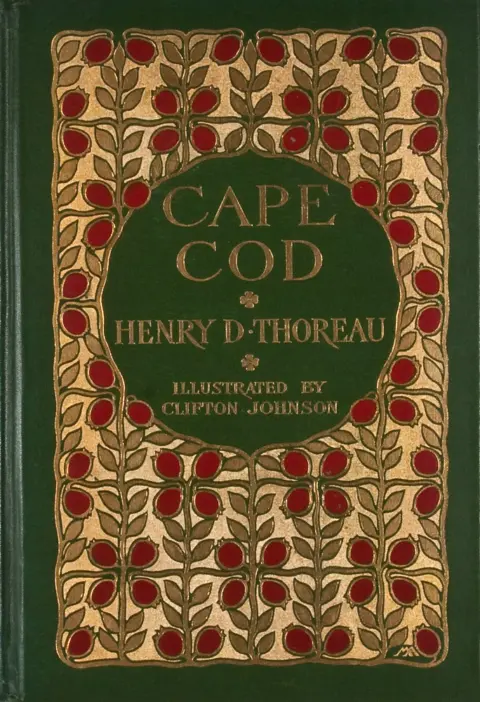
THE CLASSIC COLLECTION · 1908
"Cape Cod" by Henry David Thoreau is a detailed travelogue and nature reflection written in the mid-19th century. The book chronicles the author’s journeys through Cape Cod, exploring its landscapes, inhabitants, and the philosophical underpinnings of life on the coast. Thoreau, known for his deep appreciation of nature and individualism, captures the essence of the Cape's natural beauty and the lives of those who call it home. The opening of "Cape Cod" introduces Thoreau's desire to explore and understand the ocean and its surroundings more intimately, prompting his visits in various seasons. He recounts his experiences following the shipwreck of the brig "St. John" off the Cohasset shore, describing the somber aftermath as locals engage in grim recovery efforts, dealing with both the physical remains of the tragedy and their emotional impact. Thoreau reflects on life, death, and the sea's indifference, drawing philosophical conclusions from the environment he encounters, indicating a deeper exploration of existence and the human condition amidst the trials of nature.
Introduction adapted from the source catalogue; source summaries may be automatically generated.
Free to read · English · 78,660 words · No account needed
MAKE TIME FOR A GOOD BOOK
On by default. Untick to stop anonymous reading totals. Each page counts after 10 seconds in view. How this works.
Anonymous counting is on unless you have switched it off.
These houses were on the shores of a chain of ponds, seven in number, the source of a small stream called Herring River, which empties into the Bay. There are many Herring Rivers on the Cape; they will, perhaps, be more numerous than herrings soon. We knocked at the door of the first house, but its inhabitants were all gone away. In the meanwhile, we saw the occupants of the next one looking out the window at us, and before we reached it an old woman came out and fastened the door of her bulkhead, and went in again. Nevertheless, we did not hesitate to knock at her door, when a grizzly-looking man appeared, whom we took to be sixty or seventy years old. He asked us, at first, suspiciously, where we were from, and what our business was; to which we returned plain answers.
“How far is Concord from Boston?” he inquired.
“Twenty miles by railroad.”
“Twenty miles by railroad,” he repeated.
“Didn’t you ever hear of Concord of Revolutionary fame?”
“Didn’t I ever hear of Concord? Why, I heard the guns fire at the battle of Bunker Hill. [They hear the sound of heavy cannon across the Bay.] I am almost ninety; I am eighty-eight year old. I was fourteen year old at the time of Concord Fight,—and where were you then?”
We were obliged to confess that we were not in the fight.
“Well, walk in, we’ll leave it to the women,” said he.
So we walked in, surprised, and sat down, an old woman taking our hats and bundles, and the old man continued, drawing up to the large, old-fashioned fireplace,—
“I am a poor good-for-nothing crittur, as Isaiah says; I am all broken down this year. I am under petticoat government here.”
The family consisted of the old man, his wife, and his daughter, who appeared nearly as old as her mother, a fool, her son (a brutish-looking, middle-aged man, with a prominent lower face, who was standing by the hearth when we entered, but immediately went out), and a little boy of ten.
While my companion talked with the women, I talked with the old man. They said that he was old and foolish, but he was evidently too knowing for them.
“These women,” said he to me, “are both of them poor good-for-nothing critturs. This one is my wife. I married her sixty-four years ago. She is eighty-four years old, and as deaf as an adder, and the other is not much better.”
Your reading position is saved on this browser. Take it to another device with a library code. Reading pages adapt to text, rather than matching a printed edition.
Henry David Thoreau
Henry David Thoreau
Henry David Thoreau
Henry David Thoreau
BEHIND THE BOOK
This eBook is for the use of anyone anywhere in the United States and most other parts of the world at no cost and with almost no restrictions whatsoever. You may copy it, give it away or re-use it under the terms of the Project Gutenberg License included with this eBook or online at www.gutenberg.org. If you are not located in the United States, you will have to check the laws of the country where you are located before using this eBook. Read the source licence.
The original source file, including credits and licence, is retained by this library. Request an original-format copy at no charge. Please include the book title and Project Gutenberg identifier #34392.
KEEP YOUR CURIOSITY GOING
Wilfrid Scawen Blunt
Wilfrid Scawen Blunt
E. W. (Edgar Watson) Howe

David Patterson (Spirit) Hatch
Coulson Kernahan

Ralph Waldo Emerson