THE CLASSIC COLLECTION✦Familiar Letters The Writings of Henry David Thoreau, Volume 06 (of 20)CLASSIC FREE BOOKS
Familiar Letters The Writings of Henry David Thoreau, Volume 06 (of 20)
Henry David Thoreau
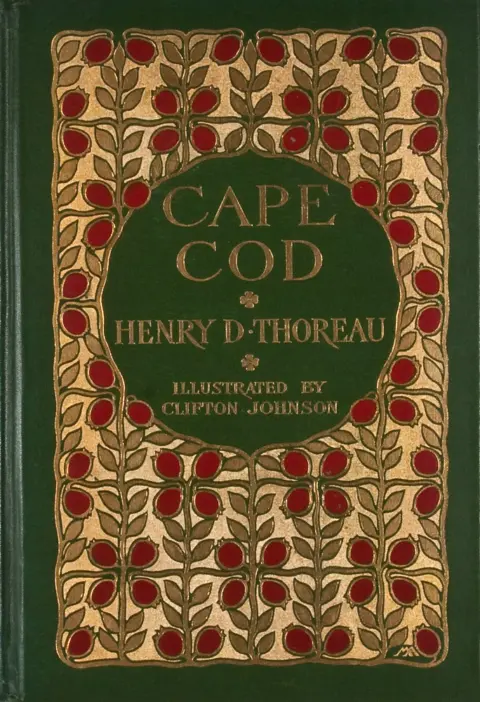
THE CLASSIC COLLECTION · 1908
"Cape Cod" by Henry David Thoreau is a detailed travelogue and nature reflection written in the mid-19th century. The book chronicles the author’s journeys through Cape Cod, exploring its landscapes, inhabitants, and the philosophical underpinnings of life on the coast. Thoreau, known for his deep appreciation of nature and individualism, captures the essence of the Cape's natural beauty and the lives of those who call it home. The opening of "Cape Cod" introduces Thoreau's desire to explore and understand the ocean and its surroundings more intimately, prompting his visits in various seasons. He recounts his experiences following the shipwreck of the brig "St. John" off the Cohasset shore, describing the somber aftermath as locals engage in grim recovery efforts, dealing with both the physical remains of the tragedy and their emotional impact. Thoreau reflects on life, death, and the sea's indifference, drawing philosophical conclusions from the environment he encounters, indicating a deeper exploration of existence and the human condition amidst the trials of nature.
Introduction adapted from the source catalogue; source summaries may be automatically generated.
Free to read · English · 78,660 words · No account needed
MAKE TIME FOR A GOOD BOOK
On by default. Untick to stop anonymous reading totals. Each page counts after 10 seconds in view. How this works.
Anonymous counting is on unless you have switched it off.
The next morning, Thursday, October 11th, it rained, as hard as ever; but we were determined to proceed on foot, nevertheless. We first made some inquiries with regard to the practicability of walking up the shore on the Atlantic side to Provincetown, whether we should meet with any creeks or marshes to trouble us. Higgins said that there was no obstruction, and that it was not much farther than by the road, but he thought that we should find it very “heavy” walking in the sand; it was bad enough in the road, a horse would sink in up to the fetlocks there. But there was one man at the tavern who had walked it, and he said that we could go very well, though it was sometimes inconvenient and even dangerous walking under the bank, when there was a great tide, with an easterly wind, which caused the sand to cave. For the first four or five miles we followed the road, which here turns to the north on the elbow, —the narrowest part of the Cape,—that we might clear an inlet from the ocean, a part of Nauset Harbor, in Orleans, on our right. We found the travelling good enough for walkers on the sides of the roads, though it was “heavy” for horses in the middle. We walked with our umbrellas behind us, since it blowed hard as well as rained, with driving mists, as the day before, and the wind helped us over the sand at a rapid rate. Everything indicated that we had reached a strange shore. The road was a mere lane, winding over bare swells of bleak and barren-looking land. The houses were few and far between, besides being small and rusty, though they appeared to be kept in good repair, and their dooryards, which were the unfenced Cape, were tidy; or, rather, they looked as if the ground around them was blown clean by the wind. Perhaps the scarcity of wood here, and the consequent absence of the wood-pile and other wooden traps, had something to do with this appearance. They seemed, like mariners ashore, to have sat right down to enjoy the firmness of the land, without studying their postures or habiliments. To them it was merely terra firma and cognita, not yet fertilis and jucunda. Every landscape which is dreary enough has a certain beauty to my eyes, and in this instance its permanent qualities were enhanced by the weather. Everything told of the sea, even when we did not see its waste or hear its roar. For birds there were gulls, and for carts in the fields, boats turned bottom upward against the houses, and sometimes the rib of a whale was woven into the fence by the road-side. The trees were, if possible, rarer than the houses, excepting apple-trees, of which there were a few small orchards in the hollows. These were either narrow and high, with flat tops, having lost their side branches, like huge plum-bushes growing in exposed situations, or else dwarfed and branching immediately at the ground, like quince-bushes. They suggested that, under like circumstances, all trees would at last acquire like habits of growth. I afterward saw on the Cape many full-grown apple-trees not higher than a man’s head; one whole orchard, indeed, where all the fruit could have been gathered by a man standing on the ground; but you could hardly creep beneath the trees. Some, which the owners told me were twenty years old, were only three and a half feet high, spreading at six inches from the ground five feet each way, and being withal surrounded with boxes of tar to catch the cankerworms, they looked like plants in flower-pots, and as if they might be taken into the house in the winter. In another place, I saw some not much larger than currant-bushes; yet the owner told me that they had borne a barrel and a half of apples that fall. If they had been placed close together, I could have cleared them all at a jump. I measured some near the Highland Light in Truro, which had been taken from the shrubby woods thereabouts when young, and grafted. One, which had been set ten years, was on an average eighteen inches high, and spread nine feet with a flat top. It had borne one bushel of apples two years before. Another, probably twenty years old from the seed, was five feet high, and spread eighteen feet, branching, as usual, at the ground, so that you could not creep under it. This bore a barrel of apples two years before. The owner of these trees invariably used the personal pronoun in speaking of them; as, “I got him out of the woods, but he doesn’t bear.” The largest that I saw in that neighborhood was nine feet high to the topmost leaf, and spread thirty-three feet, branching at the ground five ways.
Your reading position is saved on this browser. Take it to another device with a library code. Reading pages adapt to text, rather than matching a printed edition.
Henry David Thoreau
Henry David Thoreau
Henry David Thoreau
Henry David Thoreau
BEHIND THE BOOK
This eBook is for the use of anyone anywhere in the United States and most other parts of the world at no cost and with almost no restrictions whatsoever. You may copy it, give it away or re-use it under the terms of the Project Gutenberg License included with this eBook or online at www.gutenberg.org. If you are not located in the United States, you will have to check the laws of the country where you are located before using this eBook. Read the source licence.
The original source file, including credits and licence, is retained by this library. Request an original-format copy at no charge. Please include the book title and Project Gutenberg identifier #34392.
KEEP YOUR CURIOSITY GOING
Wilfrid Scawen Blunt
Wilfrid Scawen Blunt
E. W. (Edgar Watson) Howe

David Patterson (Spirit) Hatch
Coulson Kernahan

Ralph Waldo Emerson