THE CLASSIC COLLECTION✦Familiar Letters The Writings of Henry David Thoreau, Volume 06 (of 20)CLASSIC FREE BOOKS
Familiar Letters The Writings of Henry David Thoreau, Volume 06 (of 20)
Henry David Thoreau
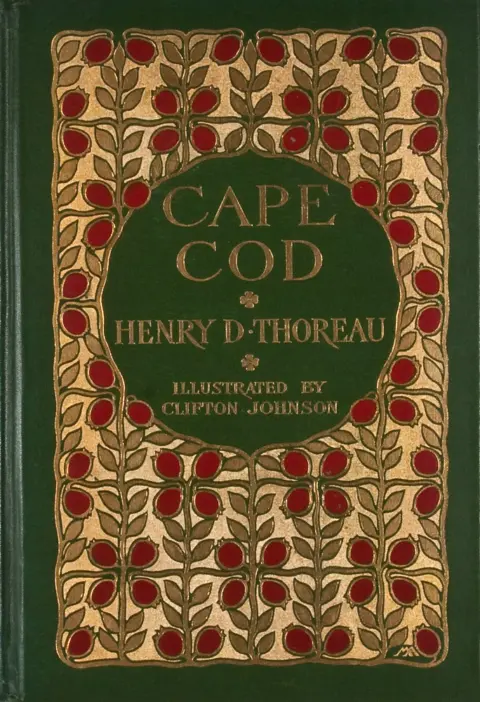
THE CLASSIC COLLECTION · 1908
"Cape Cod" by Henry David Thoreau is a detailed travelogue and nature reflection written in the mid-19th century. The book chronicles the author’s journeys through Cape Cod, exploring its landscapes, inhabitants, and the philosophical underpinnings of life on the coast. Thoreau, known for his deep appreciation of nature and individualism, captures the essence of the Cape's natural beauty and the lives of those who call it home. The opening of "Cape Cod" introduces Thoreau's desire to explore and understand the ocean and its surroundings more intimately, prompting his visits in various seasons. He recounts his experiences following the shipwreck of the brig "St. John" off the Cohasset shore, describing the somber aftermath as locals engage in grim recovery efforts, dealing with both the physical remains of the tragedy and their emotional impact. Thoreau reflects on life, death, and the sea's indifference, drawing philosophical conclusions from the environment he encounters, indicating a deeper exploration of existence and the human condition amidst the trials of nature.
Introduction adapted from the source catalogue; source summaries may be automatically generated.
Free to read · English · 78,660 words · No account needed
MAKE TIME FOR A GOOD BOOK
On by default. Untick to stop anonymous reading totals. Each page counts after 10 seconds in view. How this works.
Anonymous counting is on unless you have switched it off.
A strict regard for truth obliges us to say that the few women whom we saw that day looked exceedingly pinched up. They had prominent chins and noses, having lost all their teeth, and a sharp W would represent their profile. They were not so well preserved as their husbands; or perchance they were well preserved as dried specimens. (Their husbands, however, were pickled.) But we respect them not the less for all that; our own dental system is far from perfect.
Still we kept on in the rain, or, if we stopped, it was commonly at a post-office, and we thought that writing letters, and sorting them against our arrival, must be the principal employment of the inhabitants of the Cape this rainy day. The post-office appeared a singularly domestic institution here. Ever and anon the stage stopped before some low shop or dwelling, and a wheelwright or shoemaker appeared in his shirt sleeves and leather apron, with spectacles newly donned, holding up Uncle Sam’s bag, as if it were a slice of home-made cake, for the travellers, while he retailed some piece of gossip to the driver, really as indifferent to the presence of the former as if they were so much baggage. In one instance we understood that a woman was the postmistress, and they said that she made the best one on the road; but we suspected that the letters must be subjected to a very close scrutiny there. While we were stopping for this purpose at Dennis, we ventured to put our heads out of the windows, to see where we were going, and saw rising before us, through the mist, singular barren hills, all stricken with poverty-grass, looming up as if they were in the horizon, though they were close to us, and we seemed to have got to the end of the land on that side, notwithstanding that the horses were still headed that way. Indeed, that part of Dennis which we saw was an exceedingly barren and desolate country, of a character which I can find no name for; such a surface, perhaps, as the bottom of the sea made dry land day before yesterday. It was covered with poverty-grass, and there was hardly a tree in sight, but here and there a little weather-stained, one-storied house, with a red roof,—for often the roof was painted, though the rest of the house was not,—standing bleak and cheerless, yet with a broad foundation to the land, where the comfort must have been all inside. Yet we read in the Gazetteer—for we carried that too with us—that, in 1837, one hundred and fifty masters of vessels, belonging to this town, sailed from the various ports of the Union. There must be many more houses in the south part of the town, else we cannot imagine where they all lodge when they are at home, if ever they are there; but the truth is, their houses are floating ones, and their home is on the ocean. There were almost no trees at all in this part of Dennis, nor could I learn that they talked of setting out any. It is true, there was a meeting-house, set round with Lombardy poplars, in a hollow square, the rows fully as straight as the studs of a building, and the corners as square; but, if I do not mistake, every one of them was dead. I could not help thinking that they needed a revival here. Our book said that, in 1795, there was erected in Dennis “an elegant meeting-house, with a steeple.” Perhaps this was the one; though whether it had a steeple, or had died down so far from sympathy with the poplars, I do not remember. Another meeting-house in this town was described as a “neat building”; but of the meeting-house in Chatham, a neighboring town, for there was then but one, nothing is said, except that it “is in good repair,”—both which remarks, I trust, may be understood as applying to the churches spiritual as well as material. However, “elegant meeting-houses,” from that Trinity one on Broadway, to this at Nobscusset, in my estimation, belong to the same category with “beautiful villages.” I was never in season to see one. Handsome is that handsome does. What they did for shade here, in warm weather, we did not know, though we read that “fogs are more frequent in Chatham than in any other part of the country; and they serve in summer, instead of trees, to shelter the houses against the heat of the sun. To those who delight in extensive vision,”—is it to be inferred that the inhabitants of Chatham do not?—“they are unpleasant, but they are not found to be unhealthful.” Probably, also, the unobstructed sea-breeze answers the purpose of a fan. The historian of Chatham says further, that “in many families there is no difference between the breakfast and supper; cheese, cakes, and pies being as common at the one as at the other.” But that leaves us still uncertain whether they were really common at either.
Your reading position is saved on this browser. Take it to another device with a library code. Reading pages adapt to text, rather than matching a printed edition.
Henry David Thoreau
Henry David Thoreau
Henry David Thoreau
Henry David Thoreau
BEHIND THE BOOK
This eBook is for the use of anyone anywhere in the United States and most other parts of the world at no cost and with almost no restrictions whatsoever. You may copy it, give it away or re-use it under the terms of the Project Gutenberg License included with this eBook or online at www.gutenberg.org. If you are not located in the United States, you will have to check the laws of the country where you are located before using this eBook. Read the source licence.
The original source file, including credits and licence, is retained by this library. Request an original-format copy at no charge. Please include the book title and Project Gutenberg identifier #34392.
KEEP YOUR CURIOSITY GOING
Wilfrid Scawen Blunt
Wilfrid Scawen Blunt
E. W. (Edgar Watson) Howe

David Patterson (Spirit) Hatch
Coulson Kernahan

Ralph Waldo Emerson