THE CLASSIC COLLECTION✦Familiar Letters The Writings of Henry David Thoreau, Volume 06 (of 20)CLASSIC FREE BOOKS
Familiar Letters The Writings of Henry David Thoreau, Volume 06 (of 20)
Henry David Thoreau
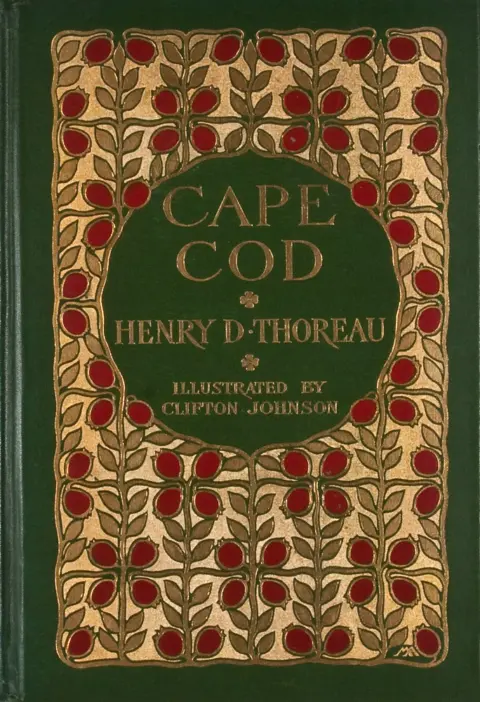
THE CLASSIC COLLECTION · 1908
"Cape Cod" by Henry David Thoreau is a detailed travelogue and nature reflection written in the mid-19th century. The book chronicles the author’s journeys through Cape Cod, exploring its landscapes, inhabitants, and the philosophical underpinnings of life on the coast. Thoreau, known for his deep appreciation of nature and individualism, captures the essence of the Cape's natural beauty and the lives of those who call it home. The opening of "Cape Cod" introduces Thoreau's desire to explore and understand the ocean and its surroundings more intimately, prompting his visits in various seasons. He recounts his experiences following the shipwreck of the brig "St. John" off the Cohasset shore, describing the somber aftermath as locals engage in grim recovery efforts, dealing with both the physical remains of the tragedy and their emotional impact. Thoreau reflects on life, death, and the sea's indifference, drawing philosophical conclusions from the environment he encounters, indicating a deeper exploration of existence and the human condition amidst the trials of nature.
Introduction adapted from the source catalogue; source summaries may be automatically generated.
Free to read · English · 78,660 words · No account needed
MAKE TIME FOR A GOOD BOOK
On by default. Untick to stop anonymous reading totals. Each page counts after 10 seconds in view. How this works.
Anonymous counting is on unless you have switched it off.
The “Isola della Réna” (Sable Island?) appears on the chart of “Nuova Francia” and Norumbega, accompanying the “Discourse” above referred to in Ramusio’s third volume, edition 1556-65. Champlain speaks of there being at the Isle of Sable, in 1604, “grass pastured by oxen (bœufs) and cows which the Portuguese carried there more than sixty years ago,” i.e. sixty years before 1613; in a later edition he says, which came out of a Spanish vessel which was lost in endeavoring to settle on the Isle of Sable; and he states that De la Roche’s men, who were left on this island seven years from 1598, lived on the flesh of these cattle which they found “en quantie),” and built houses out of the wrecks of vessels which came to the island (“perhaps Gilbert’s”), there being no wood or stone. Lescarbot says that they lived “on fish and the milk of cows left there about eighty years before by Baron de Leri and Saint Just.” Charlevoix says they ate up the cattle and then lived on fish. Haliburton speaks of cattle left there as a rumor. De Leri and Saint Just had suggested plans of colonization on the Isle of Sable as early as 1515 (1508?) according to Bancroft, referring to Charlevoix. These are but a few of the instances which I might quote.
Cape Cod is commonly said to have been discovered in 1602. We will consider at length under what circumstances, and with what observation and expectations, the first Englishmen whom history clearly discerns approached the coast of New England. According to the accounts of Archer and Brereton (both of whom accompanied Gosnold), on the 26th of March, 1602, old style, Captain Bartholomew Gosnold set sail from Falmouth, England, for the North part of Virginia, in a small bark called the Concord, they being in all, says one account, “thirty-two persons, whereof eight mariners and sailors, twelve purposing upon the discovery to return with the ship for England, the rest remain there for population.” This is regarded as “the first attempt of the English to make a settlement within the limits of New England.” Pursuing a new and a shorter course than the usual one by the Canaries, “the 14th of April following” they had sight of Saint Mary’s, an island of the Azores. As their sailors were few and “none of the best” (I use their own phrases), and they were “going upon an unknown coast,” they were not “overbold to stand in with the shore but in open weather”; so they made their first discovery of land with the lead. The 23d of April the ocean appeared yellow, but on taking up some of the water in a bucket, “it altered not either in color or taste from the sea azure.” The 7th of May they saw divers birds whose names they knew, and many others in their “English tongue of no name.” The 8th of May “the water changed to a yellowish green, where at seventy fathoms” they “had ground.” The 9th, they had upon their lead “many glittering stones,”—“which might promise some mineral matter in the bottom.” The 10th, they were over a bank which they thought to be near the western end of St. John’s Island, and saw schools of fish. The 12th, they say, “continually passed fleeting by us sea-oare, which seemed to have their movable course towards the northeast.” On the 13th, they observed “great beds of weeds, much wood, and divers things else floating by,” and “had smelling of the shore much as from the southern Cape and Andalusia in Spain.” On Friday, the 14th, early in the morning they descried land on the north, in the latitude of forty-three degrees, apparently some part of the coast of Maine. Williamson (History of Maine) says it certainly could not have been south of the central Isle of Shoals. Belknap inclines to think it the south side of Cape Ann. Standing fair along by the shore, about twelve o’clock the same day, they came to anchor and were visited by eight savages, who came off to them “in a Biscay shallop, with sail and oars,”—“an iron grapple, and a kettle of copper.” These they at first mistook for “Christians distressed.” One of them was “apparelled with a waistcoat and breeches of black serge, made after our sea-fashion, hoes and shoes on his feet; all the rest (saving one that had a pair of breeches of blue cloth) were naked.” They appeared to have had dealings with “some Basques of St. John de Luz, and to understand much more than we,” say the English, “for want of language, could comprehend.” But they soon “set sail westward, leaving them and their coast.” (This was a remarkable discovery for discoverers.)
Your reading position is saved on this browser. Take it to another device with a library code. Reading pages adapt to text, rather than matching a printed edition.
Henry David Thoreau
Henry David Thoreau
Henry David Thoreau
Henry David Thoreau
BEHIND THE BOOK
This eBook is for the use of anyone anywhere in the United States and most other parts of the world at no cost and with almost no restrictions whatsoever. You may copy it, give it away or re-use it under the terms of the Project Gutenberg License included with this eBook or online at www.gutenberg.org. If you are not located in the United States, you will have to check the laws of the country where you are located before using this eBook. Read the source licence.
The original source file, including credits and licence, is retained by this library. Request an original-format copy at no charge. Please include the book title and Project Gutenberg identifier #34392.
KEEP YOUR CURIOSITY GOING
Wilfrid Scawen Blunt
Wilfrid Scawen Blunt
E. W. (Edgar Watson) Howe

David Patterson (Spirit) Hatch
Coulson Kernahan

Ralph Waldo Emerson