THE CLASSIC COLLECTION✦Familiar Letters The Writings of Henry David Thoreau, Volume 06 (of 20)CLASSIC FREE BOOKS
Familiar Letters The Writings of Henry David Thoreau, Volume 06 (of 20)
Henry David Thoreau
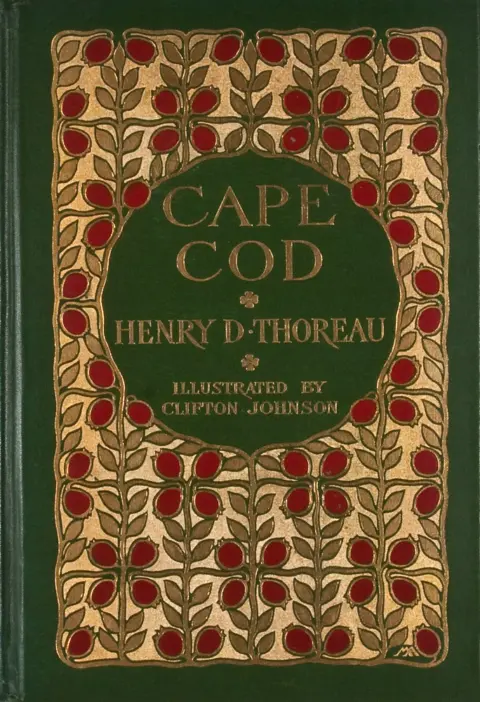
THE CLASSIC COLLECTION · 1908
"Cape Cod" by Henry David Thoreau is a detailed travelogue and nature reflection written in the mid-19th century. The book chronicles the author’s journeys through Cape Cod, exploring its landscapes, inhabitants, and the philosophical underpinnings of life on the coast. Thoreau, known for his deep appreciation of nature and individualism, captures the essence of the Cape's natural beauty and the lives of those who call it home. The opening of "Cape Cod" introduces Thoreau's desire to explore and understand the ocean and its surroundings more intimately, prompting his visits in various seasons. He recounts his experiences following the shipwreck of the brig "St. John" off the Cohasset shore, describing the somber aftermath as locals engage in grim recovery efforts, dealing with both the physical remains of the tragedy and their emotional impact. Thoreau reflects on life, death, and the sea's indifference, drawing philosophical conclusions from the environment he encounters, indicating a deeper exploration of existence and the human condition amidst the trials of nature.
Introduction adapted from the source catalogue; source summaries may be automatically generated.
Free to read · English · 78,660 words · No account needed
MAKE TIME FOR A GOOD BOOK
On by default. Untick to stop anonymous reading totals. Each page counts after 10 seconds in view. How this works.
Anonymous counting is on unless you have switched it off.
About the light-house I observed in the summer the pretty Polygala polygama, spreading ray-wise flat on the ground, white pasture thistles (Cirsium pumilum), and amid the shrubbery the Smilax glauca, which is commonly said not to grow so far north; near the edge of the banks about half a mile southward, the broom crow-berry (Empetrum Conradii), for which Plymouth is the only locality in Massachusetts usually named, forms pretty green mounds four or five feet in diameter by one foot high,—soft, springy beds for the wayfarer. I saw it afterward in Provincetown, but prettiest of all the scarlet pimpernel, or poor-man’s weather-glass (Anagallis-arvensis), greets you in fair weather on almost every square yard of sand. From Yarmouth, I have received the Chrysopsis falcata (golden aster), and Vaccinium stamineum (Deerberry or Squaw Huckleberry), with fruit not edible, sometimes as large as a cranberry (Sept. 7).
The Highland Light-house,[1] where we were staying, is a substantial-looking building of brick, painted white, and surmounted by an iron cap. Attached to it is the dwelling of the keeper, one story high, also of brick, and built by government. As we were going to spend the night in a light-house, we wished to make the most of so novel an experience, and therefore told our host that we would like to accompany him when he went to light up. At rather early candle-light he lighted a small Japan lamp, allowing it to smoke rather more than we like on ordinary occasions, and told us to follow him. He led the way first through his bedroom, which was placed nearest to the light-house, and then through a long, narrow, covered passage-way, between whitewashed walls like a prison entry, into the lower part of the light-house, where many great butts of oil were arranged around; thence we ascended by a winding and open iron stairway, with a steadily increasing scent of oil and lamp-smoke, to a trap-door in an iron floor, and through this into the lantern. It was a neat building, with everything in apple-pie order, and no danger of anything rusting there for want of oil. The light consisted of fifteen argand lamps, placed within smooth concave reflectors twenty-one inches in diameter, and arranged in two horizontal circles one above the other, facing every way excepting directly down the Cape. These were surrounded, at a distance of two or three feet, by large plate-glass windows, which defied the storms, with iron sashes, on which rested the iron cap. All the iron work, except the floor, was painted white. And thus the light-house was completed. We walked slowly round in that narrow space as the keeper lighted each lamp in succession, conversing with him at the same moment that many a sailor on the deep witnessed the lighting of the Highland Light. His duty was to fill and trim and light his lamps, and keep bright the reflectors. He filled them every morning, and trimmed them commonly once in the course of the night. He complained of the quality of the oil which was furnished. This house consumes about eight hundred gallons in a year, which cost not far from one dollar a gallon; but perhaps a few lives would be saved if better oil were provided. Another light-house keeper said that the same proportion of winter-strained oil was sent to the southernmost light-house in the Union as to the most northern. Formerly, when this light-house had windows with small and thin panes, a severe storm would sometimes break the glass, and then they were obliged to put up a wooden shutter in haste to save their lights and reflectors,—and sometimes in tempests, when the mariner stood most in need of their guidance, they had thus nearly converted the light-house into a dark lantern, which emitted only a few feeble rays, and those commonly on the land or lee side. He spoke of the anxiety and sense of responsibility which he felt in cold and stormy nights in the winter; when he knew that many a poor fellow was depending on him, and his lamps burned dimly, the oil being chilled. Sometimes he was obliged to warm the oil in a kettle in his house at midnight, and fill his lamps over again,—for he could not have a fire in the light-house, it produced such a sweat on the windows. His successor told me that he could not keep too hot a fire in such a case. All this because the oil was poor. The government lighting the mariners on its wintry coast with summer-strained oil, to save expense! That were surely a summer-strained mercy.
Your reading position is saved on this browser. Take it to another device with a library code. Reading pages adapt to text, rather than matching a printed edition.
Henry David Thoreau
Henry David Thoreau
Henry David Thoreau
Henry David Thoreau
BEHIND THE BOOK
This eBook is for the use of anyone anywhere in the United States and most other parts of the world at no cost and with almost no restrictions whatsoever. You may copy it, give it away or re-use it under the terms of the Project Gutenberg License included with this eBook or online at www.gutenberg.org. If you are not located in the United States, you will have to check the laws of the country where you are located before using this eBook. Read the source licence.
The original source file, including credits and licence, is retained by this library. Request an original-format copy at no charge. Please include the book title and Project Gutenberg identifier #34392.
KEEP YOUR CURIOSITY GOING
Wilfrid Scawen Blunt
Wilfrid Scawen Blunt

E. W. (Edgar Watson) Howe

David Patterson (Spirit) Hatch
Coulson Kernahan

Ralph Waldo Emerson