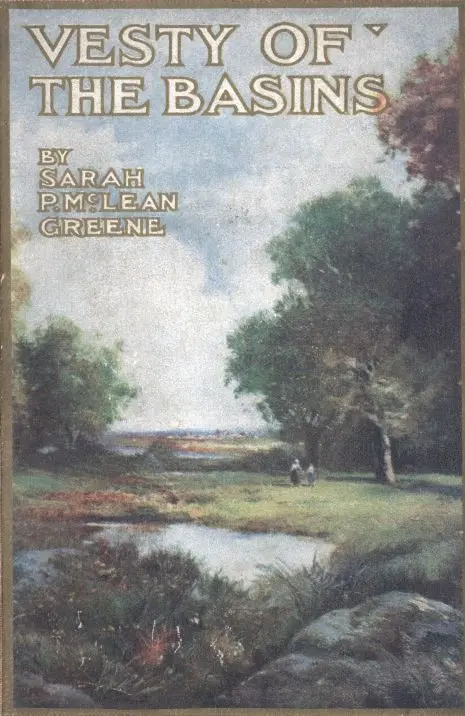
Vesty of the Basins
Sarah Pratt McLean Greene
THE CLASSIC COLLECTION · 1881
"Cape Cod Folks" by Sarah Pratt McLean Greene is a novel written in the late 19th century. The story centers around a young teacher, who journeys to the small and somewhat isolated community of Wallencamp on Cape Cod to fulfill a mission of education and personal discovery. Through her experiences, the book explores themes of community, the challenges of teaching, and the dynamics present in a rural setting. The opening of the narrative introduces Aunt Sibylla, a passionate and authoritative figure in Wallencamp, who delivers an emotionally charged speech about the precariousness of life on the Cape, setting an atmosphere steeped in urgency and foreboding. It also introduces the young protagonist, who arrives from a comfortable background, yet seeks to redefine herself through teaching. As she navigates her first night in Wallencamp, filled with peculiar encounters and a mix of anxiety and anticipation, we witness her initial impressions of the quirky local inhabitants, including the warm-hearted Keeler family. This blend of humor, pathos, and local color is likely indicative of Greene's narrative style throughout the book, promising a thoughtful exploration of her character's evolving relationships within the community.
Introduction adapted from the source catalogue; source summaries may be automatically generated.
Free to read · English · 87,581 words · No account needed
MAKE TIME FOR A GOOD BOOK
On by default. Untick to stop anonymous reading totals. Each page counts after 10 seconds in view. How this works.
Anonymous counting is on unless you have switched it off.
Wallencamp had its peculiar seasons. After the season of hulled corn, came the reign of baked beans. It was during this latter dispensation that my courage failed considerably.
Madeline used to remark, throwing a rare musical halo about her words: "These beans are better than they look. Ain't they, teacher?"
And I was wont to reply conscientiously enough, though with a sweetly wearied glance at the familiar dish; "Certainly, they do taste better than they look."
Occasionally we had what Harvey Dole called, "squash on the shell," an ingenious term for the last of the winter pumpkins boiled in halves, and served au naturel.
Grandpa, too, pined and put away his food. He used to look across the table at me, with a feeble appeal for sympathy in his expression. Oftentimes he sighed deeply, and related anecdotes redolent of "red salmon" and "deer flesh," "strawberries as big as teacups" and "peaches as big as pint bowls," in places where he had sailed.
Once, he ventured to remark, apologetically, referring to the beans and pumpkins, that "bein' sich a mild winter, somehow he didn't hanker arter sech bracin' food, and he guessed he'd go over to Ware'am, and git some pork."
"Wall, thar' now, pa!" said Grandma; "seems to me we'd ought ter consider all the fruits o' God's bounty as good and relishin' in their season."
"I call that punkin out of season," said Grandpa, recklessly. "Strikes me
so."
"I was talkin' about fruits. I wasn't talkin' about punkins," said Grandma, with derisive conclusiveness.
"Wall," said Grandpa, very much aroused, "if you call them tarnal white beans the fruits of God, I don't!"
"Don't you consider that God made beans, pa?"
"No, I don't!"
"Who, then--" continued Grandma, in an awful tone--"do you consider made
beans, pa?"
Grandpa's eyes, as he glared at the dish, were large and round, and significant of unspeakable things.
"Bijonah Keeler!" Grandma hastened to say; "my ears have heard enough!"
As for Grandma, neither her appetite, nor her spirits, flagged. In spite of her confirmed habit of tantalizing Grandpa--and this was from no malevolence of motive, but simply as the conscientious fulfilment of a sacred religious and domestic duty--she was the most delightful soul I ever knew.
At supper, it was a habit for her to sit at the table long after we had finished our meal, and to continue eating and talking in her slow, automatic, sublimely philosophical manner, until not a vestige of anything eatable remained, and then as she rose, she would remark, simply, with a glance at the denuded board:--
"It beats all, how near you guessed the vittles to-night, daughter!"
Your reading position is saved on this browser. Take it to another device with a library code. Reading pages adapt to text, rather than matching a printed edition.
Sarah Pratt McLean Greene
BEHIND THE BOOK
This eBook is for the use of anyone anywhere in the United States and most other parts of the world at no cost and with almost no restrictions whatsoever. You may copy it, give it away or re-use it under the terms of the Project Gutenberg License included with this eBook or online at www.gutenberg.org. If you are not located in the United States, you will have to check the laws of the country where you are located before using this eBook. Read the source licence.
The original source file, including credits and licence, is retained by this library. Request an original-format copy at no charge. Please include the book title and Project Gutenberg identifier #19708.
KEEP YOUR CURIOSITY GOING
Coulson Kernahan

Maurice Baring
Frances Wright
Cécile Tormay

Frederic Jesup Stimson

W. H. P. (William Henry Pope) Jarvis