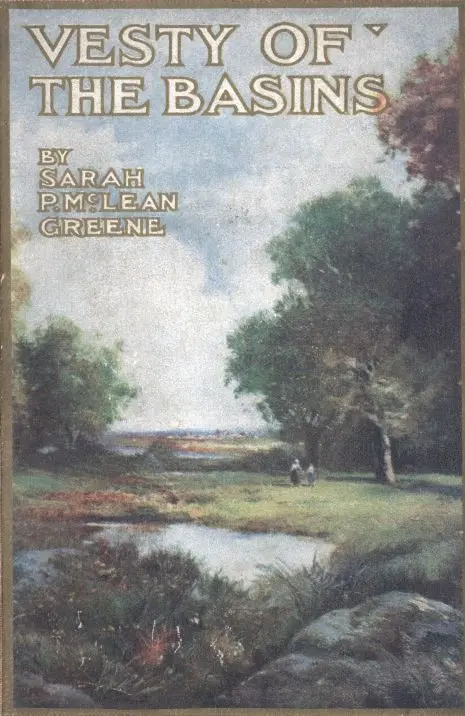
Vesty of the Basins
Sarah Pratt McLean Greene
THE CLASSIC COLLECTION · 1881
"Cape Cod Folks" by Sarah Pratt McLean Greene is a novel written in the late 19th century. The story centers around a young teacher, who journeys to the small and somewhat isolated community of Wallencamp on Cape Cod to fulfill a mission of education and personal discovery. Through her experiences, the book explores themes of community, the challenges of teaching, and the dynamics present in a rural setting. The opening of the narrative introduces Aunt Sibylla, a passionate and authoritative figure in Wallencamp, who delivers an emotionally charged speech about the precariousness of life on the Cape, setting an atmosphere steeped in urgency and foreboding. It also introduces the young protagonist, who arrives from a comfortable background, yet seeks to redefine herself through teaching. As she navigates her first night in Wallencamp, filled with peculiar encounters and a mix of anxiety and anticipation, we witness her initial impressions of the quirky local inhabitants, including the warm-hearted Keeler family. This blend of humor, pathos, and local color is likely indicative of Greene's narrative style throughout the book, promising a thoughtful exploration of her character's evolving relationships within the community.
Introduction adapted from the source catalogue; source summaries may be automatically generated.
Free to read · English · 87,581 words · No account needed
MAKE TIME FOR A GOOD BOOK
On by default. Untick to stop anonymous reading totals. Each page counts after 10 seconds in view. How this works.
Anonymous counting is on unless you have switched it off.
"Pull for the shore, sailor,
Pull for the shore;
Heed not the rolling waves,
But bend to the oar:"
and with a final "Pull for the shore," that sent that imaginary life-boat bounding high and dry on the strand at the hands of its impulsive crew.
Then they sat down and wiped the perspiration from their faces, which had become transfigured with a sudden zest and radiance.
I recovered myself sufficiently to express a bewildered sense of pleasure
and gratitude.
"Do you sing, teacher?" asked Harvey Dole, a round-faced youth with an irrepressible fund of mirth in his eyes, who had broken in on the former silence with an unguarded little snicker.
Lovell Barlow, he of the dignified countenance and spade-shaped beard, had faintly and helplessly echoed that snicker, and now repeated Harvey's words:--
"Ahem, certainly--Do you sing, teacher? Do you, now? Do you sing, you
know?"
I had some new and seriously awakened doubts on the subject. However, the degree of attainment not being brought into question, I felt that I could answer in the affirmative.
The countenances of the group brightened still more perceptibly.
"And do you sing No. 2?" inquired Harvey, eagerly.
I tried to assume, in reply, a tone of equal animation.
"Is it something new? I don't think I've heard of it before."
"Why, it's the Moody and Sankey hymn-book!" exclaimed Harvey, looking
suddenly blank.
I strove to soften the effect of this blow by a lively show of
recognition.
"Oh, yes, I know perfectly now. It's 'Hold the Fort,' 'Ring the Bells of Heaven,' and all those songs, isn't it?"
"'Hold the Fort' 's in No. 1," said George Olver, a new speaker, with beautiful, brave, brown eyes, and a soldierly bearing.
He spoke, correcting me, but with the tender consideration which a father might display toward an unenlightened child.
"There's three numbers," said Harvey Dole, "and you ought to learn to sing 'em, teacher. We sing 'em all the time, down here."
"You are fond of singing?" I questioned.
Ned Vickery, of lithe figure and straight black hair, a denizen of the Indian encampment, started up, flushing through his dark skin.
"I lul-love it!" he said.
Ned Vickery sang with the most exquisite smoothness, but stumbled a little in prosaical conversation.
A silent Norwegian, Lars Thorjon, who had sat gazing at me and smiling, flushed also at the words, and murmured something rapturous with a foreign accent.
"Yes, we're rather fond of singing." I heard George Giver's resolute
tones.
Harvey Dole gave a low, expressive whistle.
"I like it, certainly, ahem! I do. I like it, you know," said Lovell
Barlow.
Your reading position is saved on this browser. Take it to another device with a library code. Reading pages adapt to text, rather than matching a printed edition.
Sarah Pratt McLean Greene
BEHIND THE BOOK
This eBook is for the use of anyone anywhere in the United States and most other parts of the world at no cost and with almost no restrictions whatsoever. You may copy it, give it away or re-use it under the terms of the Project Gutenberg License included with this eBook or online at www.gutenberg.org. If you are not located in the United States, you will have to check the laws of the country where you are located before using this eBook. Read the source licence.
The original source file, including credits and licence, is retained by this library. Request an original-format copy at no charge. Please include the book title and Project Gutenberg identifier #19708.
KEEP YOUR CURIOSITY GOING
Coulson Kernahan

Maurice Baring
Frances Wright
Cécile Tormay

Frederic Jesup Stimson

W. H. P. (William Henry Pope) Jarvis