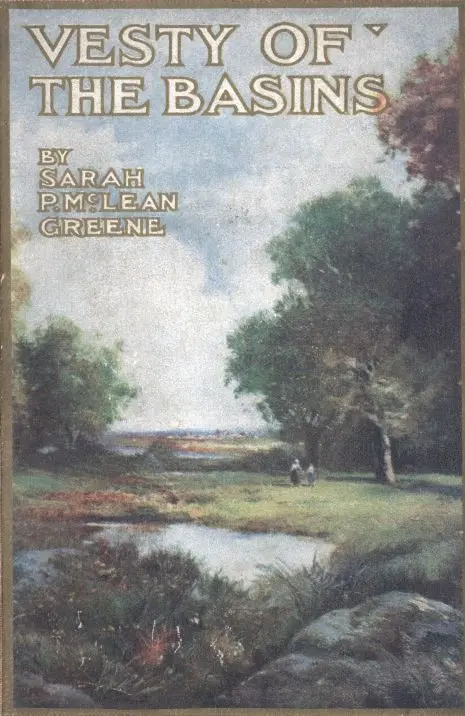
Vesty of the Basins
Sarah Pratt McLean Greene
THE CLASSIC COLLECTION · 1881
"Cape Cod Folks" by Sarah Pratt McLean Greene is a novel written in the late 19th century. The story centers around a young teacher, who journeys to the small and somewhat isolated community of Wallencamp on Cape Cod to fulfill a mission of education and personal discovery. Through her experiences, the book explores themes of community, the challenges of teaching, and the dynamics present in a rural setting. The opening of the narrative introduces Aunt Sibylla, a passionate and authoritative figure in Wallencamp, who delivers an emotionally charged speech about the precariousness of life on the Cape, setting an atmosphere steeped in urgency and foreboding. It also introduces the young protagonist, who arrives from a comfortable background, yet seeks to redefine herself through teaching. As she navigates her first night in Wallencamp, filled with peculiar encounters and a mix of anxiety and anticipation, we witness her initial impressions of the quirky local inhabitants, including the warm-hearted Keeler family. This blend of humor, pathos, and local color is likely indicative of Greene's narrative style throughout the book, promising a thoughtful exploration of her character's evolving relationships within the community.
Introduction adapted from the source catalogue; source summaries may be automatically generated.
Free to read · English · 87,581 words · No account needed
MAKE TIME FOR A GOOD BOOK
On by default. Untick to stop anonymous reading totals. Each page counts after 10 seconds in view. How this works.
Anonymous counting is on unless you have switched it off.
The boy was still lying prone on the ground, when I left the place of mourning with Grandma and Madeline. I spoke to him, and shrank instinctively from his face as he turned it towards me. It was swollen and disfigured with weeping. He had bruised it, too, in falling. He rose, trembling, and walked with me. For my own part, the emotional had given place to feelings of a more sustained and ordinary nature.
I strove to impress upon Harvey's mind the beautiful and poetic manner in which his father had been released from his sufferings.
I reminded him of the shortness of life, "even from your point of view, Harvey;" and the necessity there was always, for not allowing ourselves to be overcome by our griefs or passions, or diverted from the supreme satisfaction of performing our appointed tasks, etc.
And Harvey listened patiently throughout, and said "good night," with a brave attempt at a smile, and a sob still choking in his throat.
I turned an instant, to look at him as he walked away. He wore, generally, a coat of ministerial form and complexion; this, taken in connection with his round, laughing face, his boyish figure, and propensity for playing tricks, had often made me smile, hitherto. But, now, there was something in the attitude of those long, black tails that brought the tears to my eyes.
It occurred to me, indirectly, what Emily had said about my stringing words together, and I marvelled if possibly my exhortation had soared over poor Harvey's head and left his heart aching for an ordinary word of sympathy, or a simple reference to One who as a man of sorrows, was best fitted to understand and console his grief. To any sentiments of the latter nature, Harvey was particularly susceptible.
"Children, all of them!" Thus gently apostrophizing the Wallencampers, I dismissed the cause of my brief mental discomfiture, with a half-pitying smile.
The day after Mr. 'Lihu's death, I looked down from my desk in school to see the infant Sophronia weeping bitterly.
"What is the matter, Sophronia?" I said.
"Carietta's been to see the cops twice," she sobbed; "and I ain't been
any."
I only gathered from this that Carietta was somehow implicated as being the cause of the infant Sophronia's sufferings.
"Now," said I gravely; "tell me what you mean?"
"She means the cops!" cried Carietta, her small face distorted with a leer of the most horrid satisfaction, "'Lihu's cops. 'Phrony means the----"
"That will do," I said. "I understand you perfectly. I understand you only too well. This is about as bad," I reflected; "as anything in my experience."
Your reading position is saved on this browser. Take it to another device with a library code. Reading pages adapt to text, rather than matching a printed edition.
Sarah Pratt McLean Greene
BEHIND THE BOOK
This eBook is for the use of anyone anywhere in the United States and most other parts of the world at no cost and with almost no restrictions whatsoever. You may copy it, give it away or re-use it under the terms of the Project Gutenberg License included with this eBook or online at www.gutenberg.org. If you are not located in the United States, you will have to check the laws of the country where you are located before using this eBook. Read the source licence.
The original source file, including credits and licence, is retained by this library. Request an original-format copy at no charge. Please include the book title and Project Gutenberg identifier #19708.
KEEP YOUR CURIOSITY GOING
Coulson Kernahan

Maurice Baring
Frances Wright
Cécile Tormay

Frederic Jesup Stimson

W. H. P. (William Henry Pope) Jarvis