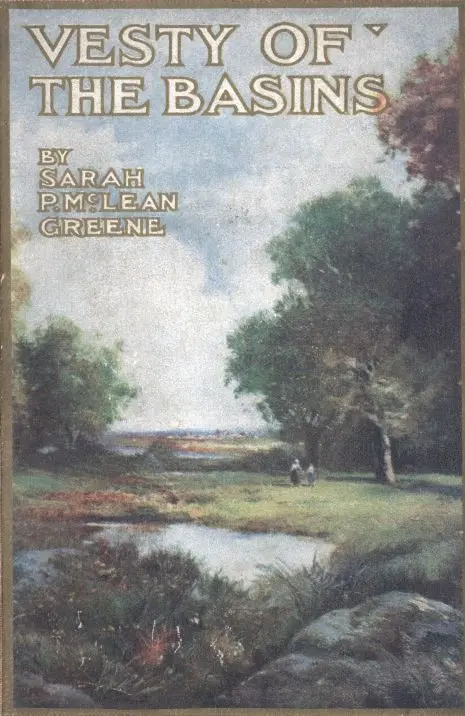
Vesty of the Basins
Sarah Pratt McLean Greene
THE CLASSIC COLLECTION · 1881
"Cape Cod Folks" by Sarah Pratt McLean Greene is a novel written in the late 19th century. The story centers around a young teacher, who journeys to the small and somewhat isolated community of Wallencamp on Cape Cod to fulfill a mission of education and personal discovery. Through her experiences, the book explores themes of community, the challenges of teaching, and the dynamics present in a rural setting. The opening of the narrative introduces Aunt Sibylla, a passionate and authoritative figure in Wallencamp, who delivers an emotionally charged speech about the precariousness of life on the Cape, setting an atmosphere steeped in urgency and foreboding. It also introduces the young protagonist, who arrives from a comfortable background, yet seeks to redefine herself through teaching. As she navigates her first night in Wallencamp, filled with peculiar encounters and a mix of anxiety and anticipation, we witness her initial impressions of the quirky local inhabitants, including the warm-hearted Keeler family. This blend of humor, pathos, and local color is likely indicative of Greene's narrative style throughout the book, promising a thoughtful exploration of her character's evolving relationships within the community.
Introduction adapted from the source catalogue; source summaries may be automatically generated.
Free to read · English · 87,581 words · No account needed
MAKE TIME FOR A GOOD BOOK
On by default. Untick to stop anonymous reading totals. Each page counts after 10 seconds in view. How this works.
Anonymous counting is on unless you have switched it off.
Being thus hopelessly debarred from any communication with external nature, and fearing to give myself up to my own thoughts, which were of a somewhat dangerous character, I endeavored to engage my companion in lively and cheerful converse by the way; but he was in a position of actual physical suffering, for the reins were short--too short, that is, to form a happy connecting link between him and the horse, and poor Lovell was obliged to lean forward at an acute angle in order to grasp them at all. Whenever the ghostly quadruped made a plunge forward, as he not unfrequently did, Lovell was thrust violently down into the straw, and throughout all this he comported himself with such firm and hopeless dignity that, with the respect due to suffering, I was moved to witness the struggle, at length, with silent commiseration. Once, having kept his seat for a longer time than usual, Lovell said:--
"I'll give you a riddle, Miss Hungerford, I will. Ahem! 'Why--why does a hen go around the road,' Miss Hungerford?"
I posed my head in an attitude of deep thought.
"Because," Lovell hastened to say; "because she can't go across--no, that wasn't right--why--ahem! why does a hen go across the road, Miss Hungerford?" and the next instant he was wallowing in the straw at my feet.
My soul was filled with unutterable compassion for him.
"Because," I ventured, when Lovell reappeared again, affecting a tone of lively inspiration: "because she can't go around it?"
"You--you've heard of it before!" gravely protested Lovell.
"I confess," said I, "that I have. It used to be my favorite riddle."
"It--it used to be mine, too," said Lovell. "It used to be, Miss Hungerford--ahem! It used to be--You--you couldn't tell what I was thinking of when I--ahem--when I started from home to-night, now, could you, Miss Hungerford?" said Lovell, at length.
"I'm sure I couldn't, Mr. Barlow," said I: "but I hope it was something
very agreeable."
"But it wasn't," said Lovell; "that is, not very, Miss Hungerford; ahem! not very. I was--I was--ahem! I was thinking of it, you know, of--of such a thing as getting married, you know."
"I hope," said I, cheerfully, after a pause; "that as you consider the subject longer, it will be a less painful one to you."
"I hope so, Miss Hungerford," said Lovell. "Ahem! I hope so, certainly;" but there was little of that sanguine quality expressed in his tones.
The great white horse made another plunge forward, and Lovell recovered himself with a desperate effort.
Your reading position is saved on this browser. Take it to another device with a library code. Reading pages adapt to text, rather than matching a printed edition.
Sarah Pratt McLean Greene
BEHIND THE BOOK
This eBook is for the use of anyone anywhere in the United States and most other parts of the world at no cost and with almost no restrictions whatsoever. You may copy it, give it away or re-use it under the terms of the Project Gutenberg License included with this eBook or online at www.gutenberg.org. If you are not located in the United States, you will have to check the laws of the country where you are located before using this eBook. Read the source licence.
The original source file, including credits and licence, is retained by this library. Request an original-format copy at no charge. Please include the book title and Project Gutenberg identifier #19708.
KEEP YOUR CURIOSITY GOING
Coulson Kernahan

Maurice Baring
Frances Wright
Cécile Tormay

Frederic Jesup Stimson

W. H. P. (William Henry Pope) Jarvis