
The Writing of News A Handbook with Chapters on Newspaper Correspondence and Copy Reading
Charles G. (Charles Griffith) Ross
THE CLASSIC COLLECTION · 1915
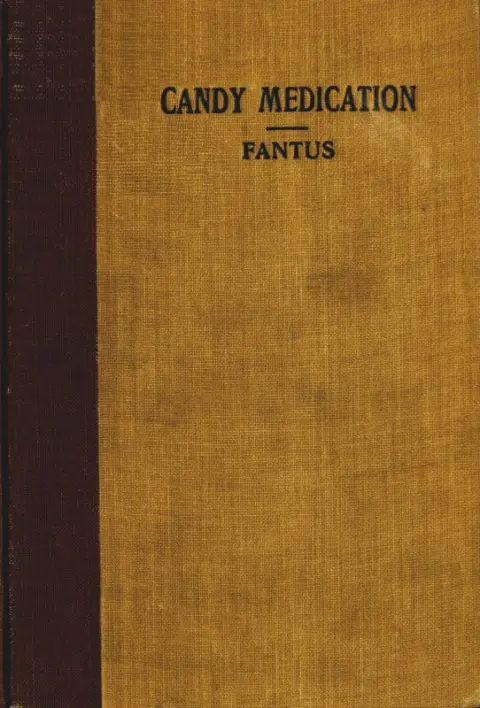
"Candy Medication" by Bernard Fantus is a scientific publication written in the early 20th century. The book focuses on an innovative approach to administering medication to children, utilizing sweet tablets or candies designed to make the intake of medicines more palatable. The work incorporates both historical perspectives and practical applications, aiming to highlight the benefits of this method in pediatric therapeutics. The opening portion introduces the concept of candy medications, tracing its historical roots to ancient times when medicinal confections were common. Fantus shares his motivations for exploring this approach, noting the challenges children face when taking traditional liquid medicines. He argues that candy medication can greatly alleviate the fear and resistance typically associated with taking medicine among children, using delightful and attractive sweet tablets. The text outlines the necessity of creating a formulary to standardize this method, thereby enhancing its accessibility and effectiveness for practitioners and pharmacists alike.
Introduction adapted from the source catalogue; source summaries may be automatically generated.
Free to read · English · 13,128 words · No account needed
MAKE TIME FOR A GOOD BOOK
On by default. Untick to stop anonymous reading totals. Each page counts after 10 seconds in view. How this works.
Anonymous counting is on unless you have switched it off.
Spirit of lemon, 10% 5.00 Cc. Tincture of curcuma 10.00 Cc. Fat starch 20.00 Gm. Sugar, powdered 80.00 Gm.
Mix the powdered sugar with the tincture of curcuma and permit the alcohol to evaporate; then add the spirit of lemon and the fat starch. Mix well and preserve in a well-stoppered bottle in a dark place.
[A] Not absolutely necessary.
[B] Equivalent amount of sugar might be used though powder may not work quite as well in machine.
[C] Equivalent amount of sugar might be used, though powder may not
work as well in machine.
[1] Fantus, B.--Candy Medication, Journal of the American Medical Association, September 14, 1912, Vol. LIX, p. 842.
[2] Sawyer, Sir James--The Lancet, August 12, 1911, p. 435.
[3] Fantus, B.--Tabellae Dulces, Journal of the American Pharmaceutical Association, May, 1914, Vol. III.
[4] Fuller, Robert M.--Dose Dispensing Simplified, New Remedies,
March, 1878, p. 69.
[5] Schleimer, A.--The National Druggist, February, 1909, p. 54.
[6] Fantus, B.--Candy Medication Formulary, Journal of the National Association of Retail Druggists, May 22 and 29, and June 12 and 13, 1913, Vol. XVI, pp. 407, 471, 599, 663.
[7] Fantus, B.--The Making of Tablets by the Retail Druggist, Journal of the American Pharmaceutical Association, January, 1914, Vol. III, No. 1, p. 72.
[8] Wood, Joseph R.--Tablet Manufacture, J. B. Lippincott Co.,
Philadelphia, Pa.
[9] Lloyd, John Uri--Lloyd's Reagent, Preliminary Announcement, Journal of the American Pharmaceutical Association, May, 1914, Vol. III, No. 5, p. 625.
A
Absorbents, 17
Alcresta Strychnine, 33
Anhydrotic, 19
Antacids, 17
Anthelmintic, 18
Antidiarrheals, 17
Antiemetics, 17
Antipyretics, 20
Antiseptic, Urinary, 19
Antiseptics, Intestinal, 18
Antispasmodics, 18
Antitussic, 18
Aromatic Calomel, 11
C
Cacao butter process, 24
"Capping", 30
Cathartics, 18
Chocolate creams, medicated, 12
Choice of color, 34
Choice of flavor, 31
Cinnamon Cacao Sugar, 72
Circulatory depressant, 19
Circulatory stimulants, 19
Color, choice of, 34
Confection, 11
Construction of Formulae, 31
Cough Remedies, 18
Cremulae, 12
D
Depressants, 19
Depressant, Circulatory, 19
Diaphoretics, 19
Difficulties in Tablet Making, 29, 36
Diuretics, 19
E
Emetics, 17
Eureka Tablet Machine, 27
Expectorants, 18
F
Fat covering, 25, 32
Fat starch, 72
Fat sugars, 72, 73
Fat sugar process, 24
Flavor, choice of, 31
Fondant, 12
Formulae, construction of, 31
Formulae for stock preparations, 72
Formulae for sweet tablets, 35
Formulary, 36-71
Fuller's earth, 33
G
Green fat sugar, 72
H
Hematinics, 20
Historical Introduction, 11
I
Indications for sweet tablets, 16
Intestinal antiseptics, 18
L
Lloyd's Reagent, 33
Lozenges, 11
M
Machine, Tablet, 27
Making of sweet tablets, 23
Malaria, specifics in, 20
Myxedema, specific in, 20
O
Objections to sweet tablets, 21
P
Paraffin process, 24
Phenolax, 11
Pink fat sugar, 72
Purgen, 11
R
References, 75
Red fat sugar, 73
Rheumatic fever, specifics in, 20
Your reading position is saved on this browser. Take it to another device with a library code. Reading pages adapt to text, rather than matching a printed edition.
BEHIND THE BOOK
This eBook is for the use of anyone anywhere in the United States and most other parts of the world at no cost and with almost no restrictions whatsoever. You may copy it, give it away or re-use it under the terms of the Project Gutenberg License included with this eBook or online at www.gutenberg.org. If you are not located in the United States, you will have to check the laws of the country where you are located before using this eBook. Read the source licence.
The original source file, including credits and licence, is retained by this library. Request an original-format copy at no charge. Please include the book title and Project Gutenberg identifier #44295.
KEEP YOUR CURIOSITY GOING
Charles G. (Charles Griffith) Ross
Hannah Webster Foster

Emily Lawless
Edwin Hamlin Carr

Charles De Lano Hine
Andrew Ure