Australia, New Zealand and some islands of the South seas
Frank G. (Frank George) Carpenter
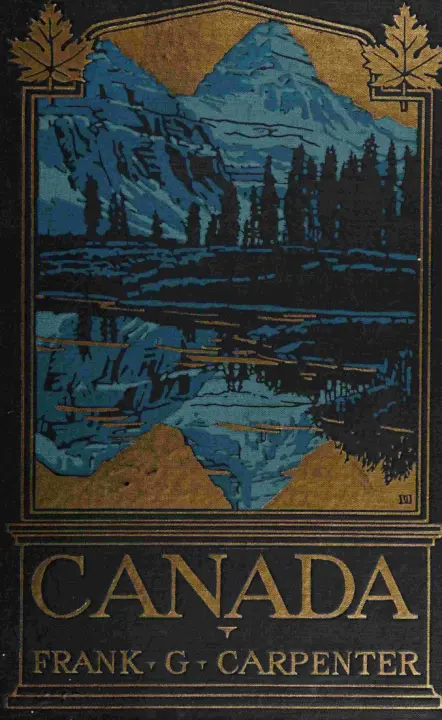
THE CLASSIC COLLECTION · 1924
"Canada and Newfoundland" by Frank G. Carpenter is a travelogue written in the early 20th century. The work explores the vast landscapes, unique cultures, and abundant natural resources of Canada, specifically focusing on the regions of Newfoundland and its historical significance. Carpenter combines his observations from extensive travels with insights into the socio-economic aspects of the places he visits, aiming to educate readers about the richness of Canadian life. The opening of the book invites readers into a journey through Canada, introducing the vastness of the country and highlighting its natural wealth. Carpenter mentions that Canada is nearly as large as all of Europe and discusses its potential for population growth due to its vast uncultivated lands. He shares his experiences visiting different parts of Canada, such as the St. Lawrence River and the cod fisheries of Newfoundland. The narrative sets up a tone of excitement and discovery, emphasizing the interconnectedness of the United States and Canada, suggesting that these two lands share a similar heritage that invites exploration and understanding.
Introduction adapted from the source catalogue; source summaries may be automatically generated.
Free to read · English · 93,267 words · No account needed
MAKE TIME FOR A GOOD BOOK
On by default. Untick to stop anonymous reading totals. Each page counts after 10 seconds in view. How this works.
Anonymous counting is on unless you have switched it off.
Settlers, Canada’s inducements to, 191.
Shawinigan Falls, hydro-electric development of, 46.
Shaughnessy, Lord, an American boy who became president of the
Canadian Pacific, 165.
Sheep, in southern Alberta, 208.
Silver in the Kootenay country, 221.
Silver mines of northern Ontario, 119.
Slavin, Frank, in the Klondike, 278;
partnership with Joe Boyle, 282.
“Soo” Canal, the waterway and its traffic, 136.
Sports, Canadian, 67;
outdoor games promoted by municipal athletic commission at Toronto,
101.
Spruce, predominant standing timber of Canada, 91.
Steam thawing of the ground in Yukon mining, 266, 271.
Steel industries developed in Sydney district, Nova Scotia, 39.
Stock raising in southwestern Saskatchewan, 176.
Sudbury, rich nickel deposits at, 126, 127.
Sunlight, hours of, at Dawson, Yukon, 264.
Superior, Lake, the grain-carrying trade through, 141 et seq.
Swift Current, an important commercial centre of Saskatchewan, 179.
Sydney coal mines, of immense importance, 39.
Tahkeena River, crossing of, on the Yukon trail, 235.
The Pas, an undeveloped mineral region, 154.
Thomas, C. A., demonstrates possibility of winter automobile travel
in the Yukon, 239.
Thornton, Sir Henry, in charge of the Canadian national railways, 164.
Three Rivers, Quebec, largest production of paper in the world, at,
47, 92.
Threshing, methods in the Canadian wheat belt, 185.
Tides, forty feet high in Bay of Fundy, 38.
Timber, valuable tracts in Newfoundland, 11.
Timothy hay, large crops at Edmonton, 200.
Tomatoes, a hot-house crop at Dawson, Yukon, 261.
Toronto, the city of public ownership, 97 et seq.
Toronto University, largest in the British Empire, 98.
Transcontinental railway systems of Canada, 157.
Trappists, at Winnipeg, 153.
Truro, Nova Scotia, 38.
Turnips, as a crop, at Dawson, Yukon, 264.
University of Saskatchewan, efforts in behalf of agriculture and
ceramics, 179.
Valley of the Ten Peaks, in the Canadian Rockies, 216.
Vancouver, chief city of British Columbia and Canada’s most important Pacific port, 224.
Vancouver Island, copper workings on, 223.
Van Horne, Wm., strenuous railroad builder, 165.
Veneer, manufacture of, at Sault Ste. Marie, 135.
Victoria, capital of British Columbia, 225.
Wabana iron mines rich under-sea deposits, 24.
Wainwright Park, Alberta, containing largest herd of buffalo extant,
217.
Waterfalls that work for the people, 106 et seq.
Water-power, great developments in Quebec, 46; its relation to the paper and pulp industry, 96.
Welland Canal, building of deeper and larger locks, 99.
Welland River, hydro-electric development of, 113.
Wheat, the great movement through Port Arthur and Fort William, 141
et seq.;
production of the Winnipeg district, 149;
on the Saskatchewan prairies, 175, 181;
methods of planting and harvesting in the Canadian wheat belt, 183;
large crops at Edmonton, 200;
in Peace River Valley, 202;
importance of Vancouver as a shipping point, 225.
Wheat belt, Canada’s, its immense extent and great production, 181.
White Horse, beginning of the trail to Dawson, 232.
White pine timber becoming exhausted in Canada, 91.
Wild flowers, abundant in the Yukon, 235.
Williams-Taylor, Sir Frederick, interview with, on Canadian banking,
73.
Winnipeg, a fast-growing city, 148 et seq.;
its importance in the fur trade, 166.
Winter sports in Quebec, 50.
Wireless telegraph, fisheries of Nova Scotia controlled by, 36.
Your reading position is saved on this browser. Take it to another device with a library code. Reading pages adapt to text, rather than matching a printed edition.
Frank G. (Frank George) Carpenter
Frank G. (Frank George) Carpenter
Frank G. (Frank George) Carpenter
BEHIND THE BOOK
This eBook is for the use of anyone anywhere in the United States and most other parts of the world at no cost and with almost no restrictions whatsoever. You may copy it, give it away or re-use it under the terms of the Project Gutenberg License included with this eBook or online at www.gutenberg.org. If you are not located in the United States, you will have to check the laws of the country where you are located before using this eBook. Read the source licence.
The original source file, including credits and licence, is retained by this library. Request an original-format copy at no charge. Please include the book title and Project Gutenberg identifier #71640.
KEEP YOUR CURIOSITY GOING
Wilfrid Scawen Blunt
Wilfrid Scawen Blunt

E. W. (Edgar Watson) Howe
Cécile Tormay

Moritz Busch
John L. Ransom