THE CLASSIC COLLECTION✦The long wayCLASSIC FREE BOOKS
The long way
Mary Imlay Taylor
THE CLASSIC COLLECTION · 1910
"Caleb Trench" by Mary Imlay Taylor is a novel written in the early 20th century. The story introduces the central character, Caleb Trench, a shopkeeper and aspiring lawyer, whose strong moral compass sets him apart in a small southern community navigating social class tensions and political strife. The narrative focuses on his interactions with the well-bred yet conflicted Diana Royall, establishing a dynamic that suggests deeper themes of honesty, social status, and potential romance. At the start of the novel, we find Diana Royall in her elegant drawing room, discussing an unexpected visit from Caleb Trench, who is honest to a fault, returning six cents in change. This encounter reveals Diana's haughty attitude, foreshadowing her struggle with her feelings towards Trench, whose straightforwardness challenges her perceptions. As the story unfolds, we see glimpses of Trench’s life and character, particularly in his kindness towards a struggling young mother and the friendship he shares with his dog. The initial chapters weave together themes of class disparity, personal integrity, and burgeoning attraction, setting the stage for the developing tension between individual desire and societal expectations.
Introduction adapted from the source catalogue; source summaries may be automatically generated.
Free to read · English · 71,514 words · No account needed
MAKE TIME FOR A GOOD BOOK
On by default. Untick to stop anonymous reading totals. Each page counts after 10 seconds in view. How this works.
Anonymous counting is on unless you have switched it off.
“I TELL you, David Royall, I can’t understand I how you ever let that man come to your house,” Mrs. Eaton said; “a common man in the first place, and now--why, there can’t be any doubt at all about Jean Bartlett! Hasn’t he got the child?”
Colonel Royall tilted his chair against the pillar of the veranda and looked at her mildly. “That’s where the doubt comes in, Jinny,” he remarked.
“I can’t understand you!” she retorted tartly, dropping a stitch in her crocheting and struggling blindly to pick it up. “I can’t in the least understand your doubts--it’s obvious.”
“Which?” said the colonel, “the doubt or Sammy?”
“Both!” said she.
“Well, Dr. Cheyney told me about it,” said the colonel, “and I’m not sure that I believe all the other things I hear. Give him the benefit of the doubt, Jinny.”
“There isn’t any doubt,” declared Mrs. Eaton; “everybody says he’s the father of that child.”
Colonel Royall shook his head slowly. “It isn’t like the male critter, Jinny,” he argued mildly, “to take in the child; he’d most likely ship it.”
“Some women do that!” said Mrs. Eaton sharply, shutting her thin lips.
The colonel turned a terrible face upon her. “Jinny!”
Mrs. Eaton reddened and her hands shook, but she went on without regarding his anger. “At least, he’s the father of the Cresset speech, you’ll admit that, and, if you please, here is this duel with Jacob--with my son!”
“I believe Jacob was the challenger,” said Colonel Royall.
“He couldn’t stand being insulted by such trash!” said the indignant
mother.
The colonel smiled broadly. “Come, Jinny, why did he go there?”
“How should I know?” she retorted hotly; “some political reason, of course, and Trench took advantage of it, as a common man would.”
The colonel began to whittle a stick, man’s resource from time immemorial. “Jinny,” he said, “you’re the greatest partisan on earth; if you could lead a political party you’d cover your antagonist with confusion. When I see Jacob beating his head against a wall I always remember he’s your son.”
Mrs. Eaton’s face relaxed a little. “Jacob takes after my family,” she admitted, smiling; “he’s like them in looks and he has all their charm.”
“Why don’t you say yours, Jinny?” asked the colonel, twinkling.
“I don’t think you half appreciate that,” she replied, with a touch of coquetry; “if you did, you wouldn’t quarrel with me about Caleb Trench.”
“Do I?” said the colonel.
Your reading position is saved on this browser. Take it to another device with a library code. Reading pages adapt to text, rather than matching a printed edition.
Mary Imlay Taylor
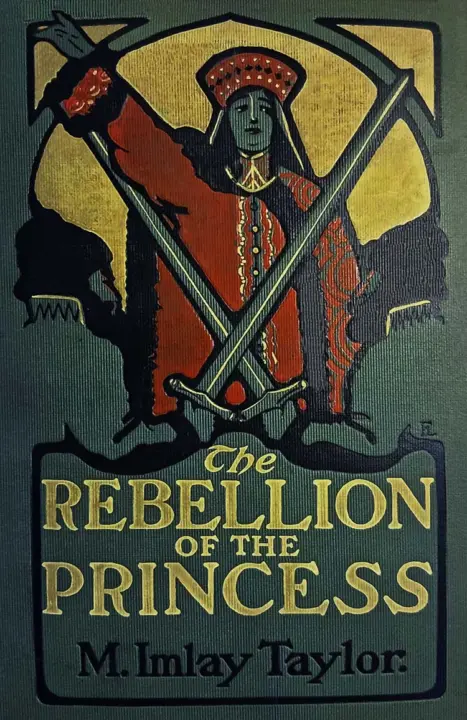
Mary Imlay Taylor
Mary Imlay Taylor
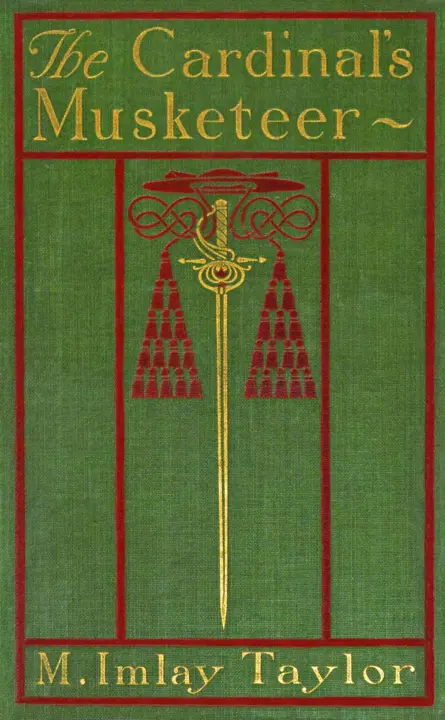
Mary Imlay Taylor
BEHIND THE BOOK
This eBook is for the use of anyone anywhere in the United States and most other parts of the world at no cost and with almost no restrictions whatsoever. You may copy it, give it away or re-use it under the terms of the Project Gutenberg License included with this eBook or online at www.gutenberg.org. If you are not located in the United States, you will have to check the laws of the country where you are located before using this eBook. Read the source licence.
The original source file, including credits and licence, is retained by this library. Request an original-format copy at no charge. Please include the book title and Project Gutenberg identifier #69145.
KEEP YOUR CURIOSITY GOING
Coulson Kernahan

Maurice Baring
Frances Wright
Cécile Tormay

Frederic Jesup Stimson

W. H. P. (William Henry Pope) Jarvis