THE CLASSIC COLLECTION✦The long wayCLASSIC FREE BOOKS
The long way
Mary Imlay Taylor
THE CLASSIC COLLECTION · 1910
"Caleb Trench" by Mary Imlay Taylor is a novel written in the early 20th century. The story introduces the central character, Caleb Trench, a shopkeeper and aspiring lawyer, whose strong moral compass sets him apart in a small southern community navigating social class tensions and political strife. The narrative focuses on his interactions with the well-bred yet conflicted Diana Royall, establishing a dynamic that suggests deeper themes of honesty, social status, and potential romance. At the start of the novel, we find Diana Royall in her elegant drawing room, discussing an unexpected visit from Caleb Trench, who is honest to a fault, returning six cents in change. This encounter reveals Diana's haughty attitude, foreshadowing her struggle with her feelings towards Trench, whose straightforwardness challenges her perceptions. As the story unfolds, we see glimpses of Trench’s life and character, particularly in his kindness towards a struggling young mother and the friendship he shares with his dog. The initial chapters weave together themes of class disparity, personal integrity, and burgeoning attraction, setting the stage for the developing tension between individual desire and societal expectations.
Introduction adapted from the source catalogue; source summaries may be automatically generated.
Free to read · English · 71,514 words · No account needed
MAKE TIME FOR A GOOD BOOK
On by default. Untick to stop anonymous reading totals. Each page counts after 10 seconds in view. How this works.
Anonymous counting is on unless you have switched it off.
Their eyes met with a challenge of angry pride, then a whimsical smile quivered at the corners of her mouth, and she clasped her hands innocently over her ferns. “When you begin to like me we shall be friends,” she said.
There was an instant of awkward silence, and then they both laughed,
not happily, but with a nervous quiver that suggested hysterical
emotion.
“I do not know when I began--to dislike you,” he said.
“I deserved it from the first, I fancy,” she retorted, hurrying on with her determination to show her repentance; “I have behaved like a snob.”
He did not reply; he stooped, instead, to pick up the flowers that he had broken. “My mother would never step on a flower or leave it to die in the road,” he explained simply; “whenever I remember it I pick them up. As a boy I recollect thinking that there was some significance in it, that I must not leave them to die.”
Diana looked at him curiously, from under her lashes. What manner of man was he? “It is a sweet thought,” she said, “in a woman--a tenderness of heart.”
“Her heart was as tender as her soul was beautiful,” said Caleb Trench; “she died when I was twenty years old.”
Diana held out her hand. “Will you give me the flowers?” she asked
simply.
He gave them with a slight flush of surprise. “They are poor and broken,” he apologized lamely.
“I see that you think I have neither a heart nor a soul,” she replied.
He smiled. “I do not let myself think of either, Miss Royall,” he said; “I fancy that a wise man will always avoid the dizzy heights, and even a foolish one will see a precipice.”
Diana was silent; that she understood him would have been apparent to the initiated, for her little ears were red, but the proud curve of her lips remained firm and the steady glance of her eyes rested on the darkening valley. The hills had purpled to gray, the sky was whitening, and in the west the evening star shone like a point of flame.
Out of the stillness her voice sounded unusually soft and sweet. “I’m going to have some friends to tea to-morrow afternoon, Mr. Trench,” she said; “will you come?”
“No,” he replied, and then added: “Pardon me, that seems discourteous, but I am not going out again here, Miss Royall.”
Almost involuntarily she smiled. “We are playing the game of tit-for-tat, Mr. Trench, and you’ve won.”
“I have been a bear,” he replied, “but--Miss Royall, it’s growing dark; let me take you home.”
Your reading position is saved on this browser. Take it to another device with a library code. Reading pages adapt to text, rather than matching a printed edition.
Mary Imlay Taylor
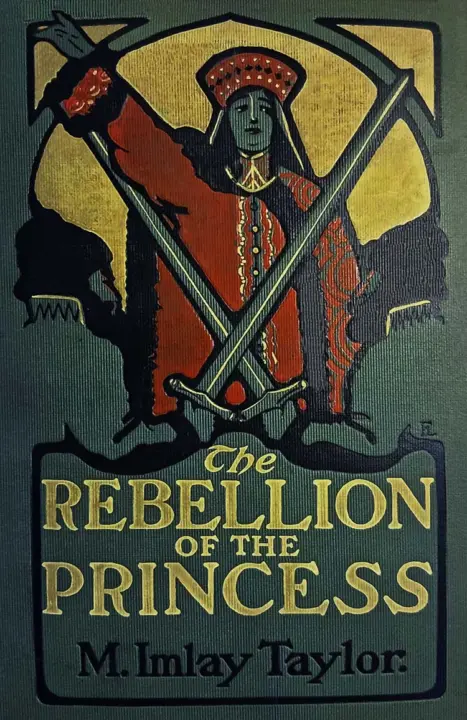
Mary Imlay Taylor
Mary Imlay Taylor
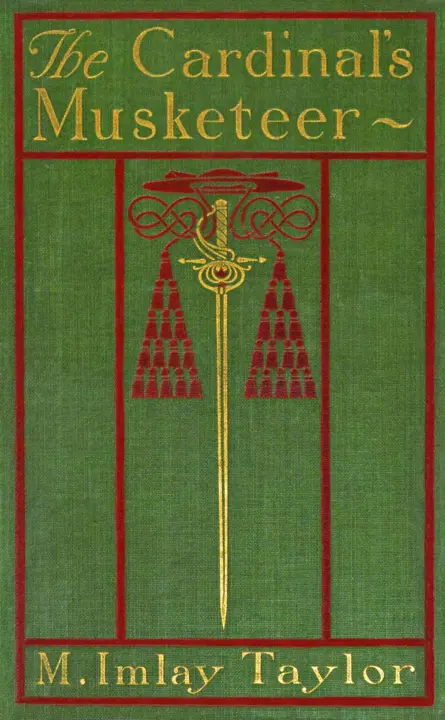
Mary Imlay Taylor
BEHIND THE BOOK
This eBook is for the use of anyone anywhere in the United States and most other parts of the world at no cost and with almost no restrictions whatsoever. You may copy it, give it away or re-use it under the terms of the Project Gutenberg License included with this eBook or online at www.gutenberg.org. If you are not located in the United States, you will have to check the laws of the country where you are located before using this eBook. Read the source licence.
The original source file, including credits and licence, is retained by this library. Request an original-format copy at no charge. Please include the book title and Project Gutenberg identifier #69145.
KEEP YOUR CURIOSITY GOING
Coulson Kernahan

Maurice Baring
Frances Wright
Cécile Tormay

Frederic Jesup Stimson

W. H. P. (William Henry Pope) Jarvis