THE CLASSIC COLLECTION✦Half a dozen boysCLASSIC FREE BOOKS
Half a dozen boys
Anna Chapin Ray
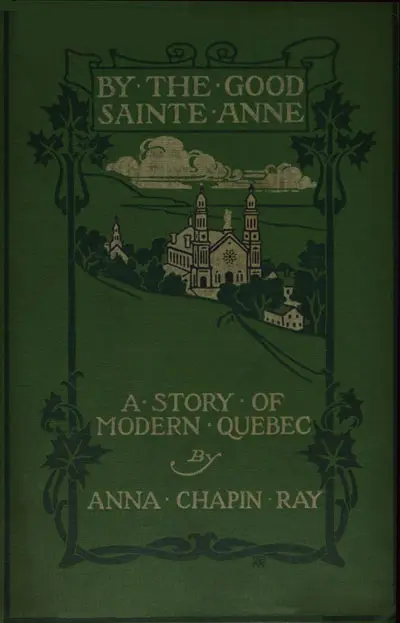
THE CLASSIC COLLECTION · 1904
"By the Good Sainte Anne: A Story of Modern Quebec" by Anna Chapin Ray is a novel written in the early 20th century. The story is set against the backdrop of Quebec and follows Nancy Howard, a young American girl who is struggling with feeling exiled from her social life back home as her father studies history in the picturesque but remote region of Beaupré. The narrative explores Nancy's interactions with a cast of characters that reveals both her longing for excitement and the cultural dynamics of the area. The opening of the novel introduces Nancy Howard, who is feeling exasperated by her father's academic pursuits that keep her isolated in the countryside while her friends are enjoying social events back home. As she engages with a local woman, Madame Gagnier, she learns of a pilgrimage to the church of Sainte Anne-de-Beaupré, sparking her curiosity about the miracles associated with it. The chapter captures Nancy’s spirited desire for adventure and connection, as she resolves to participate in the pilgrimage. Simultaneously, we encounter a young Englishman, Mr. Cecil Barth, who finds himself in Quebec but is grappling with his own feelings of isolation, setting the stage for future interactions between them. Through a blend of humor and introspection, the narrative hints at the themes of cultural clash, faith, and personal growth that will unfold in their journey within the unique setting of modern Quebec.
Introduction adapted from the source catalogue; source summaries may be automatically generated.
Free to read · English · 52,520 words · No account needed
MAKE TIME FOR A GOOD BOOK
On by default. Untick to stop anonymous reading totals. Each page counts after 10 seconds in view. How this works.
Anonymous counting is on unless you have switched it off.
Barth glanced anxiously about the table. Aside from the tray, there were two plates upon the table, and one of the two held tiny strips of toasted bread. All told, there were exactly eight of the strips, each amounting to a mouthful and a half, and Nancy had just been out at the Cove Fields, playing golf.
Nancy pointed to the other plate.
“I mean those—biscuits,” she said conclusively and with emphasis.
“Those? Oh. But those aren’t biscuits.”
“What do you call them, then? Buns?” Nancy inquired, with scathing
curiosity.
“Buns? Oh, no. Those are scones.”
This time, Nancy fairly bounced in her chair.
“They are nothing in this world but common, every-day American soda biscuits,” she said, as she helped herself to the puffiest and the brownest. “You are in America now, Mr. Barth, and there is no sense in your putting British names to our cooking. Will you have a biscuit?”
“Oh, yes. But really, you know, they are scones,” he protested. “My mother nearly always has them.”
Nancy cast anxious eyes at the drop of molten butter that was trickling along the base of her thumb.
“And so do we,” she replied firmly; “only we eat them at breakfast, with a napkin. I don’t mean that we actually eat the napkin,” she explained hastily, in mercy for the limitations of her companion’s understanding. “But, really, these are very buttery.”
Barth sucked his forefinger with evident relish.
“Oh, rather!” he assented. “That’s what makes them so good.”
Nancy furtively rescued her handkerchief from her temporary substitute for a pocket. Then, bending forward, she arranged four of the strips of toast around the margin of her saucer.
“What’s that for?” Barth queried, at a loss to know whether the act was another Americanism, or merely a Nancyism pure and simple.
“We are going to go halves on our rations,” Nancy answered coolly. “I am just as hungry as you are, and I don’t propose to have you eating more than your share of things.”
“Would you like to have me order some more scones?” he asked
courteously.
For the space of a full minute, Nancy bestowed her entire attention upon her teacup. Then she lifted the white of one eye to Barth’s questioning face.
“Oh, rather!” she responded nonchalantly.
Your reading position is saved on this browser. Take it to another device with a library code. Reading pages adapt to text, rather than matching a printed edition.
Anna Chapin Ray
Anna Chapin Ray
Anna Chapin Ray
Anna Chapin Ray
BEHIND THE BOOK
This eBook is for the use of anyone anywhere in the United States and most other parts of the world at no cost and with almost no restrictions whatsoever. You may copy it, give it away or re-use it under the terms of the Project Gutenberg License included with this eBook or online at www.gutenberg.org. If you are not located in the United States, you will have to check the laws of the country where you are located before using this eBook. Read the source licence.
The original source file, including credits and licence, is retained by this library. Request an original-format copy at no charge. Please include the book title and Project Gutenberg identifier #60175.
KEEP YOUR CURIOSITY GOING
Coulson Kernahan

Maurice Baring
Frances Wright
Cécile Tormay

Frederic Jesup Stimson

W. H. P. (William Henry Pope) Jarvis