THE CLASSIC COLLECTION✦Half a dozen boysCLASSIC FREE BOOKS
Half a dozen boys
Anna Chapin Ray
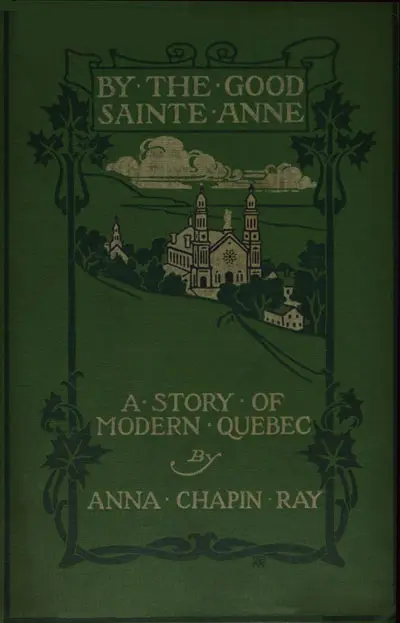
THE CLASSIC COLLECTION · 1904
"By the Good Sainte Anne: A Story of Modern Quebec" by Anna Chapin Ray is a novel written in the early 20th century. The story is set against the backdrop of Quebec and follows Nancy Howard, a young American girl who is struggling with feeling exiled from her social life back home as her father studies history in the picturesque but remote region of Beaupré. The narrative explores Nancy's interactions with a cast of characters that reveals both her longing for excitement and the cultural dynamics of the area. The opening of the novel introduces Nancy Howard, who is feeling exasperated by her father's academic pursuits that keep her isolated in the countryside while her friends are enjoying social events back home. As she engages with a local woman, Madame Gagnier, she learns of a pilgrimage to the church of Sainte Anne-de-Beaupré, sparking her curiosity about the miracles associated with it. The chapter captures Nancy’s spirited desire for adventure and connection, as she resolves to participate in the pilgrimage. Simultaneously, we encounter a young Englishman, Mr. Cecil Barth, who finds himself in Quebec but is grappling with his own feelings of isolation, setting the stage for future interactions between them. Through a blend of humor and introspection, the narrative hints at the themes of cultural clash, faith, and personal growth that will unfold in their journey within the unique setting of modern Quebec.
Introduction adapted from the source catalogue; source summaries may be automatically generated.
Free to read · English · 52,520 words · No account needed
MAKE TIME FOR A GOOD BOOK
On by default. Untick to stop anonymous reading totals. Each page counts after 10 seconds in view. How this works.
Anonymous counting is on unless you have switched it off.
Brock’s keen eyes swept the room with direct, impersonal curiosity, took note of the half-unpacked boxes, the piles of books, the heaps of clothing, then moved back to Barth’s face, where they rested with mirthful, kindly scrutiny. Then he crossed the room and dropped into a chair by the window.
“You brought me a message from Miss Howard?” Barth queried tentatively, after a pause which his companion seemed disinclined to break.
“Not so much a message as a—a suggestion,” Brock answered, with a hesitation so short as to escape the Englishman’s ear. “Miss Howard and the Lady are going to market, this morning, and I gathered, from what Miss Howard said, that she would like you to be on hand.”
“To—market?”
“Yes. She evidently thought you understood it was an engagement. The only question seemed to be about the hour.”
“Oh. What time do they go?”
“Ten.”
“And now?”
“It is past nine now.”
Barth stepped to the table and glanced at his watch.
“Fifteen past nine,” he read. “There is plenty of time. And you are sure Miss Howard wanted me?”
“Perfectly,” Brock answered, with brazen mendacity.
“How strange!” observed Mr. Cecil Barth.
“Strange that she should want you? Oh, not at all,” Brock demurred
politely.
“Oh, no. Strange that she shouldn’t have mentioned it before.”
“Didn’t she say anything about it, last night?” Brock inquired.
“No. At least, I don’t remember it.”
“It may have slipped her mind. You had a good deal to talk over, I
believe.”
“What do people do, when they go to market?” Barth queried, with sudden and intentional inconsequence.
“Buy things.”
“Yes. But what sort of things?”
“Haven’t you been down into the market yet?” Brock asked, as he craned his neck to watch two girls passing in the street beneath.
“Oh, no. Why should I?”
“Strangers generally do; it is quite one of the sights.”
“Do you mind if I begin dressing, Mr. Brock? What sort of sights?”
“Oh, cabbages, and pigs, and country things like that.”
Barth’s brows knotted, partly over his dressing, partly over his effort to grasp the situation.
“And is Miss Howard going down to—to look at those things?” he
inquired.
“No, man; of course not. She is going down with the Lady to buy them.”
“To—buy—a pig?” Barth spoke in three detached sentences.
Brock smothered his merriment according to the best of his ability.
“The Lady will do the buying. Miss Howard goes to look on.”
“And does she expect me to look on, too?”
“Certainly.”
Barth sat with his shoe horn hanging loosely in his hand.
Your reading position is saved on this browser. Take it to another device with a library code. Reading pages adapt to text, rather than matching a printed edition.
Anna Chapin Ray
Anna Chapin Ray
Anna Chapin Ray

Anna Chapin Ray
BEHIND THE BOOK
This eBook is for the use of anyone anywhere in the United States and most other parts of the world at no cost and with almost no restrictions whatsoever. You may copy it, give it away or re-use it under the terms of the Project Gutenberg License included with this eBook or online at www.gutenberg.org. If you are not located in the United States, you will have to check the laws of the country where you are located before using this eBook. Read the source licence.
The original source file, including credits and licence, is retained by this library. Request an original-format copy at no charge. Please include the book title and Project Gutenberg identifier #60175.
KEEP YOUR CURIOSITY GOING
Coulson Kernahan

Maurice Baring
Frances Wright
Cécile Tormay

Frederic Jesup Stimson

W. H. P. (William Henry Pope) Jarvis