THE CLASSIC COLLECTION✦Half a dozen boysCLASSIC FREE BOOKS
Half a dozen boys
Anna Chapin Ray
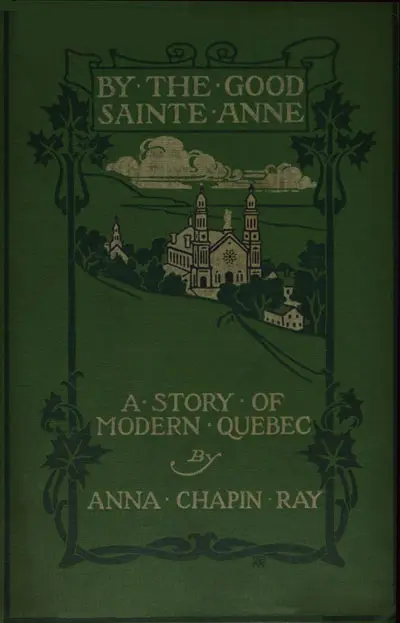
THE CLASSIC COLLECTION · 1904
"By the Good Sainte Anne: A Story of Modern Quebec" by Anna Chapin Ray is a novel written in the early 20th century. The story is set against the backdrop of Quebec and follows Nancy Howard, a young American girl who is struggling with feeling exiled from her social life back home as her father studies history in the picturesque but remote region of Beaupré. The narrative explores Nancy's interactions with a cast of characters that reveals both her longing for excitement and the cultural dynamics of the area. The opening of the novel introduces Nancy Howard, who is feeling exasperated by her father's academic pursuits that keep her isolated in the countryside while her friends are enjoying social events back home. As she engages with a local woman, Madame Gagnier, she learns of a pilgrimage to the church of Sainte Anne-de-Beaupré, sparking her curiosity about the miracles associated with it. The chapter captures Nancy’s spirited desire for adventure and connection, as she resolves to participate in the pilgrimage. Simultaneously, we encounter a young Englishman, Mr. Cecil Barth, who finds himself in Quebec but is grappling with his own feelings of isolation, setting the stage for future interactions between them. Through a blend of humor and introspection, the narrative hints at the themes of cultural clash, faith, and personal growth that will unfold in their journey within the unique setting of modern Quebec.
Introduction adapted from the source catalogue; source summaries may be automatically generated.
Free to read · English · 52,520 words · No account needed
MAKE TIME FOR A GOOD BOOK
On by default. Untick to stop anonymous reading totals. Each page counts after 10 seconds in view. How this works.
Anonymous counting is on unless you have switched it off.
“Really? A pilgrimage! I thought it was too late in the season. Do you suppose there will be a miracle?” she questioned eagerly.
Under the wide hat, the eyes lighted and the wrinkled lips puckered into
a smile.
“Mam’selle does not believe in those miracle,” Madame Gagnier reminded
her.
Nancy’s shoulders shaped themselves into an American travesty of the
inimitable French shrug.
“I am always open to conviction,” she announced calmly.
“Eh?”
“I am going to see for myself.”
“Mam’selle will go to church?”
“Yes; that is, if you are sure it is a pilgrimage.”
“What else?” In her turn, Madame Gagnier pointed to the train whence a stream of humanity was pouring into the square courtyard of the Basilica.
“You are sure? I don’t want to break my neck for nothing, scrambling down your ancestral driveway.”
“Eh?”
For the thousandth time during the past nine days, Nancy felt an unreasoning rage against the deliberate monosyllable that checked her whimsical talk. In time, it becomes annoying to be obliged to explain all one’s figures of speech. Abruptly she pulled herself up and began again.
“Unless you are sure it is a pilgrimage, I do not wish to walk down the steep slope,” she amended.
“Yes. It is a pilgrimage from Lake Saint John. My son told me. It is the last pilgrimage of the year.”
Nancy clasped her hands in rapture.
“Glory be!” she breathed fervently. “I am in great luck, to-day, for they said that it was too late in the year to expect any more of them. The Good Sainte Anne is working in my behalf. Now, if she will only produce a miracle, I’ll be quite content. Good by, Madame Gagnier!”
Madame Gagnier nodded, as she looked after the alert, erect figure.
“Mam’selle does not believe in those miracle,” she said calmly. “Well,
she shall see.”
The girl stooped to pick up her letters. Then swiftly she crossed the lawn and entered the house. Outside a closed door, she paused and tapped softly.
“Come in.” The answering voice was impersonal, abstracted.
Pushing open the door, Nancy entered the little sitting-room and crossed to the desk by the sunny window looking out on the river.
“Daddy dear, are you going to come with me, for an hour or two?”
The figure before the desk lost its scholarly abstraction and came back to the present. The student of antiquity had changed to the adoring father of a most modern sort of American girl; and his eyes, leaving the musty ecclesiastical records, brightened with a wholly worldly pride in his pretty daughter.
“What now?”
Your reading position is saved on this browser. Take it to another device with a library code. Reading pages adapt to text, rather than matching a printed edition.
Anna Chapin Ray
Anna Chapin Ray

Anna Chapin Ray

Anna Chapin Ray
BEHIND THE BOOK
This eBook is for the use of anyone anywhere in the United States and most other parts of the world at no cost and with almost no restrictions whatsoever. You may copy it, give it away or re-use it under the terms of the Project Gutenberg License included with this eBook or online at www.gutenberg.org. If you are not located in the United States, you will have to check the laws of the country where you are located before using this eBook. Read the source licence.
The original source file, including credits and licence, is retained by this library. Request an original-format copy at no charge. Please include the book title and Project Gutenberg identifier #60175.
KEEP YOUR CURIOSITY GOING
Coulson Kernahan

Maurice Baring
Frances Wright
Cécile Tormay

Frederic Jesup Stimson

W. H. P. (William Henry Pope) Jarvis