THE CLASSIC COLLECTION✦Half a dozen boysCLASSIC FREE BOOKS
Half a dozen boys
Anna Chapin Ray
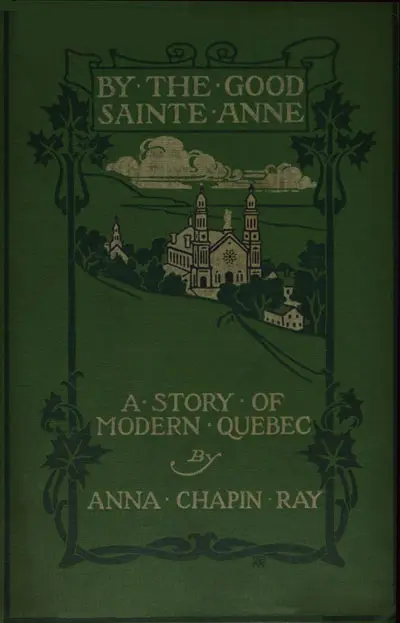
THE CLASSIC COLLECTION · 1904
"By the Good Sainte Anne: A Story of Modern Quebec" by Anna Chapin Ray is a novel written in the early 20th century. The story is set against the backdrop of Quebec and follows Nancy Howard, a young American girl who is struggling with feeling exiled from her social life back home as her father studies history in the picturesque but remote region of Beaupré. The narrative explores Nancy's interactions with a cast of characters that reveals both her longing for excitement and the cultural dynamics of the area. The opening of the novel introduces Nancy Howard, who is feeling exasperated by her father's academic pursuits that keep her isolated in the countryside while her friends are enjoying social events back home. As she engages with a local woman, Madame Gagnier, she learns of a pilgrimage to the church of Sainte Anne-de-Beaupré, sparking her curiosity about the miracles associated with it. The chapter captures Nancy’s spirited desire for adventure and connection, as she resolves to participate in the pilgrimage. Simultaneously, we encounter a young Englishman, Mr. Cecil Barth, who finds himself in Quebec but is grappling with his own feelings of isolation, setting the stage for future interactions between them. Through a blend of humor and introspection, the narrative hints at the themes of cultural clash, faith, and personal growth that will unfold in their journey within the unique setting of modern Quebec.
Introduction adapted from the source catalogue; source summaries may be automatically generated.
Free to read · English · 52,520 words · No account needed
MAKE TIME FOR A GOOD BOOK
On by default. Untick to stop anonymous reading totals. Each page counts after 10 seconds in view. How this works.
Anonymous counting is on unless you have switched it off.
“So glad you like it, Joe! It is wonderful; and then it is endeared to me by all manner of associations. Away up there in those blue hills, Mr. Barth sprained his ankle; M. St. Jacques and I spent an afternoon in this road just underneath the cliff, and,” her eyes sought Brock’s eyes mockingly; “and there aren’t ten blocks in the entire city that can’t mark some sort of a skirmish between the American and Canadian forces.”
Brock’s answering shot was prompt.
“It is only that America refuses to be annexed,” he supplemented gravely. “We hope to bring her to terms in time.”
And Barth fell to kicking the turf in moody discontent. Nancy checked
him.
“Don’t destroy the glacis of your chief American outpost, Mr. Barth. You may need it sometime to fight off the French from your possessions.”
Her words had been wholly free from any allegorical meaning. Nevertheless, Barth’s heels ground into the turf more viciously than ever, as he made grim answer,—
“Oh, we English need no artificial defenses to fight off the Frenchmen,
you know.”
“Sic ’em!” Brock observed impartially. Then he snatched his hat from his head, and, forgetful of their differences, Barth and St. Jacques followed his lead.
Distant and faint from behind the sheltering wall came the strains of God Save the King, as the band marched back from practice.
“Strange to hear America up here!” Churchill said idly.
“America?” The Frenchman’s accent was inquiring.
“Yes. That is our national anthem.”
“How long since?” Brock queried coolly.
“Why, always, I suppose.”
Barth bestowed a contemplative stare upon the stranger.
“How very—American!” he observed.
“Of course. We think it is rather characteristic, and are no end proud of it,” Churchill assured him blandly.
Barth sat up, straight and stiff.
“Mr. Churchill, did you ever happen to hear of God Save the King?”
“Queen? Oh, beg pardon! She’s dead, and it is a king now. Yes, I’ve heard of it. What about it?”
“That.” Barth swept his little gray cap towards the dying notes of the final phrase. “Your so-called America is only our God Save the King.”
“Is it? I’m no musician, and didn’t know. Still, I can’t see that it hurts it, to have started with you. So did we all, if it comes to that.”
“Then you should give us the credit for having originated it,” Brock
suggested.
St. Jacques rolled over on his other elbow.
“As it happens, Brock, you didn’t originate it. It came from the other side of the Channel.”
“Oh, rather! But it’s ours,” Barth interposed hastily.
Your reading position is saved on this browser. Take it to another device with a library code. Reading pages adapt to text, rather than matching a printed edition.
Anna Chapin Ray
Anna Chapin Ray
Anna Chapin Ray

Anna Chapin Ray
BEHIND THE BOOK
This eBook is for the use of anyone anywhere in the United States and most other parts of the world at no cost and with almost no restrictions whatsoever. You may copy it, give it away or re-use it under the terms of the Project Gutenberg License included with this eBook or online at www.gutenberg.org. If you are not located in the United States, you will have to check the laws of the country where you are located before using this eBook. Read the source licence.
The original source file, including credits and licence, is retained by this library. Request an original-format copy at no charge. Please include the book title and Project Gutenberg identifier #60175.
KEEP YOUR CURIOSITY GOING
Coulson Kernahan

Maurice Baring
Frances Wright
Cécile Tormay

Frederic Jesup Stimson

W. H. P. (William Henry Pope) Jarvis