THE CLASSIC COLLECTION✦Building the pacific railwayCLASSIC FREE BOOKS
Building the pacific railway
Edwin L. (Edwin Legrand) Sabin
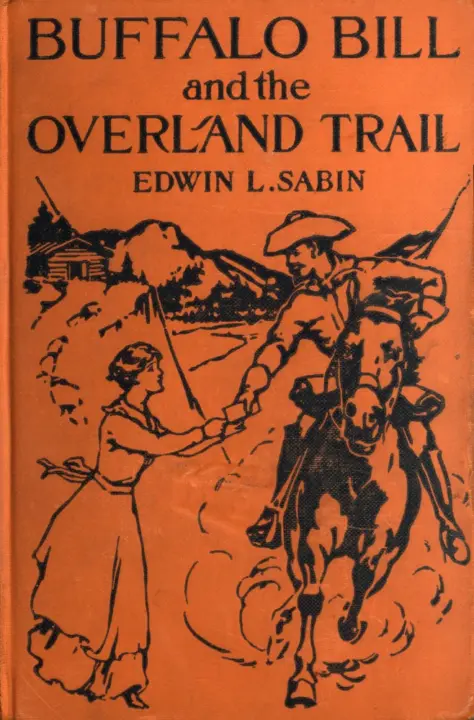
THE CLASSIC COLLECTION · 1914
"Buffalo Bill and the Overland Trail" by Edwin L. Sabin is a historical account written in the early 20th century. The narrative focuses on the adventurous life of Buffalo Bill, alongside the challenges and experiences of those who traversed the Overland Trail in the 19th century, illustrating the spirit of exploration and settlement in America. Central to the story is young David Scott, a boy who becomes involved in the conflict between white settlers and Native Americans, showcasing themes of bravery, heroism, and the harsh realities of frontier life. At the start of the tale, we are introduced to a tense situation where David Scott, a red-headed boy, is held by Cheyenne Indians as they ride through western Nebraska. The boy witnesses the thrill and danger of life on the plains, from plundering wagon trains to impending confrontations. As the narrative unfolds, the focus shifts to an intense battle between indomitable white settlers and the warring Cheyenne tribe, exemplified by buffalo hunters and courageous figures such as Buffalo Bill himself. The opening lays a vivid foundation for a story steeped in historical context, urgent action, and the resilience of its characters on the wild American frontier.
Introduction adapted from the source catalogue; source summaries may be automatically generated.
Free to read · English · 78,782 words · No account needed
MAKE TIME FOR A GOOD BOOK
On by default. Untick to stop anonymous reading totals. Each page counts after 10 seconds in view. How this works.
Anonymous counting is on unless you have switched it off.
“This Indian is Old Smoke. He’ll steal the tail off a mule. Watch him and pass him along.
The chief grinned and grunted, evidently well pleased with himself and the impression that he thought he was making.
“Soog!” he said eagerly. “Soog!”
“No sugar,” answered Hi. “Drive on, Dave. Needn’t stop.”
But the old Indian kept pace.
“Tobac’. Give tobac’?”
“Nope,” answered Hi, shaking his head. “Puckachee! Be off! Vamose!”
“Look out for those other Injuns!” suddenly warned Billy, the alert. “They’re coming right in!”
“Don’t let ’em!” begged Left-over, excited. “Give him some sugar, so he’ll go away. I’ll give him some.”
“No, you won’t,” retorted Hi, quickly. “Then he’ll want something else. Here, you――” and he spoke in earnest to the chief. “Puckachee!” And Hi waved his hand and patted his yager meaningly. “Get! All of you! No soog, no tobac’, nothing. Keep close to the wagon, boys,” he warned to his party, “and show ’em we mean business. Drive the mules right along, Dave.” He shouted to the advanced Indians: “No! No!” And facing about shifted his gun as for action.
The chief had paused, uncertain; and now his followers paused. The Hee-Haw wagon, flanked by its body-guard, with the mules snorting and straining but controlled by Davy, pressed on. In a moment the chief rode back to his band, and all went cantering away.
“Lucky for them they didn’t try to make us trouble,” boasted Left-over, changing his tune but still suspiciously pale. “We’d have shown ’em!”
“Lucky for us, you mean,” growled Hi. “If once those fellows had got in amongst us and started to crowding us thar’s no knowing what mightn’t have happened. That’s the mistake lots of these emigrants make. They try to parley and give presents, thinking they’re buying the Injuns off; and fust thing they know they’re overrun and helpless and lose their whole outfit.”
“Were you scared up there, Dave?” called Billy.
“No. Were you down there?” retorted Dave.
“Not so anybody noticed it, I hope,” answered Billy.
“Well, one thing’s certain,” said Jim. “We’ve got wuss ahead of us than Injuns, I reckon. Water’s petered out.”
Before their eyes the shallow head-waters of the Smoky Hill Fork disappeared abruptly, as if soaking down through the sand of its bed. Davy checked his mules while Hi and the others surveyed before. Not a token of water showed beyond or as far as they could see.
Billy Cody had promptly trudged on in the advance; and now he shouted
and waved.
Your reading position is saved on this browser. Take it to another device with a library code. Reading pages adapt to text, rather than matching a printed edition.
Edwin L. (Edwin Legrand) Sabin

Edwin L. (Edwin Legrand) Sabin

Edwin L. (Edwin Legrand) Sabin

Edwin L. (Edwin Legrand) Sabin
BEHIND THE BOOK
This eBook is for the use of anyone anywhere in the United States and most other parts of the world at no cost and with almost no restrictions whatsoever. You may copy it, give it away or re-use it under the terms of the Project Gutenberg License included with this eBook or online at www.gutenberg.org. If you are not located in the United States, you will have to check the laws of the country where you are located before using this eBook. Read the source licence.
The original source file, including credits and licence, is retained by this library. Request an original-format copy at no charge. Please include the book title and Project Gutenberg identifier #64231.
KEEP YOUR CURIOSITY GOING
Cécile Tormay

Moritz Busch
Coulson Kernahan
John L. Ransom

Maurice Baring
Frances Wright