THE CLASSIC COLLECTION✦Building the pacific railwayCLASSIC FREE BOOKS
Building the pacific railway
Edwin L. (Edwin Legrand) Sabin
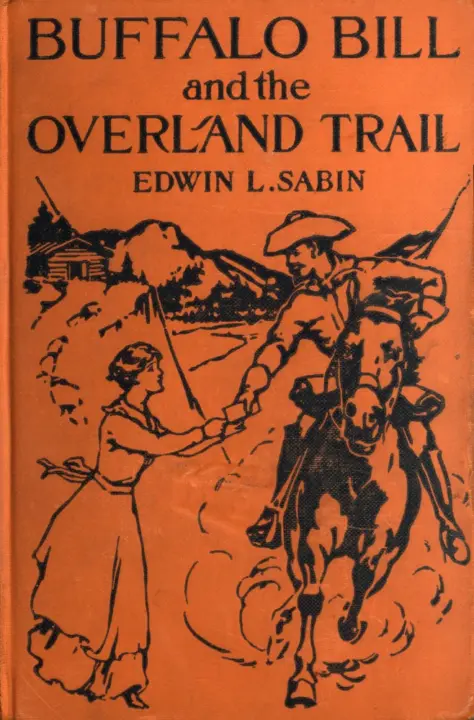
THE CLASSIC COLLECTION · 1914
"Buffalo Bill and the Overland Trail" by Edwin L. Sabin is a historical account written in the early 20th century. The narrative focuses on the adventurous life of Buffalo Bill, alongside the challenges and experiences of those who traversed the Overland Trail in the 19th century, illustrating the spirit of exploration and settlement in America. Central to the story is young David Scott, a boy who becomes involved in the conflict between white settlers and Native Americans, showcasing themes of bravery, heroism, and the harsh realities of frontier life. At the start of the tale, we are introduced to a tense situation where David Scott, a red-headed boy, is held by Cheyenne Indians as they ride through western Nebraska. The boy witnesses the thrill and danger of life on the plains, from plundering wagon trains to impending confrontations. As the narrative unfolds, the focus shifts to an intense battle between indomitable white settlers and the warring Cheyenne tribe, exemplified by buffalo hunters and courageous figures such as Buffalo Bill himself. The opening lays a vivid foundation for a story steeped in historical context, urgent action, and the resilience of its characters on the wild American frontier.
Introduction adapted from the source catalogue; source summaries may be automatically generated.
Free to read · English · 78,782 words · No account needed
MAKE TIME FOR A GOOD BOOK
On by default. Untick to stop anonymous reading totals. Each page counts after 10 seconds in view. How this works.
Anonymous counting is on unless you have switched it off.
“Did you see my mother when you were back East, Dave?” asked Billy.
“Yes.”
“How’s she looking?”
“Not extra good, Billy. She’s not very well, and she said if I came across you to tell you she’d like to see you as soon as she could.”
“How are the girls?”
“They’re all right.”
“I’m sorry about ma,” mused Billy, soberly. “If she’s poorly I’m going home as straight as I can travel, you can bet on that.”
“We can give you a job with the bull train, Billy,” proffered Charley Martin. “We’re short of men.”
But Billy shook his head.
“No, sir. I’m due at the Cody place in Salt Creek Valley.”
“Well, Billy, in that case I’ll pass you through on the next stage, if there’s room,” volunteered Mr. Ficklin.
“I can hang on somewhere,” asserted Billy. “The pass is the main thing. Never mind the room.”
While they all were talking a new arrival halted near. It was an army ambulance――a wagon with black leather top, seats running around the inside, and four big black army mules as the team. It was bound west. A soldier in dusty blue uniform was the driver, and a corporal of infantry sat beside him, between his knees a Sharp’s carbine. From the rear of the ambulance another soldier briskly piled out. By his shoulder straps and the white stripes down his trouser-seams he was an officer; by the double bars on his shoulder straps a captain. He wore a revolver in holster.
He walked over to the group and nodded.
“Hello, Ben.”
“How are you, captain.” And Mr. Ficklin arose to shake hands.
“Gentlemen,” continued Mr. Ficklin, “I want to introduce Captain Brown.”
“I believe I know the captain,” spoke Charley, also shaking hands.
“Hello, Billy,” addressed the captain, catching sight of him. “What’s the matter? Been swimming?”
“Yes,” laughed Billy. “The water’s a little cold up in the mountains, so I took my annual down here.”
“Billy’s been at the diggin’s, captain,” vouchsafed Mr. Ficklin. “He brought down so much gold in his hide that he couldn’t travel till he’d washed it out.”
Billy took their joking good-naturedly. That he was going home “broke” had not discouraged him at all.
“I know one thing, gentlemen,” he declared. “I’m not a miner, but I had to learn. The plains for me after this. You’ll find me bobbing up again.”
“Yes, you can’t keep Billy Cody down, that’s a fact,” agreed Mr. Ficklin. “Where are you bound, captain? Denver?”
Your reading position is saved on this browser. Take it to another device with a library code. Reading pages adapt to text, rather than matching a printed edition.
Edwin L. (Edwin Legrand) Sabin

Edwin L. (Edwin Legrand) Sabin

Edwin L. (Edwin Legrand) Sabin

Edwin L. (Edwin Legrand) Sabin
BEHIND THE BOOK
This eBook is for the use of anyone anywhere in the United States and most other parts of the world at no cost and with almost no restrictions whatsoever. You may copy it, give it away or re-use it under the terms of the Project Gutenberg License included with this eBook or online at www.gutenberg.org. If you are not located in the United States, you will have to check the laws of the country where you are located before using this eBook. Read the source licence.
The original source file, including credits and licence, is retained by this library. Request an original-format copy at no charge. Please include the book title and Project Gutenberg identifier #64231.
KEEP YOUR CURIOSITY GOING
Cécile Tormay

Moritz Busch
Coulson Kernahan
John L. Ransom

Maurice Baring
Frances Wright