THE CLASSIC COLLECTION✦Building the pacific railwayCLASSIC FREE BOOKS
Building the pacific railway
Edwin L. (Edwin Legrand) Sabin
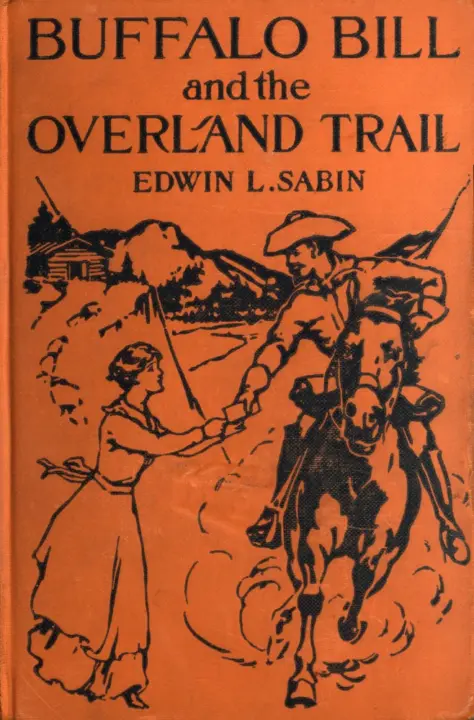
THE CLASSIC COLLECTION · 1914
"Buffalo Bill and the Overland Trail" by Edwin L. Sabin is a historical account written in the early 20th century. The narrative focuses on the adventurous life of Buffalo Bill, alongside the challenges and experiences of those who traversed the Overland Trail in the 19th century, illustrating the spirit of exploration and settlement in America. Central to the story is young David Scott, a boy who becomes involved in the conflict between white settlers and Native Americans, showcasing themes of bravery, heroism, and the harsh realities of frontier life. At the start of the tale, we are introduced to a tense situation where David Scott, a red-headed boy, is held by Cheyenne Indians as they ride through western Nebraska. The boy witnesses the thrill and danger of life on the plains, from plundering wagon trains to impending confrontations. As the narrative unfolds, the focus shifts to an intense battle between indomitable white settlers and the warring Cheyenne tribe, exemplified by buffalo hunters and courageous figures such as Buffalo Bill himself. The opening lays a vivid foundation for a story steeped in historical context, urgent action, and the resilience of its characters on the wild American frontier.
Introduction adapted from the source catalogue; source summaries may be automatically generated.
Free to read · English · 78,782 words · No account needed
MAKE TIME FOR A GOOD BOOK
On by default. Untick to stop anonymous reading totals. Each page counts after 10 seconds in view. How this works.
Anonymous counting is on unless you have switched it off.
“Sure we can,” replied Hi, promptly. “Unhitch, boys. Let’s snake ’em
out o’ thar.”
“Want our oxen, too?” keenly queried the boy.
“Nope, sonny. We can haul the wagon, but we can’t haul the bulls at the
same time.”
At shout and crack of lash the Hee-Haw mules sturdily put their shoulders to their collars and with heave and groan the wagon rolled out to the firm ground.
“Much obliged,” said the boy. “What do we owe you?”
“Nothing,” answered Hi.
“Strangers,” spoke a quavering voice, and the man himself poked his face out from under the hood, “how’ll you trade some of that meat for a sack of flour. I’ve a powerful hankering for fresh meat.”
He was as yellow as a sunflower, and looked pretty miserable.
“Take ten feet of it and welcome,” proffered Mr. Baxter at once. “We don’t want your flour.”
“No; we’ve got plenty flour,” added Hi.
“Thank you,” said the woman, “but we don’t travel on charity. My man’s got a turrible hankering for meat, and if you’ll trade we’ll be right glad to dicker with you. I reckon you can use the flour, can’t you?”
“Just as you say, then, ma’am,” responded Hi. “But you’re welcome to
the meat.”
Billy was already slashing at a string of the jerky; down it came. Seeing this, the Ohio boy dived into the wagon and lustily dragged forth a sack of flour.
He shouldered it and staggered with it toward the Hee-Haw wagon. Billy sprang to take it, but the boy shook his head stubbornly.
“I’m man enough to tote this,” he panted.
“I reckon you are, sonny,” grinned Hi. “But you’ll lemme help you toss it into the wagon, won’t you? You’re so strong and sassy you’re liable to bust a hole through the box!”
“How far to Pike’s Peak, strangers?” asked the woman, anxiously.
“A few hundred miles, ma’am.”
“It seems a powerful long road,” she sighed. “We’ve come clear from Ohio; drove the whole way. We started last fall, an’ wintered in Missouri. That’s where this baby was born.”
“We’ll get there, ma,” encouraged the boy. “Pap’ll feel better now, an’ we’ll go a-whoopin’.”
“I hope so,” she faltered. “But they do say there isn’t any gold,
anyhow.”
Davy felt sorry for her. Evidently so did the Reverend Mr. Baxter.
“What is your name, if you please?” he asked.
“Jones. Mrs. Jasper Jones. My man’s a blacksmith.”
Your reading position is saved on this browser. Take it to another device with a library code. Reading pages adapt to text, rather than matching a printed edition.
Edwin L. (Edwin Legrand) Sabin

Edwin L. (Edwin Legrand) Sabin

Edwin L. (Edwin Legrand) Sabin

Edwin L. (Edwin Legrand) Sabin
BEHIND THE BOOK
This eBook is for the use of anyone anywhere in the United States and most other parts of the world at no cost and with almost no restrictions whatsoever. You may copy it, give it away or re-use it under the terms of the Project Gutenberg License included with this eBook or online at www.gutenberg.org. If you are not located in the United States, you will have to check the laws of the country where you are located before using this eBook. Read the source licence.
The original source file, including credits and licence, is retained by this library. Request an original-format copy at no charge. Please include the book title and Project Gutenberg identifier #64231.
KEEP YOUR CURIOSITY GOING
Cécile Tormay

Moritz Busch
Coulson Kernahan
John L. Ransom

Maurice Baring
Frances Wright