THE CLASSIC COLLECTION✦Building the pacific railwayCLASSIC FREE BOOKS
Building the pacific railway
Edwin L. (Edwin Legrand) Sabin
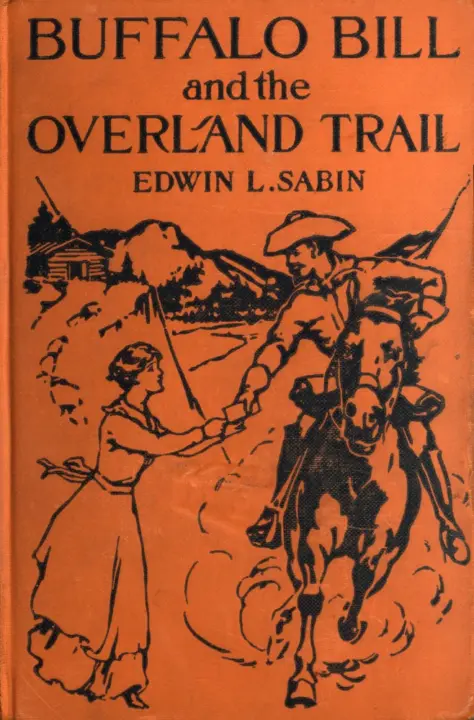
THE CLASSIC COLLECTION · 1914
"Buffalo Bill and the Overland Trail" by Edwin L. Sabin is a historical account written in the early 20th century. The narrative focuses on the adventurous life of Buffalo Bill, alongside the challenges and experiences of those who traversed the Overland Trail in the 19th century, illustrating the spirit of exploration and settlement in America. Central to the story is young David Scott, a boy who becomes involved in the conflict between white settlers and Native Americans, showcasing themes of bravery, heroism, and the harsh realities of frontier life. At the start of the tale, we are introduced to a tense situation where David Scott, a red-headed boy, is held by Cheyenne Indians as they ride through western Nebraska. The boy witnesses the thrill and danger of life on the plains, from plundering wagon trains to impending confrontations. As the narrative unfolds, the focus shifts to an intense battle between indomitable white settlers and the warring Cheyenne tribe, exemplified by buffalo hunters and courageous figures such as Buffalo Bill himself. The opening lays a vivid foundation for a story steeped in historical context, urgent action, and the resilience of its characters on the wild American frontier.
Introduction adapted from the source catalogue; source summaries may be automatically generated.
Free to read · English · 78,782 words · No account needed
MAKE TIME FOR A GOOD BOOK
On by default. Untick to stop anonymous reading totals. Each page counts after 10 seconds in view. How this works.
Anonymous counting is on unless you have switched it off.
“Don’t be so brash about it, then. If you go and kill off one of those mules we’ll put you in harness with the other one.”
“And that will be a pair,” added Billy, quick as a wink.
“Never mind, Left-over,” comforted the Reverend. “Maybe we can get our dried apples there and have that pie I promised you.”
But as they toiled on nearer, the tent grocery seemed deserted. It had no customers and no proprietor.
“Whoa!” yelled Left-over loudly, pulling down his mules opposite the tent. “Whoa, there!” And――“Hello,” he hailed shrilly.
At this slowly emerged from between two large barrels the figure of a gaunt, frowsy-headed man――like a dog crawling out of a kennel. The man must have been asleep. He yawned and stretched and stared.
“Howdy?”
“Howdy, strangers.”
“What do you keep?”
“Everything.”
“Got any dried apples?” demanded Left-over, eagerly.
“Nary apple.”
“Got any crackers?”
“Nary cracker.”
“Any ham?” queried Hi.
“Nary ham.”
“Any molasses?” asked Billy.
“Nary molasses.”
“Any salt?” asked Jim.
“Nary salt.”
“What have you got, then?”
“Pickles and smokin’ tobacco, strangers. Which’ll you have?”
“That’s a great grocery stock!” scoffed Billy, as the Hee-Haw party proceeded. “Pickles and smoking tobacco!”
“I should say!” agreed Davy. “Not much chance for a pie there!”
“I didn’t s’pose the country was going to be as bad as this,” whined Left-over, from the wagon seat.
“Wait till you strike the wust of it,” answered Jim.
“Somebody’s broken down ahead, hasn’t he?” queried the Reverend Mr.
Baxter.
“Looks so. We’ll go on and make camp there, anyway, and see,” directed
Captain Hi.
The trail had veered apart from the Smoky Hill Fork and was cutting through a wide, flat bottom-land, grown to short buffalo grass and a few cottonwood trees. In the midst of the stretch was a “prairie schooner,” halted, its white hood just visible in the gathering dusk. Lonely enough it looked, too――solitary there with not another token of human life near it. It did not have even a camp-fire.
In the twilight the Hee-Haw Express drew upon it and halted also. The owner of the wagon was sitting on the tongue, smoking an old clay pipe.
“Howdy, strangers?” he greeted, coolly.
“Howdy,” they responded; and suddenly Billy nudged Davy and pointed to
the wagon hood.
“Pike’s Peak or Bust!” said the one sign; and under that had been added: “Busted, by Thunder!”
“What’s the matter, pardner? Stuck?” asked Captain Hi.
The man jerked his thumb toward the wagon hood.
“Read for yoreself, stranger,” he bade. “Busted!”
“Where’s your party?”
Your reading position is saved on this browser. Take it to another device with a library code. Reading pages adapt to text, rather than matching a printed edition.
Edwin L. (Edwin Legrand) Sabin

Edwin L. (Edwin Legrand) Sabin

Edwin L. (Edwin Legrand) Sabin

Edwin L. (Edwin Legrand) Sabin
BEHIND THE BOOK
This eBook is for the use of anyone anywhere in the United States and most other parts of the world at no cost and with almost no restrictions whatsoever. You may copy it, give it away or re-use it under the terms of the Project Gutenberg License included with this eBook or online at www.gutenberg.org. If you are not located in the United States, you will have to check the laws of the country where you are located before using this eBook. Read the source licence.
The original source file, including credits and licence, is retained by this library. Request an original-format copy at no charge. Please include the book title and Project Gutenberg identifier #64231.
KEEP YOUR CURIOSITY GOING
Cécile Tormay

Moritz Busch
Coulson Kernahan
John L. Ransom

Maurice Baring
Frances Wright