THE CLASSIC COLLECTION✦Building the pacific railwayCLASSIC FREE BOOKS
Building the pacific railway
Edwin L. (Edwin Legrand) Sabin
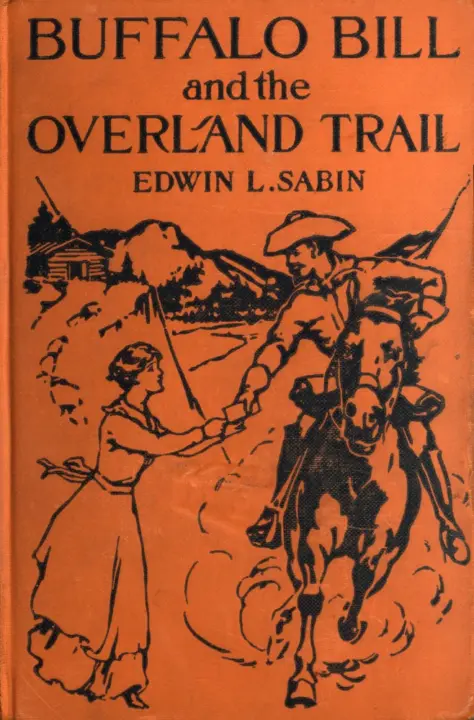
THE CLASSIC COLLECTION · 1914
"Buffalo Bill and the Overland Trail" by Edwin L. Sabin is a historical account written in the early 20th century. The narrative focuses on the adventurous life of Buffalo Bill, alongside the challenges and experiences of those who traversed the Overland Trail in the 19th century, illustrating the spirit of exploration and settlement in America. Central to the story is young David Scott, a boy who becomes involved in the conflict between white settlers and Native Americans, showcasing themes of bravery, heroism, and the harsh realities of frontier life. At the start of the tale, we are introduced to a tense situation where David Scott, a red-headed boy, is held by Cheyenne Indians as they ride through western Nebraska. The boy witnesses the thrill and danger of life on the plains, from plundering wagon trains to impending confrontations. As the narrative unfolds, the focus shifts to an intense battle between indomitable white settlers and the warring Cheyenne tribe, exemplified by buffalo hunters and courageous figures such as Buffalo Bill himself. The opening lays a vivid foundation for a story steeped in historical context, urgent action, and the resilience of its characters on the wild American frontier.
Introduction adapted from the source catalogue; source summaries may be automatically generated.
Free to read · English · 78,782 words · No account needed
MAKE TIME FOR A GOOD BOOK
On by default. Untick to stop anonymous reading totals. Each page counts after 10 seconds in view. How this works.
Anonymous counting is on unless you have switched it off.
“Well, I can’t send him out this time. We don’t need him with a train.” Mr. Russell spoke directly to Davy. “Did you ever herd?”
“Not much, sir. But I think I could.”
“Well, you go on down to Leavenworth and see Mr. Majors. He’s hiring the herding end of the business. If he wants to take you on, all right.” And Mr. Russell turned away. He was a man of short speech.
“Much obliged, Mr. Russell,” answered the two boys.
“Come on, Dave,” bade Billy, making for the two ponies.
They mounted, to go on to Leavenworth City. This was in plain sight from the high land where the fort was located. It was nestled prettily in a wooded basin beside the river two miles southeast. Fort Leavenworth was on the trail between it and Salt Creek Valley, and the trail continued to the Missouri at the town itself.
A lively place Leavenworth proved to be. It contained about five thousand people, living there, and a lot more who were simply pausing until they had outfitted for the trail westward. The streets were crowded with teams and wagons and people; and the river was dotted with rowboats, barges and several steamboats.
Billy Cody hustled right along, without giving Dave much time to look about. Evidently he was bound for the company office. In fact, suddenly he said so.
“There’s the Planters’ Hotel, Red,” he spoke, pointing. “It’s the biggest. The company’s office is right across the street, kittycorner. See it?”
Kittycorner from the Planters’ Hotel (which was a large three-story building, with a wide porch and a verandah, too, running around its face) Dave saw a sign reading, in big letters, “Russell, Majors & Waddell,” on a brick building. The streets hereabouts were more crowded than at any other point, and the two boys had difficulty in threading their way, dodging people and horses and oxen and wagons.
“Better tie up here,” spoke Billy abruptly, his quick eye sighting a vacant hitching spot at the sidewalk. “This place is getting too populous for me; can’t hardly breathe.”
They wedged in, tied their horses, and Billy led the way to the Russell, Majors & Waddell office――headquarters of the great overland freighting firm.
“That’s Mr. Majors at the desk,” he informed, undertone, to Dave, on the threshold. And――“How do you do, Mr. Waddell?” he said respectfully, as another man was brushing past them.
“How-do-do, Billy,” responded the man. “Back again, are you?”
“Yes, sir.”
“Well, take care of yourself, my boy,” and Mr. Waddell hastened away, as if on matters important.
Your reading position is saved on this browser. Take it to another device with a library code. Reading pages adapt to text, rather than matching a printed edition.
Edwin L. (Edwin Legrand) Sabin

Edwin L. (Edwin Legrand) Sabin

Edwin L. (Edwin Legrand) Sabin

Edwin L. (Edwin Legrand) Sabin
BEHIND THE BOOK
This eBook is for the use of anyone anywhere in the United States and most other parts of the world at no cost and with almost no restrictions whatsoever. You may copy it, give it away or re-use it under the terms of the Project Gutenberg License included with this eBook or online at www.gutenberg.org. If you are not located in the United States, you will have to check the laws of the country where you are located before using this eBook. Read the source licence.
The original source file, including credits and licence, is retained by this library. Request an original-format copy at no charge. Please include the book title and Project Gutenberg identifier #64231.
KEEP YOUR CURIOSITY GOING
Cécile Tormay

Moritz Busch
Coulson Kernahan
John L. Ransom

Maurice Baring
Frances Wright